





What Are the Main Modes of Heat Transfer in Bakery Ovens?
In the industrial bakery environment, understanding how heat is transferred inside ovens is crucial for achieving consistent product quality, efficient energy use, and optimal production speed. Heat transfer influences texture, crust color, moisture content, and overall bake performance. In bakery ovens, heat moves from the heat source to the baked goods via multiple mechanisms. This article explores the three primary heat transfer modes, their role in baking, and how modern baking equipment like the KC-SMART series supports even and efficient heat distribution.
Conduction: Direct Contact Heat Transfer
Conduction is the transfer of heat through direct physical contact between materials. In a bakery oven, this process occurs when dough or batter touches a heated surface such as a baking tray, rack, or oven floor. The thermal energy flows from the hotter surface (metal pan or oven deck) directly into the product.
Role in Baking: Conduction is especially important for the bottom crust of breads, pizzas, and pastries. It ensures that heat penetrates from the surface into the interior of the product.
Factors Affecting Conduction:
Material of the baking surface (metal conducts heat faster than stone).
Contact area between product and surface.
Temperature gradient between oven surface and food.
Conduction works alongside other heat transfer methods to complete the baking process efficiently.
Convection: Heat Transfer by Air Movement
Convection refers to heat transfer through the movement of air or gas. In a bakery oven, heated air circulates around the products, carrying thermal energy to their surfaces. Convection can be natural, driven by rising hot air and sinking cool air, or forced, using fans to push heated air throughout the oven chamber for more uniform heating.
Role in Baking: Convection helps maintain consistent temperature distribution across multiple racks and around each product, reducing hot or cold spots inside the oven. Forced convection shortens baking time and improves uniformity.
Industrial Applicability: Rack ovens and tunnel ovens often integrate powerful air circulation systems to enhance convective heat transfer, crucial for large batches.
The importance of airflow is one reason why commercial ovens are designed to optimize convection patterns for best results.
Radiation: Electromagnetic Wave Heat Transfer
Radiation is the transfer of heat through electromagnetic waves emitted by hot surfaces in the oven. Unlike conduction or convection, radiation does not require a medium like air or metal; energy travels in waves and is absorbed by the product surfaces.
Role in Baking: Thermal radiation contributes significantly to surface browning and crust formation. High-temperature oven walls, heating elements, and burners emit infrared radiation that warms the outer layer of baked goods.
Dominant Mechanism: In many industrial bakery ovens, especially gas-fired tunnel ovens and deck ovens with high surface temperatures, radiant heat plays a leading role in transferring energy to products.
Radiation works together with convection and conduction to develop texture and color.
Combined Heat Transfer in Bakery Processes
In a typical industrial oven, all three heat transfer mechanisms operate simultaneously:
| Heat Transfer Mode | Mechanism | Impact on Baking |
|---|---|---|
| Conduction | Direct contact between product and heated surface | Flooring crust development and internal heat penetration |
| Convection | Movement of hot air around products | Even heating throughout oven cavity |
| Radiation | Electromagnetic waves from hot elements or oven surfaces | Browning and surface heat absorption |
These mechanisms interact during the baking cycle. For example, convection brings heated air into contact with the dough surface, while radiation from the oven chamber walls accelerates heat absorption at product surfaces.
How Oven Design Influences Heat Transfer
Industrial bakery ovens are engineered to optimize these heat transfer modes for consistent output:
Oven Walls and Heating Elements: High emissivity materials promote effective radiation.
Air Circulation Systems: Fans and ducts enhance convective transfer, especially in tunnel ovens.
Bake Decks and Trays: Conductive materials ensure even bottom heat transfer.
Tunnel ovens and conveyorized systems used in high-volume bakeries maintain stable thermal environments that favor balanced heat transfer across all products as they move through the bake zones.
KC-SMART Solutions for Efficient Heat Transfer
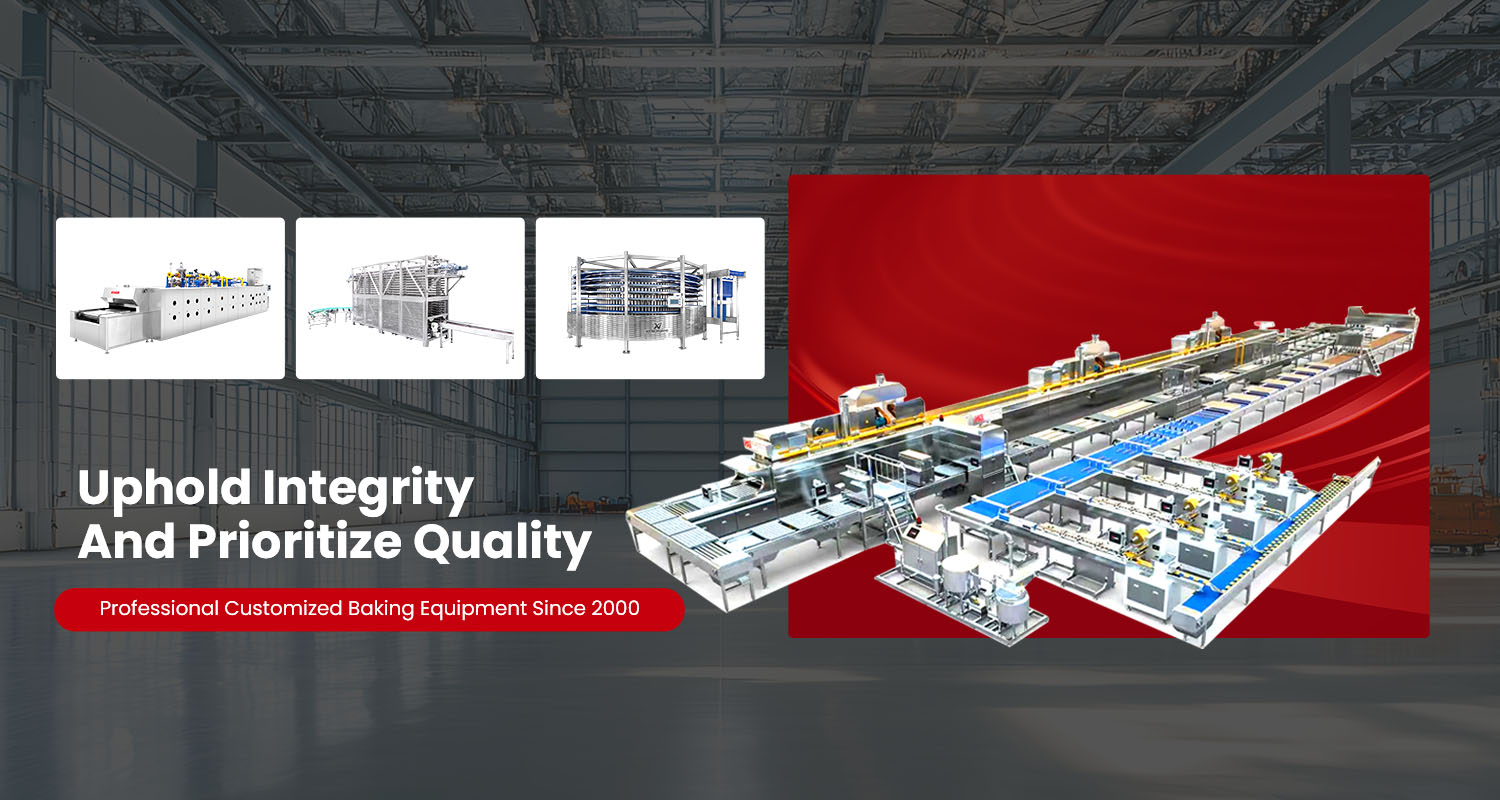
For bakeries aiming to modernize their production, KC-SMART offers advanced, intelligent baking equipment tailored to industrial needs. Founded in 2000, KC-SMART provides comprehensive oven systems and bakery solutions including gas-fired tunnel ovens with precise temperature control and efficient circulation systems that support balanced conduction, convection, and radiation heat transfer.
These intelligent ovens help:
Deliver uniform product quality across batches.
Reduce energy consumption through optimized heat distribution.
Support high-capacity production with stable performance.
Integrating such equipment enhances heat transfer efficiency, improves product consistency, and accelerates production throughput.
Practical Considerations for Bakeries
Understanding heat transfer helps bakery operators fine-tune oven settings:
Adjust oven temperature and fan speed to balance convection with radiation.
Select bake trays that facilitate good conduction where needed.
Monitor product placement and rack spacing to promote even airflow.
Better control of heat transfer leads to improved texture, uniform baking, and consistent crust and crumb characteristics.
Effective heat management in bakery ovens directly impacts product quality and operational efficiency. By leveraging an understanding of conduction, convection, and radiation, and deploying modern systems like those from KC-SMART, bakeries can achieve reliable and high-quality results in their baking production lines.