





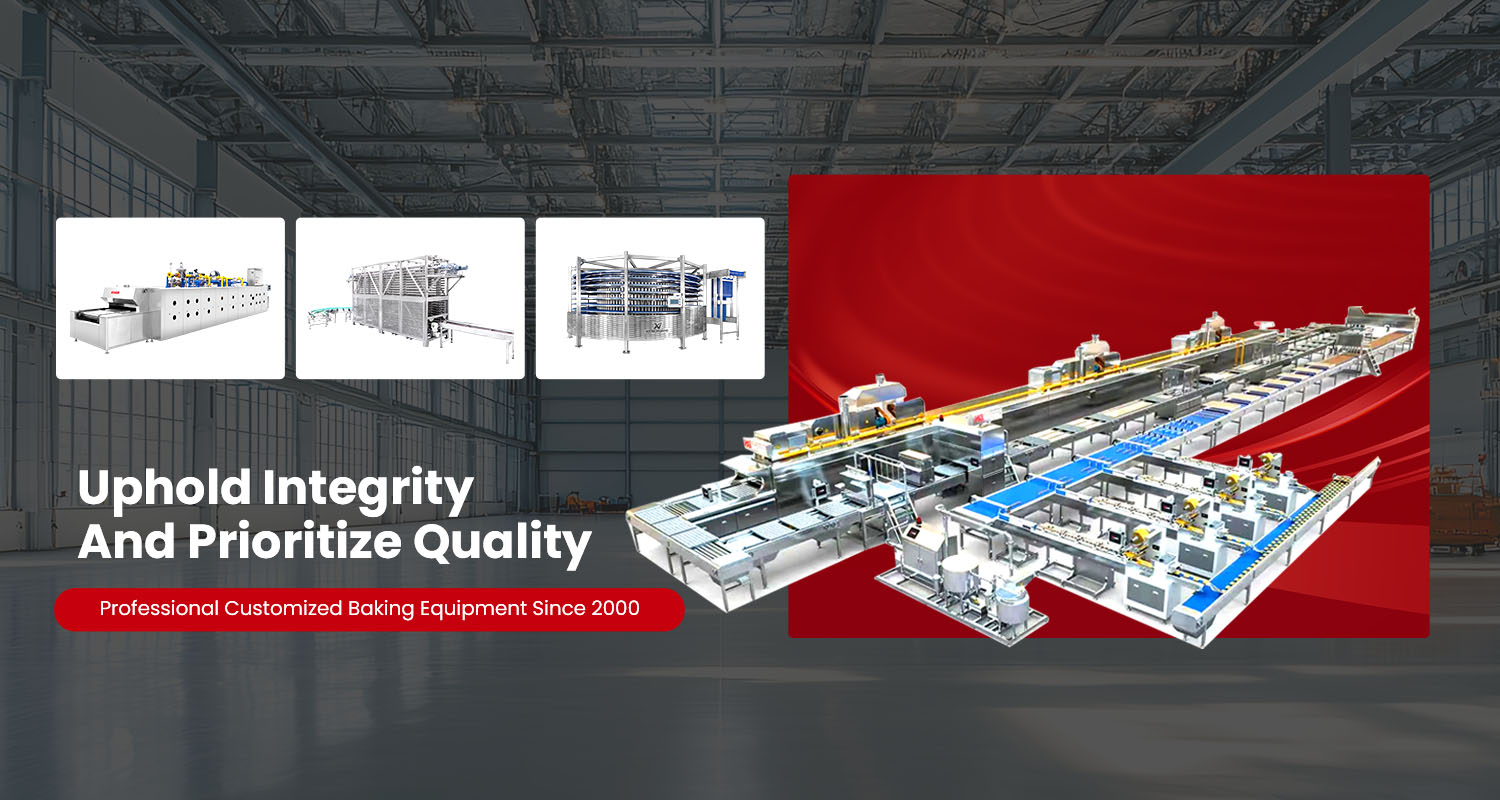
How to Choose a Bakery Cooling Tower?
A bakery cooling tower is a key piece of equipment in industrial baking lines. After products leave the oven, they require controlled cooling to stabilize shape, texture, and shelf life before packaging or further processing. Choosing the right cooling tower ensures product quality, throughput consistency, energy efficiency, and operational reliability. This guide explains how a bakery cooling tower works, what factors influence selection, and why KC-SMART is a strong choice for B-to-B customers.
What Is a Bakery Cooling Tower?
A cooling tower in a bakery is a climate-controlled conveyor system that gently reduces the temperature of freshly baked goods from baking temperature down to levels safe for handling and packaging. It blends conveyance, controlled airflow, humidity management, and timing to avoid condensation, soggy crusts, or shape distortion.
Efficient cooling is particularly important for products such as loaves, buns, pastries, cakes, and biscuits where residual heat affects texture, moisture distribution, and package integrity.
How a Cooling Tower Works
A typical bakery cooling tower consists of:
Multi-tiered conveyor
Climate-controlled chamber
Airflow system
Controls and sensors
Process Overview
Exit from Oven: Hot baked goods arrive on the conveyor directly from the oven.
Convey and Expose: As products move through the cooling chamber, controlled airflow removes heat and reduces temperature gradually.
Humidity & Airflow Control: Balanced air distribution prevents rapid moisture loss or condensation on product surfaces.
Exit at Target Temperature: Products leave the cooling tower ready for packaging or further processing.
Smooth transport and uniform air distribution are critical to prevent product deformation and ensure consistent cooling.
Key Selection Criteria
Choosing the right cooling tower depends on multiple technical and operational factors. Below are the essential considerations:
1. Product Types and Characteristics
Different baked goods require different cooling profiles:
Crusty bread needs slower, steady cooling to protect crust structure.
Soft buns and pastries need controlled humidity to avoid dryness or surface cracking.
Filled products and cakes need gentle airflow to prevent filling displacement.
Understanding product geometry, moisture content, and sensitivity to airflow guides equipment specification.
2. Cooling Capacity & Throughput
Match the cooling tower’s capacity to the line’s production rate:
| Throughput Metric | What It Means |
|---|---|
| Pieces per Hour | Number of items cooled in 60 minutes |
| Conveyor Length & Tiers | Determines residence time for cooling |
| Cooling Load | Heat energy removed per hour |
Higher throughput requires longer effective conveyor length or multi-tier designs. KC-SMART engineers calculate residence time based on target exit temperature and production speed.
3. Temperature & Humidity Management
Reliable control of air temperature and humidity is essential:
Temperature Range: Cooling towers must achieve consistent low temperatures without freezing.
Humidity Control: Prevents dehydration or condensation that may affect finish and packaging.
Look for systems with distributed sensors and automated feedback loops for real-time control adjustments.
4. Airflow Design
Airflow must be balanced and gentle:
Cross-flow and counter-flow designs help maintain uniform cooling.
Low-turbulence fans and ducts prevent product damage.
Even distribution across tiers avoids hot spots and inconsistent cooling.
Engineered airflow minimizes stress on delicate products while achieving cooling targets.
5. Hygiene, Clean-in-Place (CIP), and Maintenance
Food safety standards demand equipment that’s easy to clean and maintain:
Stainless steel constructions
Accessible conveyor belts
Integrated drainage and CIP features
Removable panels for inspection
CIP systems reduce downtime and support compliance with food safety audits.
6. Facility and Utility Requirements
Match the cooling tower to your plant layout and utilities:
| Requirement | Impact |
|---|---|
| Available Space | Tower width/height and access |
| Power Supply | Fans, controls, and climate systems |
| Drainage & Air Filtration | Condensate removal and air quality |
| Noise Restrictions | Fan selection and acoustic treatments |
Custom layouts help avoid costly modifications to buildings and utilities.
7. Controls, Automation, and Connectivity
Modern cooling towers include:
Human-Machine Interfaces (HMI)
Recipe management
Data logging
Remote diagnostics
Automation supports reproducible cooling profiles and operational visibility for quality control.
Common Cooling Tower Configurations
| Configuration | Best For |
|---|---|
| Single-Tier Conveyor | Small to medium throughput |
| Multi-Tier Spiral Tower | High throughput in limited footprint |
| Modular Inline Tower | Integration with modular baking lines |
| Open Air Cooling Conveyor | Ambient cooling for low-sensitivity products |
KC-SMART can design customized configurations based on plant floor plans and production schedules.
Installation and Commissioning Checklist
Before accepting a bakery cooling tower:
Verify airflow distribution across all tiers.
Test temperature uniformity with full line load.
Check conveyor stability at production speed.
Validate control system with recipe switching and alarms.
Review hygiene access and procedural cleaning paths.
Field testing with actual product ensures performance meets expectations before hand-over.
Why Choose KC-SMART for Your Cooling Tower
Tailored Engineering
KC-SMART designs bakery cooling towers that respond to specific production volumes, product types, space constraints, and hygiene requirements.
Advanced Climate Control
Control systems with distributed sensing and automatic regulation ensure stable cooling conditions across the entire conveyor path.
Integrated Line Optimization
KC-SMART ensures the cooling tower fits seamlessly with mixers, ovens, proofers, and packaging lines, optimizing throughput and reducing bottlenecks.
Long-Term Support
From planning through commissioning and after-sales service, KC-SMART provides professional technical support to keep your cooling systems productive over time.
Summary: Key Selection Steps
To choose the right bakery cooling tower:
Identify product cooling profiles and sensitivity.
Determine production throughput and residence time needs.
Specify precise temperature and humidity controls.
Evaluate airflow design for uniform cooling.
Plan for hygiene, maintenance, and plant utilities.
Review automation, controls, and data capabilities.
Partner with an experienced provider for design and support.
By following these steps and partnering with KC-SMART, industrial baking facilities can ensure consistent product quality, efficient cooling performance, and reliable long-term operation.