





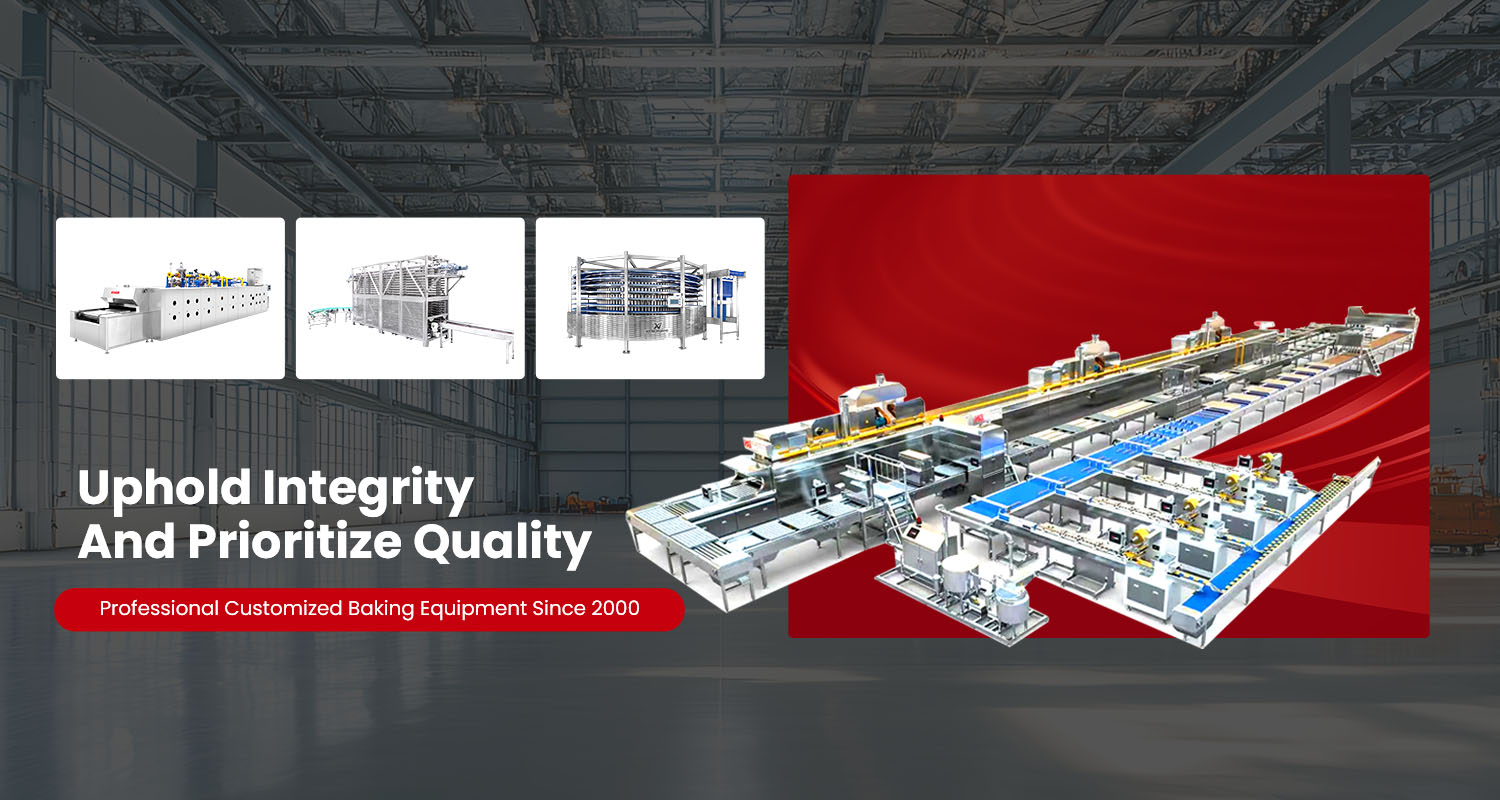
What Features Should I Look for in a Bakery Fermentation Tower?
A bakery Fermentation Tower is a key part of industrial production, designed to control dough proofing with precision and consistency. Choosing the right fermentation tower can improve product quality, increase production efficiency, and reduce labor costs. Below is a comprehensive guide to the features you should consider when selecting a bakery fermentation tower.
1. Controlled Temperature and Humidity
Effective fermentation depends on a stable proofing environment:
Precise control of temperature maintains consistent yeast activity.
Adjustable humidity levels prevent dough skinning or excessive drying.
Independent control zones allow different settings for various products.
Temperature and humidity control ensure uniform volume increase and desirable texture.
2. Uniform Dough Distribution
Consistency across all trays is essential:
Even airflow within the tower ensures equal exposure for each tray.
Conveyor design delivers smooth, vibration-free movement.
Tray spacing is optimized to allow air circulation around dough pieces.
Uniform distribution avoids uneven fermentation, which can lead to inconsistent bake results.
3. Adjustable Proofing Time
Different products require different proofing durations:
Variable conveyor speed allows you to lengthen or shorten proofing time.
Programmable logic control (PLC) can automate adjustments based on product profiles.
Flexible speed control supports multiple SKUs on the same tower.
Adjustability helps bakeries switch between products with minimal manual recalibration.
4. Capacity and Footprint
Choose a tower that matches your output goals and plant space:
| Bakery Scale | Typical Proofing Capacity | Footprint Consideration |
|---|---|---|
| Small | Low tray count | Compact footprint |
| Medium | Moderate tray count | Balanced space usage |
| Large | High tray count | Vertical or multi-level design |
High-capacity towers often use spiral or vertical lift designs to maximize proofing within limited floor space.
5. Sanitation and Clean-in-Place Design
Easy cleaning and sanitation improve food safety:
Stainless steel construction resists corrosion and supports hygiene.
Rounded edges and minimal crevices reduce dough buildup.
Access panels facilitate inspection and cleaning.
Good sanitary design protects product quality and simplifies maintenance.
6. Energy Efficiency
An efficient fermentation tower reduces operating costs:
High-efficiency fans and insulation help maintain stable conditions.
Energy-saving modes adjust air circulation based on load.
Optimization features limit energy waste during idle times.
Lower energy use increases profitability over long production runs.
7. Automation and Control Systems
Modern towers come with advanced controls:
HMI (Human-Machine Interface) for easy parameter adjustments.
Recipe presets store settings for repeatable results.
Remote monitoring supports oversight from the control room.
Automation enhances repeatability and reduces operator error.
8. Integration With Production Lines
A fermentation tower must align with upstream and downstream equipment:
Synchronized conveyor speeds with dough dividers and ovens prevent bottlenecks.
Inline communication via PLC ensures smooth transitions between proofing, baking, and cooling.
Modular design supports phased installation or future upgrades.
Seamless integration maximizes throughput and supports full line automation.
9. Safety Features
Protect workers and product integrity:
Emergency stop buttons at accessible points around the tower.
Interlocks that prevent access while the conveyor is in motion.
Temperature and humidity alarms alert operators to deviations.
Built-in safety systems reduce risks and support regulatory compliance.
10. Durability and Build Quality
Heavy-duty construction minimizes downtime:
Reinforced conveyor chains and belts handle continuous operation.
Corrosion-resistant materials extend service life.
High-quality bearings and motors reduce failures in high-usage environments.
Durable systems deliver reliable long-term performance.
11. Customization Options
Tailor the fermentation tower to your product mix:
Multiple proofing zones with independent environmental control.
Optional lifts or spiral conveyors to save floor space.
Adaptable tray sizes for different dough formats.
Customization supports flexibility and future product development.
12. Serviceability and Support
Ensure ongoing reliability:
Spare parts availability for belts, motors, and sensors.
Technical support for commissioning and troubleshooting.
Training for operators on controls and maintenance.
Strong supplier support reduces downtime and protects output quality.
Conclusion
When choosing a bakery fermentation tower, focus on:
Stable, controllable temperature and humidity
Even dough distribution and adjustable proofing time
Capacity that matches production targets
Sanitary design and energy efficiency
Automation, integration, and safety features
Durability, customization, and reliable support
Selecting a fermentation tower with these features will enhance consistency, operational efficiency, and product quality for modern bakery production.