





What Are Automatic Sorting Lines in Bakery Production?
Automatic Sorting Lines are integrated conveyor-based systems that separate, count, align, and route baked goods into the right lanes for downstream steps such as packing, tray loading, or case packing. In modern bakery plants, they sit after baking and cooling and before primary packaging, acting as a traffic controller that turns mixed product flow into stable, measurable, and pack-ready streams.
From a manufacturer’s viewpoint, a well-designed sorting line is not just “moving products.” It is an automation control layer that helps keep output consistent when product shape, weight, and production rhythm vary across shifts or SKUs.
Where a sorting line fits in a typical bakery flow
In a continuous bakery line, the product often reaches the end of the cooler in a wide, fast-moving stream. Manual sorting at this point becomes difficult because products are warm, fragile, and moving quickly. An automatic sorting line solves this by creating a structured flow:
Material distribution: spreads product evenly and stabilizes spacing
Material sorting: separates into lanes or channels based on preset rules
Material packaging interface: feeds products to wrappers, baggers, or tray loaders in a consistent rhythm
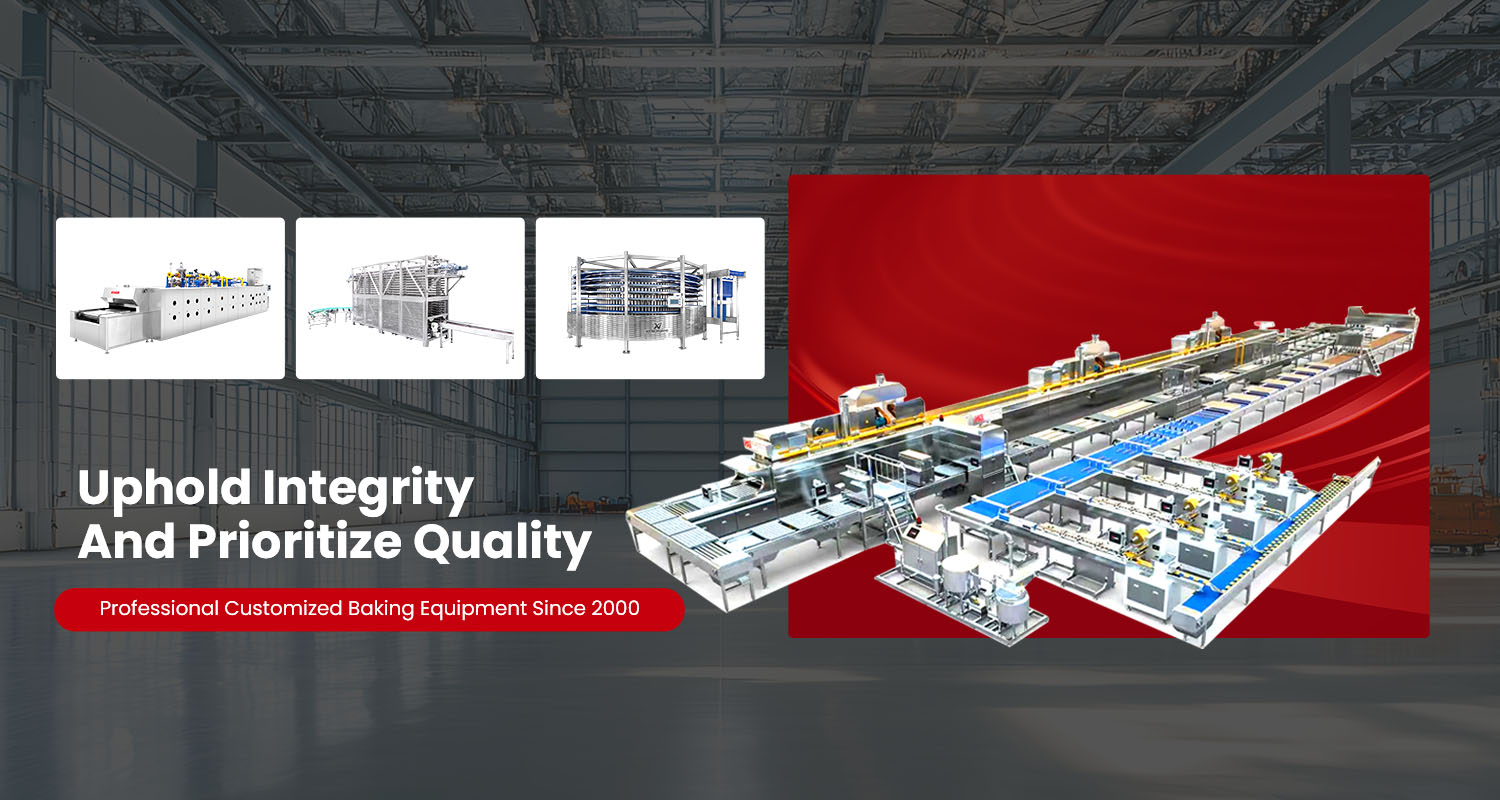
KC-SMART describes its automatic sorting line architecture around these three modules, built as an integrated automation control system to match different products and capacity requirements.
What the line actually “sorts” in real bakery production
“Sorting” in bakery is usually about order and routing, not only quality inspection. Most bakeries need one or more of these outcomes:
Lane routing for multiple packaging machines running in parallel
Counting and grouping to match pack counts such as 4/6/8 pieces per pack
Buffering to absorb short stops at packaging without disrupting upstream baking
Gentle handling to prevent scuffing, chipping, or deforming soft products
When the line is designed correctly, it reduces stop-and-go handling and helps keep packaging speed stable, which is often the real bottleneck.
KC-SMART approach to automatic sorting lines
KC-SMART positions its bakery automatic sorting line as a modular system with configurable channels, control logic, and materials suitable for food environments. In its published specifications for the baking-industry sorting line, typical configurations include:
| Item | KCLL-600A | KCLL-800A | KCLL-1000A |
|---|---|---|---|
| Voltage | 380V 3N | 380V 3N | 380V 3N |
| Conveyor width | 600 mm | 800 mm | 1000 mm |
| Channels | 6 | 8 | 10 |
| Exterior material option | Carbon steel baking paint / SUS 304 | Carbon steel baking paint / SUS 304 | Carbon steel baking paint / SUS 304 |
| OEM/ODM | Accept | Accept | Accept |
These parameters come directly from KC-SMART’s bakery sorting line listing.
KC-SMART also states a typical operating noise level of about 60 dB, which matters in long-shift environments where multiple conveyors and packers run simultaneously.
Key design points that determine sorting performance
Product handling and belt surface
Baked goods can be delicate. KC-SMART highlights food-grade polyurethane conveyor belts designed for wear resistance, corrosion resistance, easy cleaning, and reduced sticking while protecting product surfaces.
Channel logic and line balance
Sorting is only valuable if downstream packaging stays fed evenly. The most effective layouts balance:
upstream output variability
lane count and lane speed
packaging machine cycle timing
buffer length between transfer points
KC-SMART’s modular concept is useful here because distribution, sorting, and packaging interfaces can be configured as independent units or linked tightly as a complete solution. (KC-SMART)
Control and visibility
A sorting line should make production easier to manage, not harder. KC-SMART describes touchscreen-based operation with real-time monitoring, parameter adjustment, and report output to support day-to-day production control.
When an automatic sorting line makes the biggest difference
You typically see the highest impact when production has any of these traits:
Multiple SKUs sharing the same baking line but requiring different packing formats
Parallel packaging machines that must be fed evenly to avoid idle time
High-throughput lines where manual sorting becomes inconsistent under speed pressure
Products sensitive to surface marks such as soft buns, cakes, or coated items
At an industry level, bakery categories are still expanding globally, and many manufacturers are investing in automation to hold consistency while scaling output. For example, one major market estimate values the global bakery products market at USD 475.12B in 2024 and projects growth to USD 685.82B by 2032. Source: Fortune Business Insights.
Practical buying checklist before you request a layout proposal
To get a sorting line that fits your plant, prepare these inputs:
Product types and dimensions range, plus fragile points
Target throughput, plus expected peak variation
Required pack counts and packaging machine models
Space constraints and preferred conveyor elevation plan
Cleaning method and material preference, including SUS 304 requirements
Expansion plan: whether you will add more channels or packers later
If you want the line to serve as a long-term platform for upgrades, KC-SMART’s OEM/ODM acceptance and modular line concept can be useful for project-based customization rather than a fixed one-size configuration.
Why KC-SMART is a strong option for bakery sorting automation
KC-SMART focuses on one-stop baking equipment solutions and lists sorting, cooling, ovens, and other bakery modules as part of its product system, which helps when you want smoother upstream/downstream integration. KC-SMART also states it was founded in 2000 and operates at a 10,000㎡ company scale, supporting manufacturing depth for continuous-line projects.
When your goal is stable packaging feed, gentler product handling, and a cleaner, more controllable end-of-line flow, an automatic sorting line is often the most direct upgrade—and KC-SMART’s channel-based configurations, food-suitable materials, and modular architecture provide a solid foundation for that upgrade path.