





How to Maintain a Spiral Cooling Conveyor?
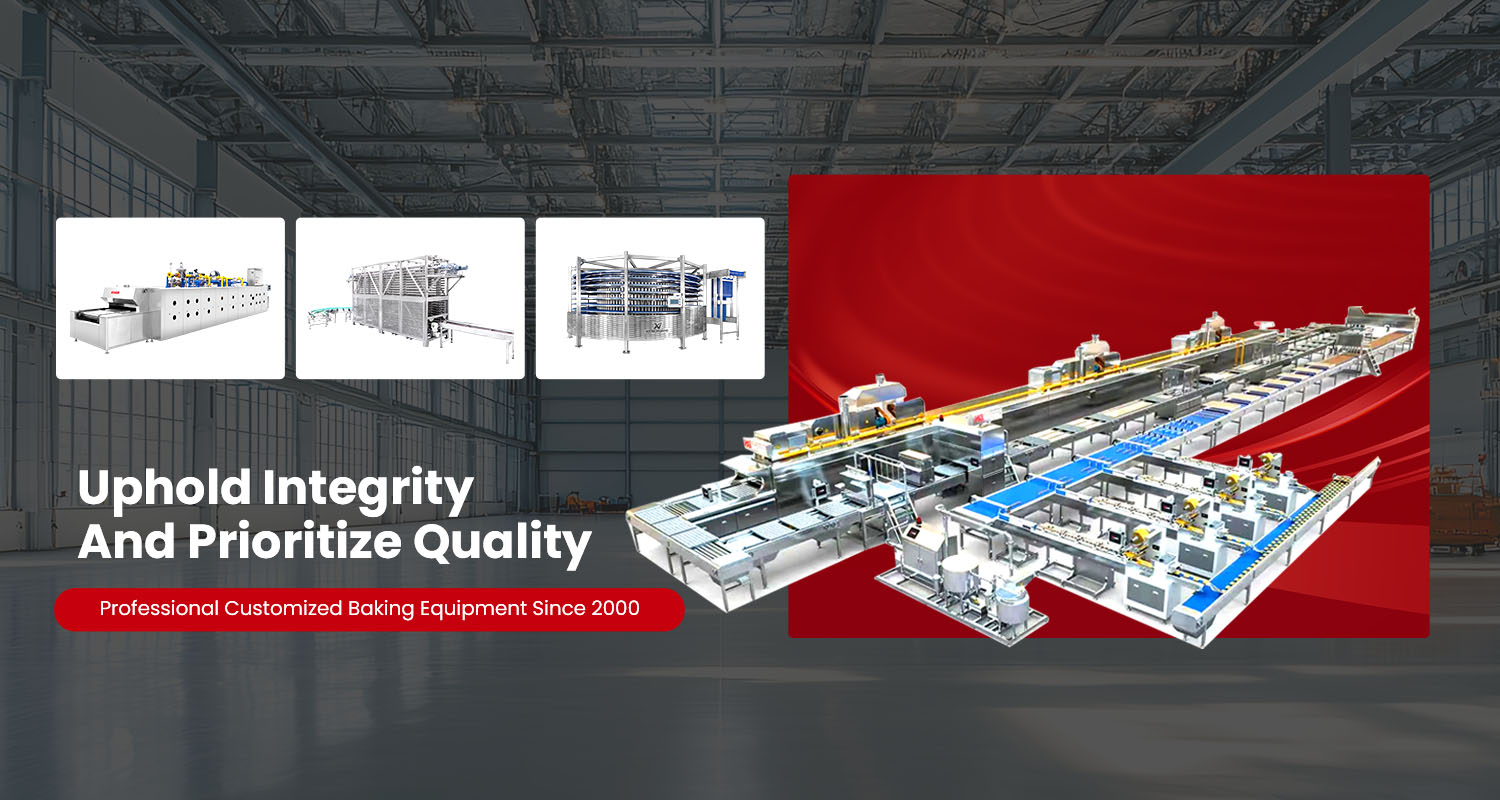
A spiral cooling conveyor is designed to extend product travel time in a compact footprint, so items can stabilize, cool, or buffer between processes without expanding your line length. The trade-off is that more conveying length is packed into one vertical structure, so hygiene access, belt tracking, tension control, and drive health must be managed deliberately. KC-SMART spiral cooling systems are built for continuous bakery production and can be customized by layers, layer height, tower diameter, and overall tower height to match real throughput and dwell-time targets.
Maintenance goals that matter in production
A practical maintenance plan should protect four outcomes:
Food-safe surfaces stay cleanable: residues and moisture trapped in guides, rails, returns, and drip zones drive risk and downtime.
Stable belt movement: correct tension, clean rails, and healthy sprockets prevent surging, noise, and belt wear.
Predictable cooling results: airflow paths and belt speed consistency keep cooling uniform, reducing quality variation.
Service safety: spiral conveyors store multiple forms of energy, so servicing must start with disciplined isolation.
KC-SMART uses a 304 stainless-steel frame and a high-strength food-grade plastic belt that is stated as FDA certified, supporting frequent washdown-style sanitation when your process requires it.
Recommended maintenance schedule
The table below is a manufacturer-style rhythm you can adapt to your shift pattern, product type, and sanitation rules. It combines spiral-conveyor service logic with measurable checkpoints from recognized maintenance and cleaning guidance.
| Interval | What to do | What “good” looks like |
|---|---|---|
| Every shift | Walk-around: missing parts, abnormal noise, obvious belt damage | No loose guards, no new vibration, no belt fragments or cracked modules |
| Weekly | Tighten fasteners, verify chain or drive tension, inspect sensors and switches | No creeping looseness, no warning alarms, no belt drift |
| Monthly | Deep clean dust and debris, inspect slats or carriers, confirm labels and warning stickers remain readable | Clean return zones, no buildup on rails, labels intact |
| Every 6 months | Lubrication tasks and systematic wear review | Lubrication applied correctly, wear parts replaced before failure |
| After any heavy washdown | Re-lubricate where required and re-check tension and tracking | Smooth restart, stable tracking, no squeal or chatter |
If your KC-SMART unit uses pneumatic tensioning logic, keep the tensioning system within a safe operating window. One spiral conveyor maintenance program specifies that pneumatic cylinder pressure should not exceed 1.5 bar for ascending spirals and 2.5 bar for descending spirals.
Cleaning and sanitation that protects the conveyor
Spiral conveyors fail early when cleaning is either too light to remove residues or too aggressive and damages components. Build a repeatable method, then train to it.
A widely used cleaning fundamentals guide for conveyor belts recommends:
Pre-rinse water temperature of 125 to 130°F and low pressure 150 to 300 psi to avoid driving soils deeper into joints.
Apply detergent without letting it dry, then rinse thoroughly.
A follow-up rinse example is 130°F water at 40 to 60 psi, focusing on high volume rather than force.
Use verification tools where appropriate. The same guide notes ATP testing as a way to confirm residue and microbial-supporting soils have been removed.
For spiral systems, pay special attention to these zones because they hide buildup:
Return path and underside supports: soils often accumulate where operators do not see them during line operation.
Rails and wear strips: residue here increases friction, raising tension and accelerating belt wear.
Drains and floor interfaces: cleaning guidance specifically warns to keep floor drains clear to prevent pooling water, which can re-contaminate the system.
KC-SMART’s 304 stainless structure and food-grade belt design are meant to support efficient cleaning cycles, which becomes a real advantage when your line runs multiple SKUs or allergen-controlled schedules.
Safety steps before any maintenance work
Spiral conveyors involve electrical, mechanical, pneumatic, and other stored energies. OSHA’s lockout and tagout standard is built specifically to prevent injury from unexpected startup or energy release during servicing. OSHA also reports that compliance with lockout and tagout helps prevent an estimated 120 fatalities and 50,000 injuries each year.
Minimum practice for a maintenance team:
Isolate energy sources and verify zero-energy state.
Use consistent tags and device ownership rules.
Allow temporary re-energization only for necessary testing, then return to isolation before continuing work.
Operational checks that reduce downtime
Even when cleaning is strong, the conveyor’s performance will drift if you do not measure a few basics.
Belt tracking: record where tracking is centered at startup and after sanitation. A small weekly drift trend is an early sign of guide wear or tension imbalance.
Noise profile: new clicking often points to damaged modules or debris in the return; new squeal often points to friction at rails.
Electrical health: verify cabinet cleanliness and cable strain relief after washdowns. If your system is configured at 380V 3N and multi-speed operation, keep wiring terminations tight and dry to avoid nuisance faults.
Speed consistency: if your process uses a defined rotational speed range, document the setpoints used for each product so maintenance can detect when the system needs calibration.
Why many plants choose KC-SMART for spiral cooling support
For long spiral conveyors, the strongest maintenance program is the one that matches how your line actually runs and how your team actually cleans. KC-SMART positions itself as a customizable solution provider, offering design choices like layers, diameter, and height to fit capacity requirements, plus integrated manufacturing, installation, and after-sales maintenance support.
If you are sourcing for a new line or upgrading an existing one, KC-SMART can also align the spiral conveyor specification with your upstream and downstream automation, which helps you standardize parts, documentation, and OEM/ODM commissioning routines across multiple projects.