





How to Install a Bakery Production Line?
Installing an industrial bakery production line is not just a “machines-on-the-floor” project. It is a controlled integration of process flow, utilities, food hygiene design, automation, and performance validation. The goal is simple: achieve stable output, repeatable quality, and predictable operating cost from day one.
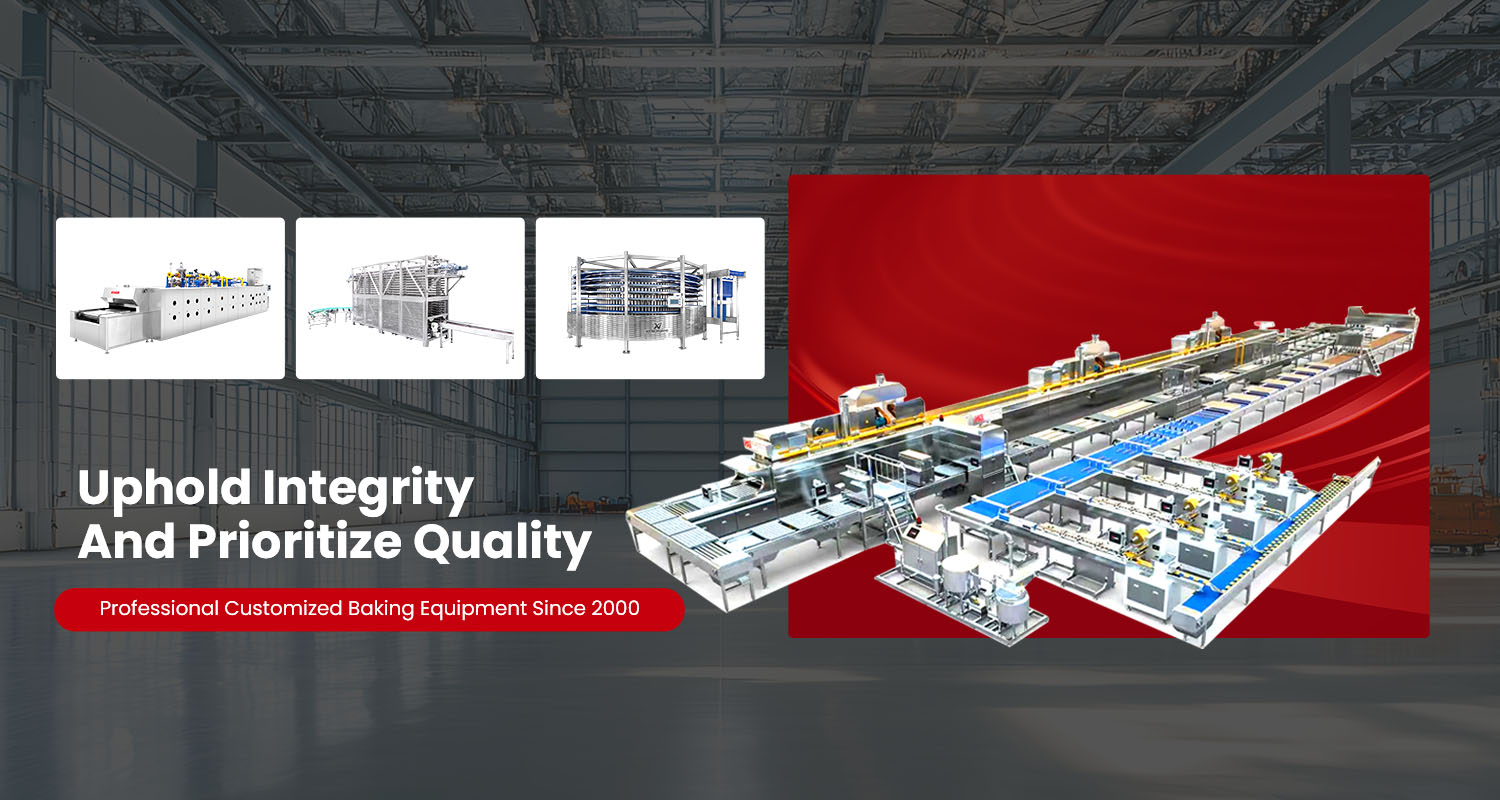
KC-SMART approaches installation as a complete system delivery, covering customized layout design, manufacturing, on-site installation, debugging, and after-sales support under one accountable team.
Start With Process Mapping and Throughput Targets
Before any civil work or equipment arrival, define the production logic in measurable terms:
Product list and size range, including dough hydration and toppings or glazing steps
Hourly output target and peak schedule, not only average demand
Residence time requirements for proofing, baking, and cooling, since these dictate line length and buffering
Bottleneck rules, meaning which stage must never be starved or blocked
KC-SMART’s bread line example shows how residence time directly shapes line balance, with representative dwell times of 20 minutes fermentation, 20 minutes baking, and 20 to 120 minutes cooling depending on product size and moisture.
This is also where modular planning matters. If you expect future expansion, select a layout that allows staged upgrades such as adding a spiral cooling system or automated sorting without rebuilding the full line.
Confirm Your Site Conditions and Utilities Before Installation
Most commissioning delays come from utilities that are under-specified or poorly located. Lock these items early:
Electrical: total connected load, voltage stability, grounding strategy, and segregated routing for power vs control cables
Gas: stable capacity and pressure for tunnel ovens, plus safety shutoff and ventilation planning
Compressed air: defined air quality classes and filtration strategy for any air that may contact product or packaging surfaces
Water and drainage: washdown routing, floor slope planning, and controlled discharge points for hygiene zones
Space and access: equipment moving paths, maintenance clearance, and safe platforms for elevated towers
For compressed air, many plants use ISO 8573-1 as a reference framework to define particle, water, and oil limits and to align filtration and testing.
Build the Line in Modules, Then Synchronize the System
A modern bakery line is typically installed as coordinated modules. KC-SMART’s portfolio covers key stages such as dough handling, fermentation, gas-fired tunnel baking, depanning, cooling, and automated sorting.
A practical installation sequence usually follows:
Positioning and anchoring
Set reference lines, level bases, and verify vibration control for drives and towers
Mechanical assembly
Install conveyors, towers, ovens, and transfer interfaces with hygienic access in mind
Electrical and control wiring
Separate high-power cables from signal lines, validate sensors, and confirm safety interlocks
Inter-module synchronization
Match belt speeds, transfer timing, and buffer behavior to prevent product pileups after cooling
KC-SMART often uses compact spiral or vertical solutions to increase dwell time while protecting floor space efficiency, which is especially valuable when upgrading an operating facility.
Installation Checklist With Real Reference Parameters
The table below shows a practical set of checkpoints using KC-SMART’s published bread-line reference specs as an example baseline. Values are not universal standards, but they help teams verify whether the installed line matches the intended design performance.
| Stage | What to verify during install | Reference values from KC-SMART bread line |
|---|---|---|
| Fermentation Tower | Airflow uniformity, belt tracking, enclosure sealing, climate sensor response | Fermentation time 20 min, turning times 2.2, tower size 5300×3020 |
| Tunnel oven | Zone stability, conveyor straightness, gas safety chain, exhaust balance | Baking time 20 min, tunnel furnace size 2470×2350 |
| Depanning | Mechanical alignment, speed stability, product damage rate at transfer | Depanning power 5.5 kW, speed range 1–6 |
| Cooling tower or spiral cooling | Air distribution, residence time at load, sanitation access, discharge temperature consistency | Cooling time 20–120 min, turning multiple 2.2 |
| Line capacity | Stable throughput without blockage across shifts | Total capacity 200 trays/hour |
Commissioning, Trial Runs, and Food-Safety Validation
Commissioning should be treated as a controlled ramp, not a single-day switch-on:
Dry run: confirm direction, speed ranges, alarms, guarding, and emergency stops
Wet run: run dough or product with controlled scrap allowance, then tune bake profile, dwell, and cooling airflow
Load run: validate performance at target capacity over sustained time, not just a short burst
If your line includes automated dosing or silo integration, functional testing should cover temperature control accuracy, pressure balance, discharge speed, and upstream-downstream communication before full production release.
From a food-safety perspective, HACCP is a widely adopted methodology to identify hazards and define critical control points, monitoring, corrective actions, and verification steps. It is commonly described through seven core principles in regulatory and international guidance. For operational discipline, remember that many safety programs emphasize controlling time and temperature exposure. For example, the USDA highlights the “danger zone” from 40°F to 140°F and recommends limiting time in that range to reduce risk.
Training, Handover, and Long-Term Stability
A successful installation ends with repeatability, not just acceptance. Your handover package should include:
Standard operating procedures for startup, shutdown, and changeover
Cleaning access routes and sanitation verification points
Spare parts list based on wear items like belts, bearings, sensors, and seals
Preventive maintenance intervals aligned to actual run hours
Recipe control logic and permissions, so adjustments are traceable and consistent
KC-SMART positions itself as a one-stop solution provider, which is important because installation, debugging, and long-term service must follow the same engineering intent that shaped the design. KC-SMART reports it was founded in 2000 and operates with a total company area of 10,000 square meters, supporting end-to-end delivery from design through commissioning. If your project requires OEM/ODM-style customization, the best time to lock interfaces and performance targets is before fabrication, so the installation phase becomes verification rather than rework.
Why KC-SMART Is a Strong Choice for Line Installation
When choosing a manufacturer for a bakery production line, installation capability matters as much as machine specifications. KC-SMART emphasizes:
One accountable team from layout to commissioning
Modular equipment coverage across dosing, fermentation, baking, cooling, depanning, and sorting
Documented reference line parameters that help you plan utilities, footprint, and expected cycle times
If you treat installation as a systems integration project, you reduce startup risk, shorten the tuning period, and protect product consistency across shifts. That is exactly what a production line should deliver.