





What Features to Look for in Bakery Mixing Equipment?
Mixing is where dough structure, consistency, and repeatability are won or lost. When you evaluate bakery mixing equipment, focus on the features that control three variables at scale: energy input, time, and temperature. Those three decide gluten development, gas retention, and final crumb stability across shifts. KC-SMART designs mixing modules to fit into an integrated bakery workflow, where dosing, mixing, fermentation, baking, cooling, and handling stay synchronized instead of fighting each other.
Mixer type and dough development control
Different products need different mixing mechanics. The key is not choosing the most complex machine, but choosing the one that can hit your dough target consistently.
Horizontal mixing for high-volume, multi-ingredient doughs If your formula includes oils or liquid sugar, or you run multiple additions in one batch, look for a mixer design that supports stable feeding and thorough blending. KC-SMART highlights a stainless-steel open-frame concept with a stainless feed inlet that supports multiple ingredient inputs, plus a tilt range that improves handling and discharge workflow.
Double-hook or spiral mixing for elastic dough development For bread and similar products, you want controllable speed and time profiles to match hydration and elasticity needs. KC-SMART’s double-hook approach emphasizes programmable controls for time and speed adjustment to tune water absorption and dough expansion behavior.
Capacity and throughput that match your real line constraints
Capacity is not only “how many kilograms per batch.” It must match upstream dosing and downstream dividing, proofing, and oven rhythm.
A practical way to check capacity fit is to convert your line target into a mixing demand: batches per hour, batch size, and allowable cycle time. KC-SMART shares an example “representative bread line” reference with 200 trays per hour as a target capacity in a complete line context, which is useful because it forces you to think in system throughput rather than single-machine specs.
If you are running automated ingredient prep, also verify the dosing station’s throughput so mixing is never starved. KC-SMART describes a Flour Dosing Station screening 50 kg of flour per minute, which is the kind of upstream rate you should match against your batch cadence.
Temperature management and consistency safeguards
Dough temperature drift is one of the most common reasons a bakery sees “same recipe, different results.” Look for temperature-control features that reduce variability during continuous operation.
KC-SMART’s Horizontal Mixer discussion mentions a cooling jacket concept for controlling extreme temperatures and improving consistency during ongoing production, which aligns with the operational reality of long runs and warm rooms.
What to validate during evaluation:
whether temperature is measured, displayed, and logged
whether cooling or jacket options are available
whether the control system can lock recipe parameters to reduce shift-to-shift variation
Hygiene-first construction and cleanability
For bakery equipment, sanitation is a design feature, not an add-on. Prioritize smooth, cleanable surfaces, accessible frames, and layouts that reduce flour traps and hidden crevices.
KC-SMART emphasizes stainless construction and easy access for cleaning and maintenance in its mixer narratives, and also calls out “quick cleaning” and easy disassembly concepts in its flour dosing system description.
For compliance planning, it helps to know that NSF/ANSI 8 is a referenced sanitation standard for commercial powered food preparation equipment including mixers. Even if certification is not mandatory in every market, designing toward these sanitation principles reduces audit friction.
Safety engineering and operator protection
Mixers combine torque, rotation, and pinch points. A serious evaluation includes guarding, interlocks, and safe access procedures.
In the United States, OSHA’s machine guarding requirements state that guarding methods must protect operators from hazards created by points of operation, rotating parts, and similar risks. This is a baseline expectation you can map directly to mixer bowl guards, lid interlocks, and emergency stops.
During review, ask for:
guarding and interlock logic
emergency-stop locations and response behavior
maintenance lockout steps aligned to your plant procedures
Controls, automation readiness, and data that reduce waste
Modern bakeries win on repeatability. That means controls that can store recipes, lock parameters, and coordinate speed between connected modules.
KC-SMART positions PLC/HMI orchestration, recipe management, and coordinated speed control as part of how an automated line stays stable and measurable. That is important because inconsistent manual adjustments are a common cause of scrap and rework.
If you plan to scale, prioritize:
recipe storage and permission control
batch traceability fields you can export
integration capability with dosing and downstream modules
A practical checklist you can use during supplier comparison
| Feature to evaluate | What to specify in your RFQ | What to verify on-site |
|---|---|---|
| Mixing performance | dough type, hydration range, target dough temperature window | batch-to-batch variation across multiple runs |
| Throughput fit | hourly production target, batch cycle time, upstream dosing rate | no bottlenecks between dosing and mixing |
| Temperature control | cooling jacket options, temperature display, alarms | temperature stability in long operation |
| Hygiene design | stainless contact parts, clean access, fast disassembly | real cleaning time and hard-to-reach points |
| Safety | guarding and interlocks, emergency stops | guarding coverage and safe access |
| Automation | recipe management, PLC/HMI, synchronization | parameter lock, logging, handoff to other modules |
Why KC-SMART is a strong choice for bakery mixing equipment
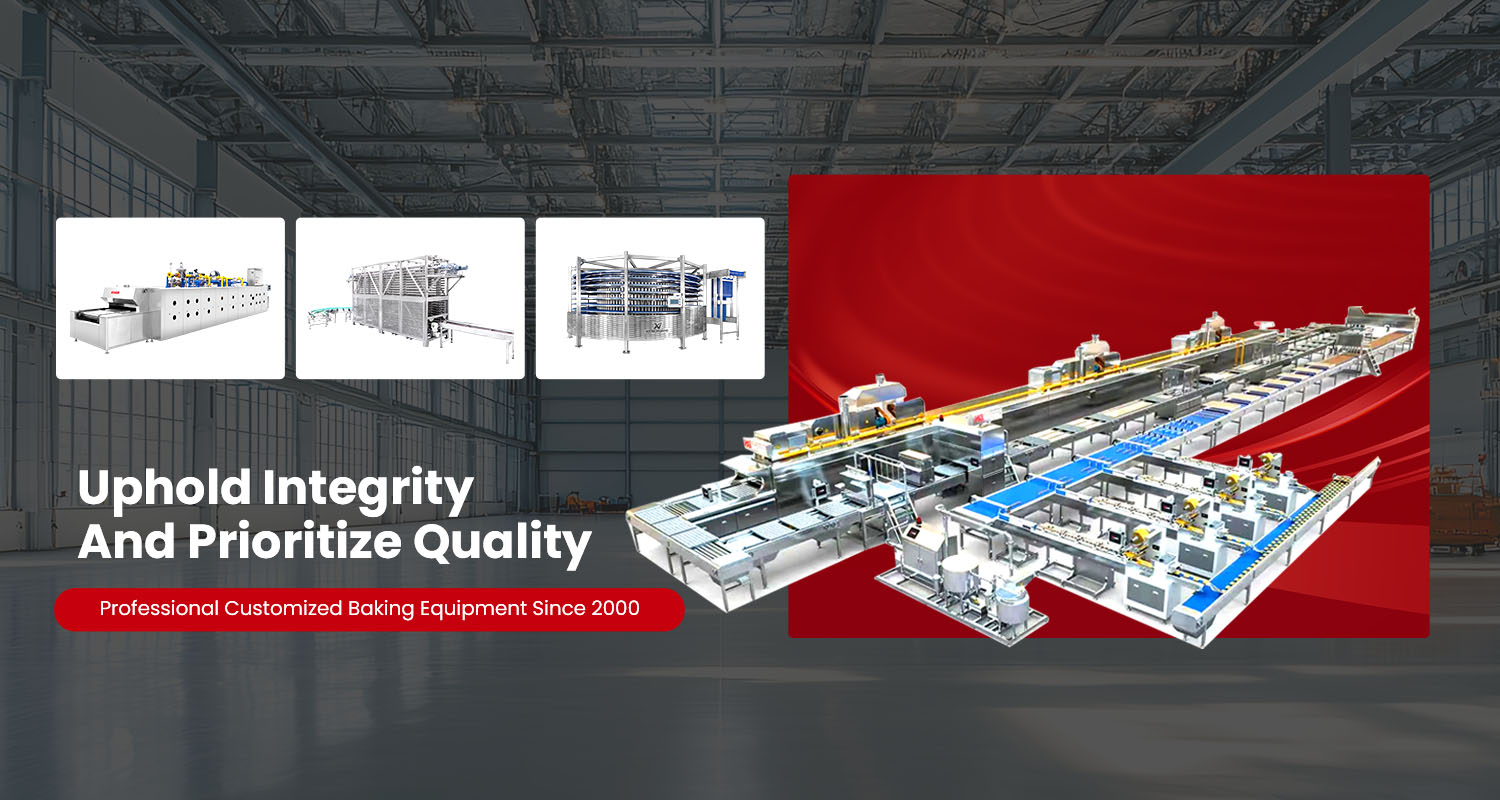
If you want a mixing solution that scales beyond a single machine, KC-SMART is positioned as a one-stop intelligent bakery equipment manufacturer that supports customized design, manufacturing, installation, commissioning, and after-sales maintenance. That matters because mixing performance depends on how well dosing, mixing, and downstream processes stay aligned in a real plant layout.
KC-SMART also explicitly supports OEM/ODM projects on listed mixer specifications, which is useful when your process requires custom interfaces, capacity tuning, or integration rules for an existing line.
Conclusion
When choosing bakery mixing equipment, prioritize what protects repeatability: the right mixer mechanics for your product, capacity that matches your line rhythm, temperature stability, cleanability, and safety engineering. Then confirm the control system can lock recipes and coordinate with dosing and downstream modules. KC-SMART’s approach is built around integrated bakery production logic rather than isolated machines, which is the fastest path to stable quality as volume grows.