





What Is the Difference Between Batch Ovens and Continuous Ovens?
Choosing the right oven architecture is one of the highest-impact decisions in a bakery line, because it sets the pace for upstream mixing, proofing, makeup, cooling, and packing. Two mainstream options dominate industrial baking: the batch oven and the continuous oven. They can both deliver consistent bake quality, but they behave very differently in capacity scaling, energy profile, changeover efficiency, and automation readiness.
KC-SMART designs and builds integrated bakery baking equipment lines, so the best choice is rarely a single machine decision. It is a system decision, aligned with daily output targets, SKU mix, utilities, and compliance needs.
Core Operating Logic
A batch oven runs a defined load, then stops for unload and reload. This naturally fits production where recipes, pan sizes, or bake curves change frequently, and where scheduling is driven by short runs.
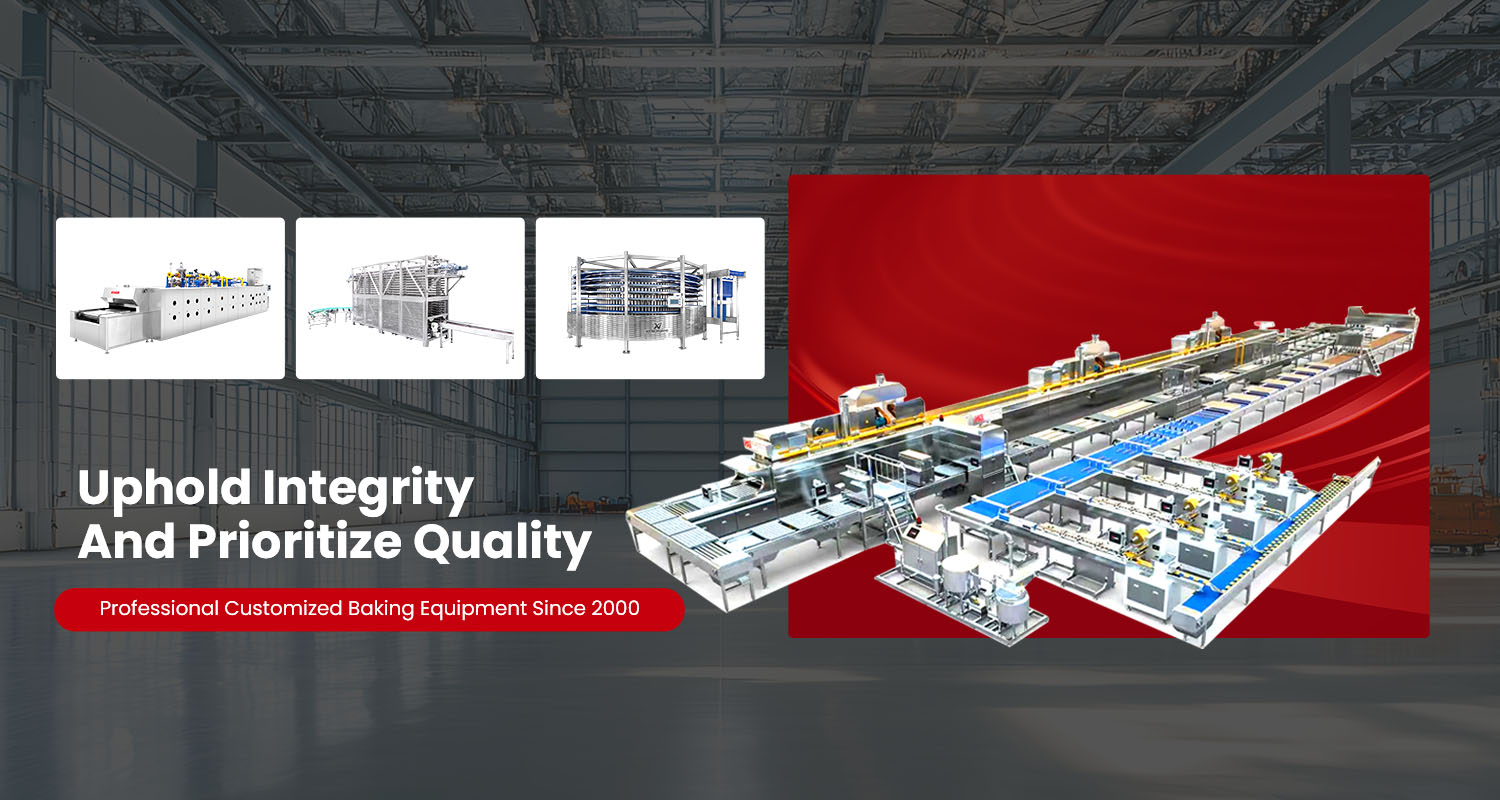
A continuous oven keeps heat and airflow stable while product moves through on a conveyor. In bakery lines, the most common form is a tunnel oven for bakery production, built with multiple heating zones and controlled residence time based on belt speed and oven length. Many tunnel designs run typical baking ranges around 150°C to 315°C, supporting diverse products by zoning and setpoint control. Data from an industrial tunnel oven technical overview notes a typical range of 300°F to 600°F which equals 150°C to 315°C.
Practical Differences That Affect Output
Throughput and Line Balance
Continuous systems scale output by widening belt width, extending oven length, and tuning belt speed. For example, commercial tunnel configurations commonly offer belt widths around 2.1 m to 3.0 m, and modular sections that extend oven length by fixed increments, enabling capacity growth without redesigning the whole line. Data from a tunnel oven specification page lists belt widths of 2.1 m, 2.5 m, and 3.0 m, and modular section design for capacity sizing.
Batch systems scale output by increasing batch size, adding racks, or adding more ovens, which can be practical when floor layout and product handling are already batch-based.
Bake Uniformity and Process Stability
Continuous baking benefits from steady thermal conditions. Once tuned, zone-to-zone stability supports tighter color and moisture control. Batch baking can also be uniform, but frequent door cycles and loading patterns introduce more variables that must be managed through SOP discipline and controls.
Changeovers and SKU Flexibility
Batch operation is naturally suited to frequent SKU changes. Continuous lines can change SKUs too, but changeover efficiency depends on zoning strategy, belt sanitation workflow, and how many upstream and downstream steps must pause together.
Comparison Table for Decision-Making
| Decision Factor | Batch Oven | Continuous Oven |
|---|---|---|
| Best fit for SKU mix | High variety, short runs | High volume, steady demand |
| Heat profile | Cycled per load | Stable, continuous thermal state |
| Capacity scaling | Add ovens or enlarge batch | Extend length, widen belt, tune speed |
| Typical tunnel temperature capability | Not applicable | Many systems cover roughly 150°C to 315°C for broad bakery needs |
| Automation integration | Moderate | Strong, supports line synchronization |
| Labor handling | More load and unload steps | Fewer interruptions, more continuous flow |
Safety, Hygiene, and Export Readiness Considerations
Industrial oven selection should also be filtered through safety and hygienic design requirements, especially when exporting or operating under audited food safety programs.
For fire and explosion risk control in industrial heated enclosures, NFPA 86 is a widely recognized reference for ovens and furnaces, addressing safe operation and hazard reduction for industrial oven systems. Data from NFPA describes NFPA 86 as a standard that gives owners, designers, and installers confidence in fire safety and fire protection for industrial ovens and furnaces.
For food machinery hygiene and cleanability, EN 1672-2 is a core European reference describing common hygiene and cleanability requirements for machinery used in preparing and processing food. The UK HSE also lists EN 1672-2 as a generic hygiene standard for food machines.
How KC-SMART Supports the Right Oven Choice
KC-SMART is positioned to help match oven architecture to full-line realities because the oven is only one node in the automation chain. With integrated capabilities spanning powder conveying, mixing, fermentation, baking, cooling, demolding, and material handling, KC-SMART can design the line around stable throughput, controllable quality checkpoints, and maintainable sanitation access. This one-stop approach also reduces interface risk between modules during installation, debugging, and long-term service.
Bottom Line
If your operation prioritizes frequent product changes and shorter production campaigns, a batch oven structure can be the most practical and controllable. If your priority is stable high output with strong automation potential, a continuous oven architecture, often implemented as a tunnel oven line, is typically the most scalable path. The strongest results come from selecting the oven type together with upstream and downstream automation, then validating capacity, zoning logic, sanitation workflow, and safety compliance as one engineered system.