





What Safety Standards Apply to Industrial Bakery Equipment?
Industrial safety for a modern bakery processing equipment project is never a single certificate. It is a structured set of legal duties, engineering standards, hygienic design rules, and verification records that travel with the bakery production line from design review to factory acceptance testing and long-term maintenance.
KC-SMART has been focused on integrated baking automation since 2000 and delivers one-stop solutions from design and manufacturing through installation, commissioning, and after-sales support. This end-to-end scope matters because compliance is proven by documentation and repeatable processes, not by marketing claims.
The two safety layers that always apply
Operator safety and functional safety
This is the industrial food machinery safety layer: mechanical hazards, guarding, emergency stops, electrical protection, and control system reliability. A widely used foundation for risk assessment is ISO 12100, which defines the methodology for hazard identification, risk estimation, and risk reduction.
Food hygiene and food-contact safety
This is the food grade machinery standards layer: cleanability, contamination prevention, and food-contact material compliance. In Europe, EN 1672-2 is a key hygiene and cleanability standard for food processing machinery.
Regional regulatory expectations that shape your compliance path
European Union
The Machinery Directive 2006/42/EC remains the baseline today, while Machinery Regulation EU 2023/1230 becomes applicable on January 20, 2027. For projects with long lead times, this date influences technical files and declarations.
For food-contact materials, EU Regulation EC No 1935/2004 sets the framework requirements, and Commission Regulation EC No 2023/2006 establishes good manufacturing practice expectations for food-contact materials supply chains.
United States
Machine guarding obligations are commonly tied to OSHA 29 CFR 1910 Subpart O, including the general requirement to provide guarding to protect operators from hazards at the point of operation and other moving-part risks.
For food-contact polymers, 21 CFR Part 177 is a core reference when polymers are used as food-contact surfaces or components.
Core technical standards buyers should see referenced in the technical file
Below is a practical checklist that aligns bakery equipment safety requirements with the records you can request during sourcing and acceptance.
| Safety domain | Standard or regulation | What it controls | Evidence you can request |
|---|---|---|---|
| Risk assessment | ISO 12100 | Hazard identification and risk reduction method | Risk assessment report with residual risk list |
| Emergency stop | ISO 13850 | Design principles and functional requirements for emergency stop | E-stop circuit design description and validation record |
| Guarding | ISO 14120 | General requirements for fixed and movable guards | Guard drawings, interlock logic, access risk review |
| Control system safety | ISO 13849-1 | Performance level approach for safety-related control parts | PL target and verification evidence for safety functions |
| Electrical equipment | IEC 60204-1 | Electrical equipment requirements from supply connection onward | Electrical schematics, protective bonding, test results |
| Industrial electrical fire and shock protection | NFPA 79 | Electrical safeguards for industrial machinery; scope includes machines up to 1000 V ac or 1500 V dc | Electrical design compliance statement and inspection checklist |
| Hygienic design | EN 1672-2 and ISO 14159 | Hygiene, cleanability, and contamination risk reduction by design | Cleanability design notes, surface and drainability review |
| Food-contact legal framework | EU 1935/2004, US 21 CFR | Material safety and regulatory status for food-contact components | Declarations, material specs, supplier compliance pack |
How standards map to real bakery equipment modules
In a typical bakery production equipment regulations review, hazards change across modules:
Mixing, dosing, and conveying: nip points, rotating shafts, pinch hazards, cleaning exposure. This is where guarding design, lockable isolation, and safe access sequences matter most.
Fermentation, baking, cooling, depanning, and sorting: hot surfaces, steam and airflow exposure, automated movement, and high-throughput transfer points. A Spiral Cooling Tower conveyor, for example, combines continuous motion with hygienic design needs, often using food-grade belt materials and stainless structures, so both safety and cleanability must be addressed in the same design review.
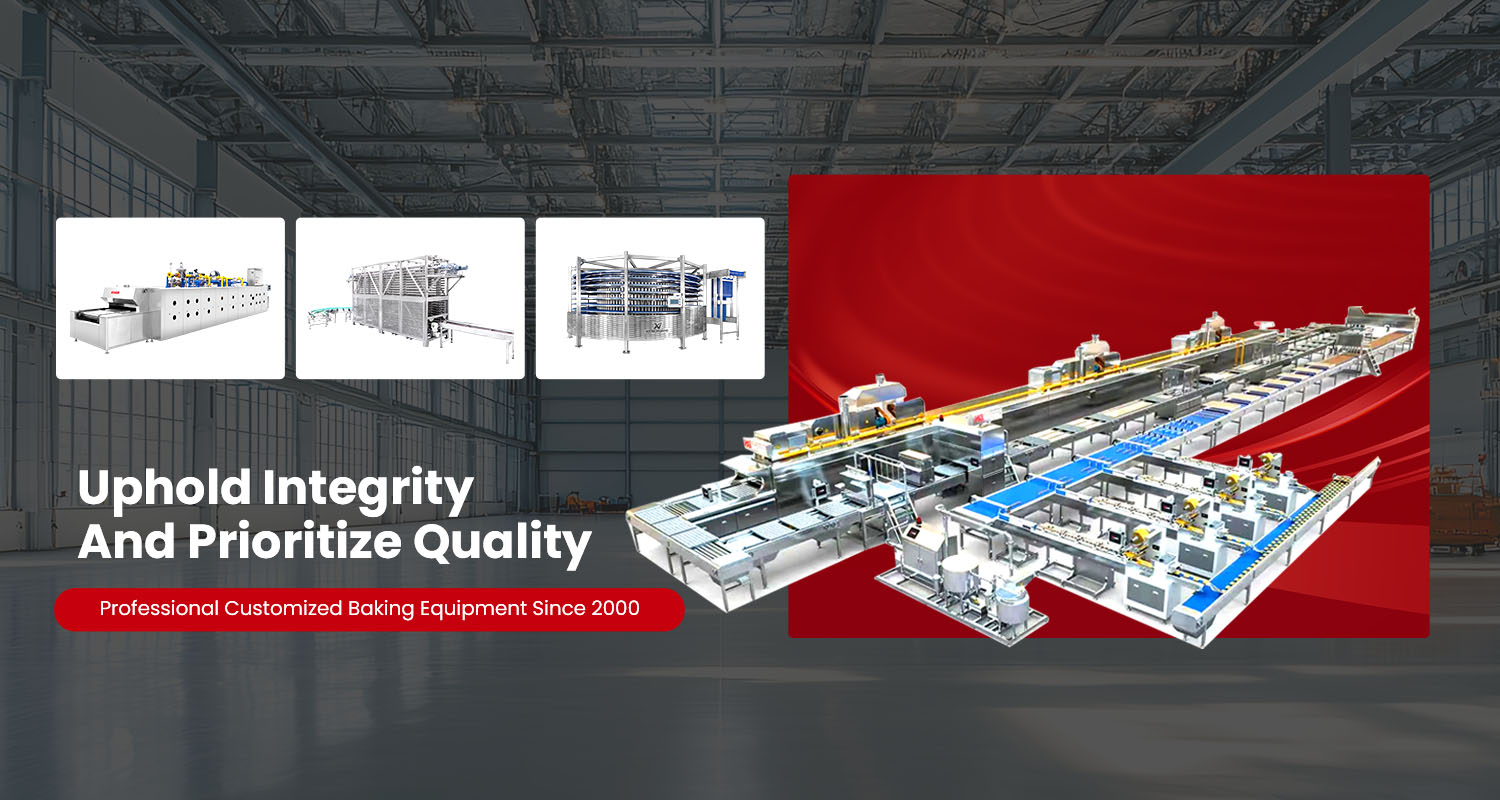
KC-SMART’s portfolio covers core modules that commonly form an industrial bakery machinery solution, including Fermentation Towers, Gas-fired Tunnel Furnaces, Depanning Machines, spiral cooling towers, and automatic sorting lines. That breadth helps keep safety logic, guarding philosophy, and hygienic interfaces consistent across the bakery production line instead of being patched together between unrelated subsystems.
What a strong manufacturer-led compliance package looks like
When you evaluate food processing equipment standards alignment, prioritize suppliers who can provide:
A complete risk assessment with clear residual risk communication aligned to ISO 12100
Safety function definitions and validation aligned to ISO 13849-1, with emergency stop design aligned to ISO 13850
Electrical documentation aligned to IEC 60204-1 and market expectations like NFPA 79 when relevant
Hygienic design rationale aligned to EN 1672-2 and hygienic design standards for equipment
Food-contact documentation suitable for the destination market, including EU 1935/2004 or US CFR alignment depending on where the line will run
Conclusion
Safety standards for industrial bakery equipment are best treated as an engineered system: legal compliance, machine safety design, hygienic design, and traceable verification. KC-SMART supports this approach through integrated design-to-commissioning delivery, helping keep safety architecture consistent across bakery processing equipment modules while meeting practical inspection and acceptance expectations in export markets.
Previous:
Next: How to Improve Bakery Production Efficiency with Automation?