





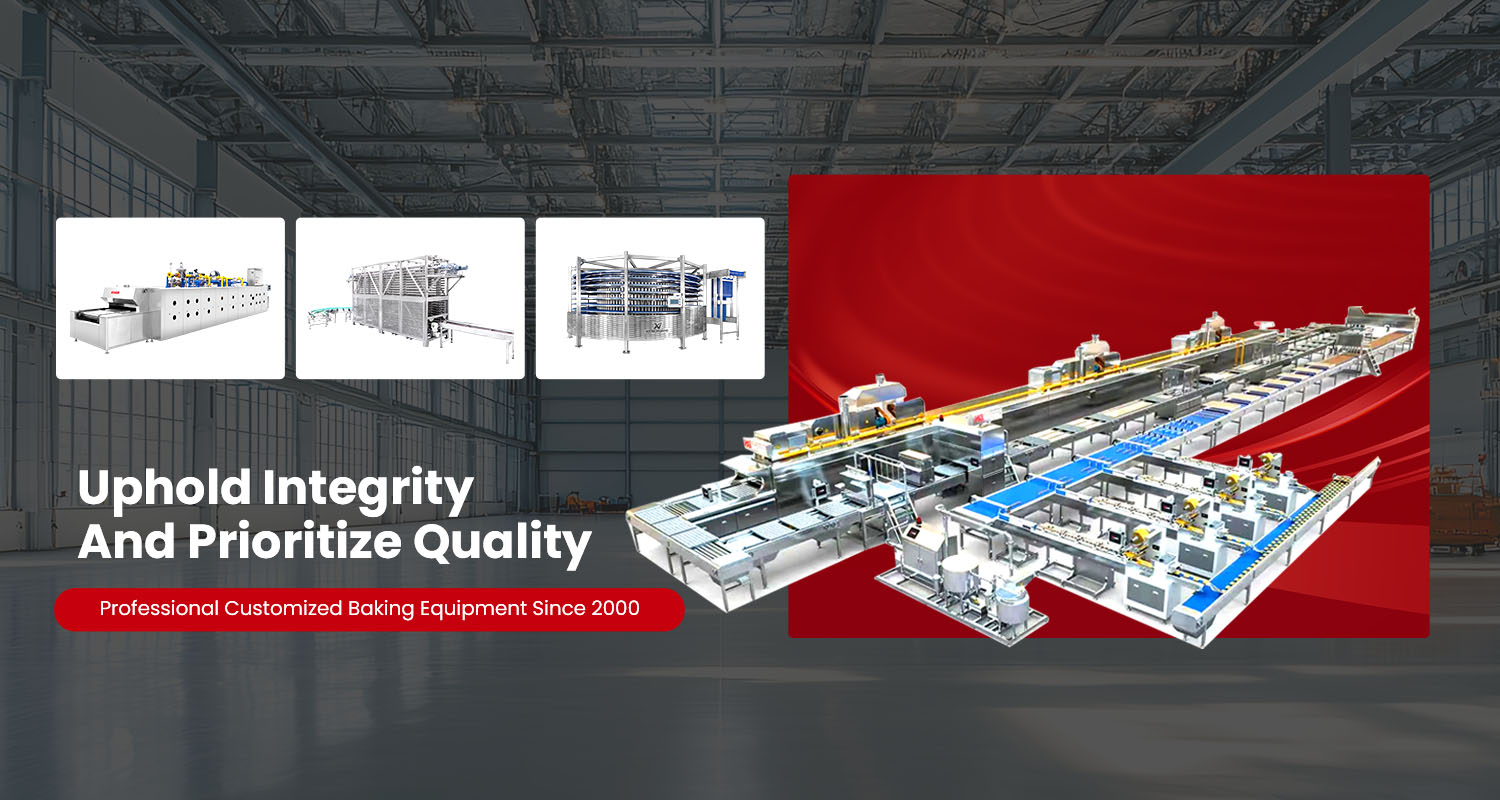
How Does a Fermentation Tower Improve Dough Quality?
In modern bakery production, dough quality is shaped long before the product reaches the oven. Fermentation is the stage where structure, flavor, gas retention, and final texture begin to stabilize. A Fermentation Tower improves this stage by giving dough a more controlled path, a more stable climate, and a more consistent residence time. KC-SMART focuses on intelligent baking equipment and provides one-stop solutions that cover design, manufacturing, installation, debugging, and after-sales maintenance. Founded in 2000, the company serves the baking industry with integrated systems that connect mixing, fermentation, baking, cooling, demolding, and material handling into one coordinated process.
Why fermentation control matters so much
Dough is highly sensitive to time, temperature, humidity, and handling. When one of these variables drifts, the result can be uneven proofing, weak internal structure, irregular volume, rough crumb, or unstable product color after baking. In large-scale production, straight manual proofing or loosely managed resting zones often create variation from tray to tray and shift to shift. A tower-based system improves repeatability because dough moves through a defined process instead of depending on scattered holding conditions. This is especially important when bakeries want stable output, lower waste, and predictable downstream performance. KC-SMART positions its equipment as part of an integrated bakery workflow, which supports that kind of process stability.
How a fermentation tower improves dough quality
A fermentation tower is designed to move dough pieces or trays through a controlled environment along a vertical path. This layout saves floor space while extending the effective proofing path, which helps the line maintain the target fermentation time without building a long horizontal tunnel. KC-SMART offers fermentation tower solutions within its bakery equipment portfolio, including spiral and vertical models, and describes this category as a compact, controlled system for proofing before baking or downstream processing.
More uniform fermentation
One major benefit is environmental consistency. In a properly designed tower, dough stays exposed to a managed climate rather than moving through fluctuating workshop conditions. More stable proofing reduces the risk of some trays becoming over-developed while others remain under-fermented. That consistency supports better gas cell formation, more even volume, and a cleaner crumb structure after baking. KC-SMART’s description of the fermentation tower emphasizes controlled climate and even exposure during the proofing path, which directly supports this quality goal.
Better dough handling
Dough quality is not only about climate. It is also about gentle transfer. Rough transport can damage surface tension and disrupt internal gas retention. A tower system helps by moving dough through a structured path with reduced random handling between stages. When proofed dough reaches baking in a more stable condition, the line is more likely to achieve repeatable shape and texture. This is one reason automated fermentation systems are valuable in continuous bakery production.
Stable residence time
Consistent proofing time is essential for product uniformity. A fermentation tower defines how long dough remains in the fermentation zone through line design, turning path, and transfer rhythm. On KC-SMART’s mooncake production line example, the fermentation tower is specified with a fermentation time of 20 minutes and a turning multiple of 2.2, showing how the company matches tower design to process timing within a full production system.
Quality improvements that buyers usually care about
From a production perspective, the advantages of a fermentation tower appear in the finished product as well as in line management.
More even volume
Stable fermentation helps dough develop more uniformly, reducing visible size differences across batches.Improved internal texture
Better gas retention and steadier proofing support a more regular crumb and more reliable mouthfeel.Cleaner surface and shape
Controlled movement and reduced manual disturbance help maintain dough integrity before baking.More predictable baking response
Dough that enters the oven at a consistent proofing stage is easier to bake to the same standard every time.Lower production variation
A controlled tower process helps reduce the gap between planned process settings and actual product results.
These outcomes align with KC-SMART’s broader approach to synchronized bakery equipment, where fermentation is treated as one connected step in the full line instead of an isolated machine.
Why tower design helps factory efficiency too
Dough quality and production efficiency are closely linked. A fermentation tower improves space utilization because it creates a long process path in a vertical footprint. KC-SMART states that its factory covers more than 10,000 square meters and supplies systems across mixing, fermentation, baking, cooling, and handling, which supports integrated line planning for industrial bakeries. For buyers, this matters because the fermentation solution must fit not only product targets but also workshop layout, labor strategy, transfer logic, and expansion plans.
Here is a simple comparison:
| Factor | Conventional open proofing area | Fermentation tower |
|---|---|---|
| Climate stability | More exposed to workshop variation | More controlled process environment |
| Floor space use | Larger horizontal footprint | Compact vertical layout |
| Residence time control | Harder to standardize | Easier to define in line design |
| Dough handling | More manual transfer risk | Structured automated movement |
| Batch consistency | More variation between trays | Better repeatability |
The compact vertical principle and controlled movement are core reasons this equipment is widely valued in automated bakery lines. KC-SMART’s product range includes both fermentation towers and Spiral Cooling Towers, showing its focus on vertical process solutions for bakery automation.
What to evaluate before selecting a fermentation tower
Not every tower will deliver the same result. Buyers should look at how the system matches product type, required fermentation time, tray format, belt material, transfer stability, cleaning access, and the connection with upstream and downstream machines. KC-SMART offers customizable designs and one-stop support across design, manufacturing, installation, and maintenance, which is useful when the goal is to align fermentation performance with the full bakery process rather than purchase a stand-alone unit.
A supplier should also understand the complete process, from dough preparation to baking and cooling. KC-SMART’s portfolio includes Dough Silo Systems, mixers, fermentation towers, tunnel furnaces, Depanning Machines, cooling towers, sorting lines, and supporting equipment, which gives the company the ability to think in terms of line compatibility and long-term production stability. That broader system view often has a direct impact on final dough quality because fermentation performance depends on what happens before and after the tower as well.
Why KC-SMART is relevant for fermentation projects
KC-SMART has been active since 2000 and presents itself as a high-tech enterprise serving global baking food customers with intelligent machinery and one-stop delivery. Its manufacturing site in Jiangmen covers more than 10,000 square meters, and its solutions span the major stages of bakery automation. That combination matters for buyers who need more than a single machine. It means the fermentation tower can be planned as part of a connected production system with installation, debugging, and after-sales support already considered.
In applications where space, consistency, and continuous throughput are all important, a spiral cake fermentation tower can be a practical answer because it combines vertical layout efficiency with controlled proofing logic. Whether the target product is bread, cakes, mooncakes, or other baked foods, the real value comes from stable dough development and fewer process variables across the line. KC-SMART’s fermentation tower range and integrated bakery equipment background make it well suited for manufacturers that want reliable proofing performance and stronger end-product consistency.
Conclusion
A fermentation tower improves dough quality by controlling the environment, stabilizing proofing time, reducing handling disturbance, and creating better consistency from tray to tray. Those improvements support more uniform volume, texture, and baking response, while also helping factories use space more efficiently. KC-SMART combines fermentation expertise with broader bakery line capability, making it easier to build a solution that works in real production conditions. For buyers comparing equipment options, the most valuable question is not only how the tower looks, but how well it fits the full dough journey from mixing to baking.