





What Industries Use Bakery Automation Machinery?
Bakery automation machinery is no longer limited to large bread factories. It is now used across multiple food production sectors where output stability, labor efficiency, hygiene control, and repeatable product quality matter every day. As bakery demand continues to expand worldwide, automated processing equipment is becoming a practical investment for manufacturers that need consistent throughput and scalable production. Industry research shows the global bakery processing equipment market is expected to reach USD 12.14 billion in 2025, while the wider bakery products market was valued at USD 495.6 billion in 2023 and is still growing steadily. That combination explains why more processors are moving from isolated machines to integrated automated lines.
For buyers evaluating production upgrades, the real question is not whether automation is useful, but which industries benefit most from it and what type of line configuration fits their product mix.
Industrial Bread And Bun Manufacturing
The first major user group is industrial bread and bun manufacturing. These plants run high-volume output, often on fixed schedules, and need stable control from dough handling to proofing, baking, cooling, depanning, and sorting. In this environment, manual operations create bottlenecks quickly. Variations in dough handling, tray transfer, or cooling rhythm can affect final texture, appearance, and packaging efficiency.
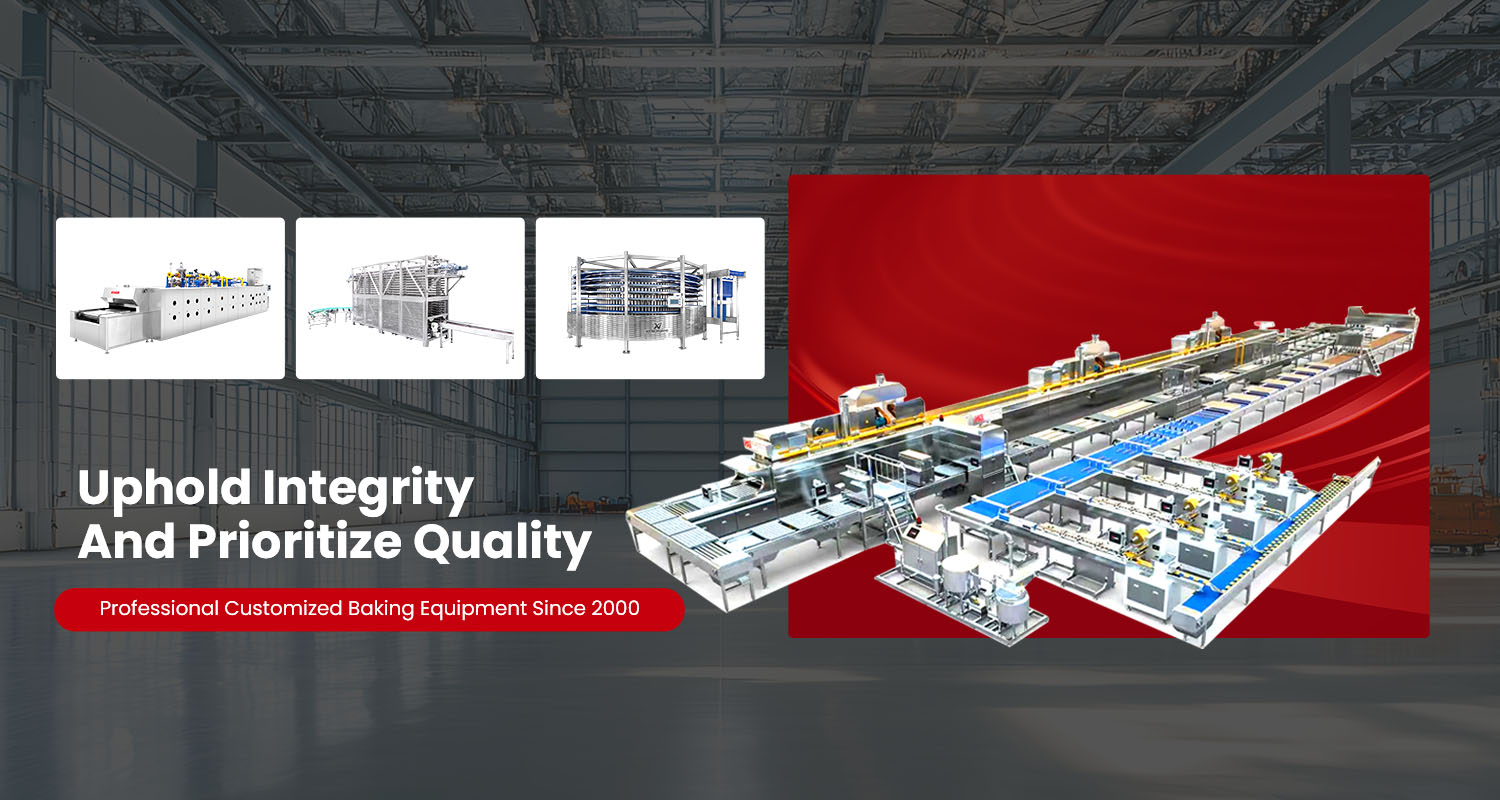
Automation helps bread and bun manufacturers standardize the entire flow. A coordinated line keeps each section matched to the next, which reduces idle waiting time and improves capacity planning. KC-SMART focuses on this kind of line-level coordination and offers equipment covering powder transportation, mixing, fermentation, baking, cooling, demolding, and material handling, making it suitable for plants that need continuous production rather than stand-alone equipment.
Biscuit And Cookie Processing
Biscuit and cookie factories are another core industry using bakery automation machinery. These products require repeatable dough feeding, controlled baking conditions, reliable depanning, and orderly downstream sorting. Since biscuits and cookies are often produced in long runs, even a small variation in transfer speed or oven stability can lead to waste across large batches.
KC-SMART states that it provides whole automatic biscuit production lines from material dosing to packing, which reflects what this segment demands most: synchronized process control. A Depanning Machine also becomes especially valuable in biscuit lines because it changes a manual, fatigue-sensitive step into a stable mechanical cycle, helping manufacturers reduce handling losses and improve rhythm consistency.
Frozen Bakery And Ready To Bake Products
Frozen bakery is one of the fastest-rising application sectors for automation. This includes frozen dough, par-baked bread, frozen pastries, and ready-to-bake product formats supplied to retail, foodservice, and distribution networks. The frozen bakery market is projected to grow from USD 74.24 billion in 2025 to USD 95.73 billion by 2030, showing how important volume-ready and shelf-life-friendly production has become.
This segment relies heavily on automation because product consistency affects thawing performance, baking recovery, appearance, and final eating quality. Cooling control, sorting efficiency, and transfer hygiene are all essential before freezing or later-stage handling. Spiral cooling systems and automatic sorting lines are especially relevant here, because they help manage floor space, product flow, and downstream handling with better line discipline.
Central Kitchens And Foodservice Supply Operations
Central kitchens that serve chain restaurants, cafés, hotels, and institutional catering also use bakery automation machinery. Their production model is different from that of retail bakeries. They may need repeated daily output for sandwich bread, burger buns, pizza bases, sweet baked items, or semi-finished dough products. What matters most is dependable supply, predictable labor needs, and equipment that supports stable turnover across multiple SKUs.
The foodservice sector remains a major and growing market segment in the wider away-from-home meal economy, which supports demand for bakery products made in centralized production environments. For these buyers, automation is attractive because it improves scheduling, reduces manual dependency, and helps maintain product consistency across multiple service locations.
Contract Food Manufacturers
Contract manufacturers are another important user group. These companies produce for private label clients, regional distributors, and brand owners that want flexible capacity without building their own factory network. They need equipment that can balance scale, changeover practicality, and long-term operating reliability. The bakery contract manufacturing market is forecast to grow strongly through 2030, reflecting how more food businesses are outsourcing production to specialized plants.
For this sector, bakery automation machinery supports two critical goals. The first is stable quality across repeated orders. The second is scalable output when customer volume grows. This is where a supplier with experience in integrated line design is more useful than a machine seller focused on only one process point. KC-SMART highlights in-house capability across customized design, manufacturing, installation, commissioning, and after-sales maintenance, which is important for contract plants that need practical engineering support through the full project cycle.
Specialty Bakery Producers With Growth Plans
Automation is also increasingly used by specialty bakeries that have moved beyond workshop scale. This includes producers of premium buns, layered baked products, seasonal bakery lines, and region-specific baked foods. These companies may not start with the largest capacity, but they often need equipment that protects product identity while improving labor efficiency and yield.
In this case, the best automation strategy is usually modular rather than excessive. A Fermentation Tower, tunnel oven, spiral cooling tower, depanning section, or sorting line can be introduced step by step based on the product profile. KC-SMART positions itself around intelligent baking equipment and custom-built machinery solutions, which suits manufacturers that need process matching instead of standard equipment copied from another factory layout.
Why Different Industries Are Investing In Automation
Although these industries produce different products, their buying logic is often similar. They want more than faster output. They want control.
| Industry Segment | Main Production Need | Suitable Automation Focus |
|---|---|---|
| Bread and bun plants | Stable high-volume throughput | Dough handling, proofing, tunnel baking, cooling |
| Biscuit and cookie factories | Repeated quality in long runs | Baking, depanning, sorting, line synchronization |
| Frozen bakery producers | Consistency before freezing and distribution | Cooling, transfer, sorting, hygiene-focused flow |
| Central kitchens | Reliable daily supply for multiple outlets | Flexible batching, baking, cooling, handling |
| Contract manufacturers | Scalable capacity for different clients | Integrated line design, stable changeover support |
| Specialty bakery producers | Efficiency without losing product identity | Modular automation with customized configuration |
Why KC-SMART Fits Industrial Bakery Upgrades
KC-SMART is positioned for manufacturers that need more than a single machine purchase. According to its official information, the company was founded in 2000, operates from a facility of more than 10,000 square meters, and is trusted by more than 300 customers. Its product range covers Dough Silo Systems, fermentation towers, Liquid Brushing Applicators, gas-fired tunnel ovens, depanning machines, spiral cooling towers, automatic sorting lines, and supporting equipment. The company also states that it provides one-stop support from design and manufacturing to installation, debugging, and after-sales maintenance.
That matters because bakery buyers are rarely just buying steel and motors. They are buying production continuity, cleaner process control, and a line structure that can keep pace with future orders. For companies seeking customized bakery food machinery, that full-process support can reduce project risk and improve the practical value of automation over time.
Final Thoughts
The industries that use bakery automation machinery most actively today include industrial bread plants, biscuit and cookie factories, frozen bakery producers, central kitchens, contract manufacturers, and growth-stage specialty bakeries. What links them together is the need for repeatable quality, lower labor pressure, controlled throughput, and a production system that can scale with demand.
KC-SMART offers an equipment portfolio built around integrated bakery production, which makes it a strong option for manufacturers planning to improve efficiency without losing process stability. A well-matched automation line can help turn daily production from a labor-heavy routine into a controlled and expandable system. To discuss a line configuration that matches your bakery products and target capacity, you can contact KC-SMART for a technical review.
Previous: