





How Long Do Industrial Baking Machines Last?
Industrial baking machines are long-term production assets, not short-cycle purchases. In most factories, well-built equipment is expected to deliver reliable service for many years, but the true answer depends on machine type, workload, cleaning discipline, preventive maintenance, and how well the full line is designed from the start. Across commercial and industrial food equipment, a practical service life is often around 10 to 15 years under proper care, while some oven systems and heavy-duty machines can continue operating closer to 20 years when maintenance is consistent and wear parts are replaced on time.
For baking plants, lifespan is not only about whether a machine still runs. The more important question is whether it can still hold temperature stability, maintain throughput, protect hygiene, and support consistent product quality shift after shift. A tunnel oven, Fermentation Tower, Depanning Machine, or cooling tower may stay in service for a long period, but once downtime rises, energy use climbs, or product uniformity starts drifting, the real operating value begins to fall. That is why experienced buyers evaluate total lifecycle performance instead of looking only at purchase price. Preventive maintenance is widely recognized as a core factor in extending equipment life and keeping production stable.
Typical Service Life By Equipment Category
Different bakery machines age at different speeds because they face different loads, temperatures, and sanitation demands.
| Equipment type | Common service life range | Main wear drivers |
|---|---|---|
| Industrial ovens | 10 to 20 years | Heat stress, burners, airflow systems, controls |
| dough mixers | 8 to 15 years | Gear load, seals, motors, operator usage |
| Fermentation systems | 10 to 15 years | Humidity, drive systems, sensors |
| Cooling towers and conveyors | 10 to 15 years | Bearings, chains, belts, airflow contamination |
| Depanners and sorting lines | 8 to 12 years | Repetitive motion, alignment, pneumatic parts |
These ranges are planning benchmarks, not guarantees. A lightly loaded line with disciplined servicing may run longer, while a high-output plant with poor sanitation control may face major repairs much earlier. Commercial oven guidance commonly places lifespan around 10 to 15 years, with some deck and heavy-duty systems lasting longer under good maintenance.
What Shortens Machine Life Fastest
In industrial baking, the biggest lifespan killers are usually not dramatic failures. They are small daily stresses that accumulate unnoticed. Flour dust, sugar residue, oil vapor, heat cycling, chain tension drift, bearing wear, and neglected lubrication gradually push machines out of tolerance. Food plants are also expected to control dust and airborne contamination risks, which makes ventilation, sanitation, and cleanable equipment design especially important.
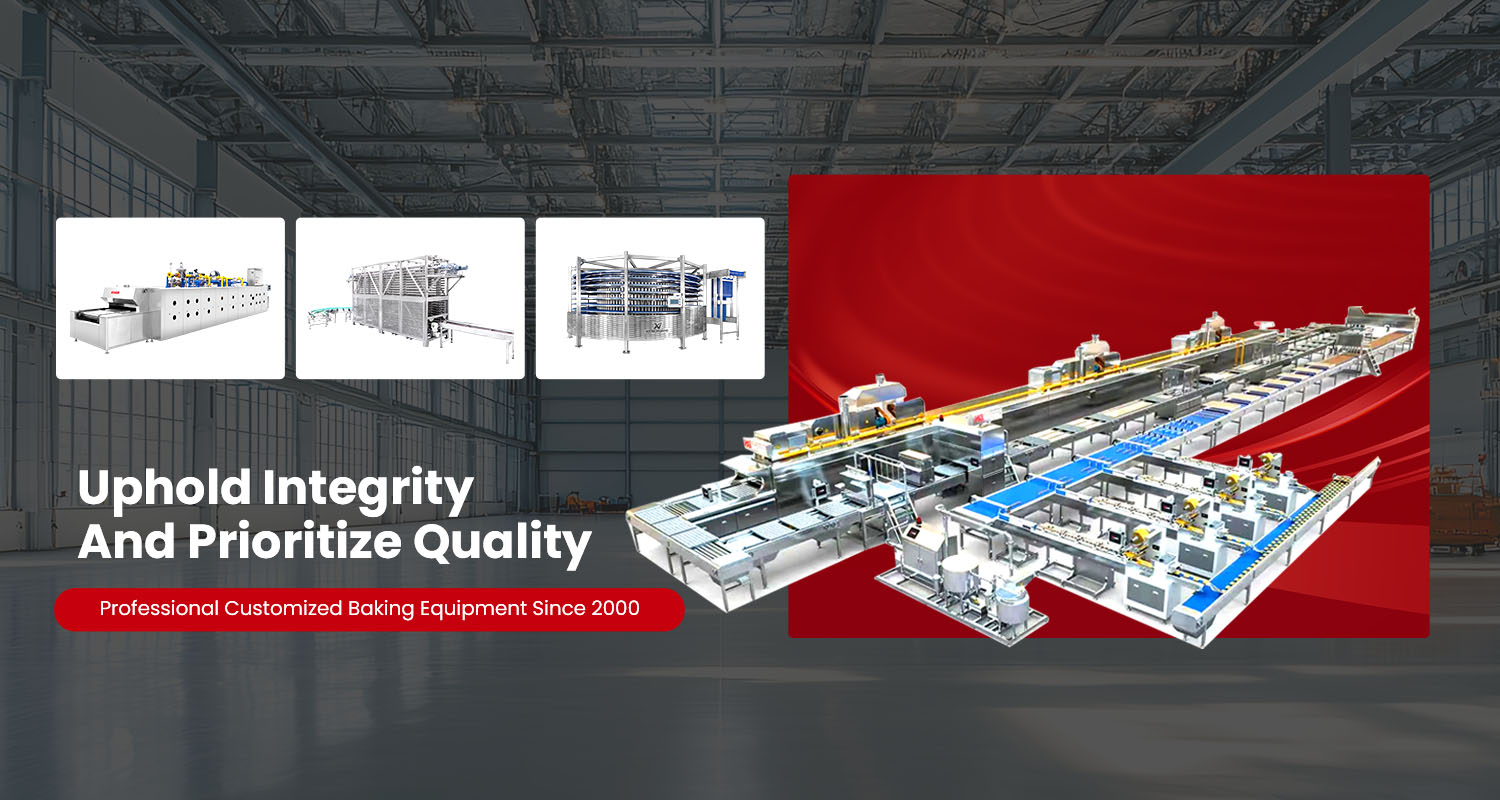
Another common problem is line imbalance. If upstream and downstream machines are not matched correctly, one section of the line becomes overloaded while another waits. That stop-start pattern increases mechanical stress, creates unstable product flow, and often reduces the useful life of motors, conveyors, and control components. Buyers who source a complete system from one engineering team often reduce this risk because guarding logic, transfer interfaces, and production rhythm are easier to standardize across the line. KC-SMART’s product range covers major bakery process stages including dough handling, fermentation, baking, cooling, depanning, and sorting, which supports more unified line integration.
How To Make Industrial Baking Machines Last Longer
The plants that get the longest service life usually follow a simple rule: clean on schedule, inspect on schedule, replace wear parts before failure, and track trends instead of reacting late. Industry maintenance guidance consistently emphasizes routine inspection, deep cleaning, preventive servicing, and written maintenance programs because these actions protect both uptime and food safety.
A strong maintenance approach usually includes:
Daily removal of flour, oil, crumbs, and residue from critical zones
Weekly inspection of chains, bearings, sensors, and drive components
Regular calibration of temperature and airflow related systems
Scheduled replacement of belts, seals, and other predictable wear parts
Post-maintenance cleaning before the line returns to production
This is where supplier capability matters. KC-SMART presents itself as a one-stop provider offering customized design, manufacturing, installation, debugging, and after-sales maintenance support. The company says it was founded in 2000, operates from a facility of over 10,000 square meters, and provides equipment covering core bakery processing stages. For buyers, that matters because lifecycle value improves when commissioning, training, and maintenance support come from a manufacturer familiar with the whole line rather than only one isolated machine.
When Repair Still Makes Sense
A machine does not need replacement just because it is old. Repair is still a rational choice when the frame is sound, spare parts remain available, controls can be updated, and the machine still meets output and hygiene requirements. In many cases, replacing burners, motors, bearings, sensors, or conveyor components can restore years of useful service at far lower cost than a full line change.
Replacement becomes easier to justify when three problems appear together: frequent downtime, unstable product quality, and rising operating cost. Once a machine starts consuming too much labor, energy, or maintenance attention, its calendar age becomes less important than its production economics.
Why Buyers Look Beyond Years
For serious bakery operations, the best question is not simply how many years a machine can last. The better question is how many years it can perform at a level that protects margin, product consistency, sanitation, and delivery reliability. A machine that runs for 15 years with stable output is a stronger investment than one that physically survives 20 years but causes constant interruptions in year eight.
That is why KC-SMART’s model is relevant for industrial buyers. Its focus on intelligent baking equipment, full-line solutions, and support across installation and maintenance aligns with the real factors that influence service life in production environments.
Conclusion
Industrial baking machines commonly last around 10 to 15 years, and heavy-duty systems may remain productive closer to 20 years when maintenance is disciplined and line design is sound. The real determinant is not age alone, but how well the equipment is built, cleaned, serviced, and integrated into daily production. Buyers who invest in complete engineering support, preventive maintenance planning, and equipment matched to real capacity needs usually get the longest useful life and the lowest long-term risk. For bakery manufacturers evaluating new lines or upgrades, KC-SMART offers an approach built around integrated solutions, technical coordination, and long-term operating value.