





What Safety Standards Apply to Baking Equipment?
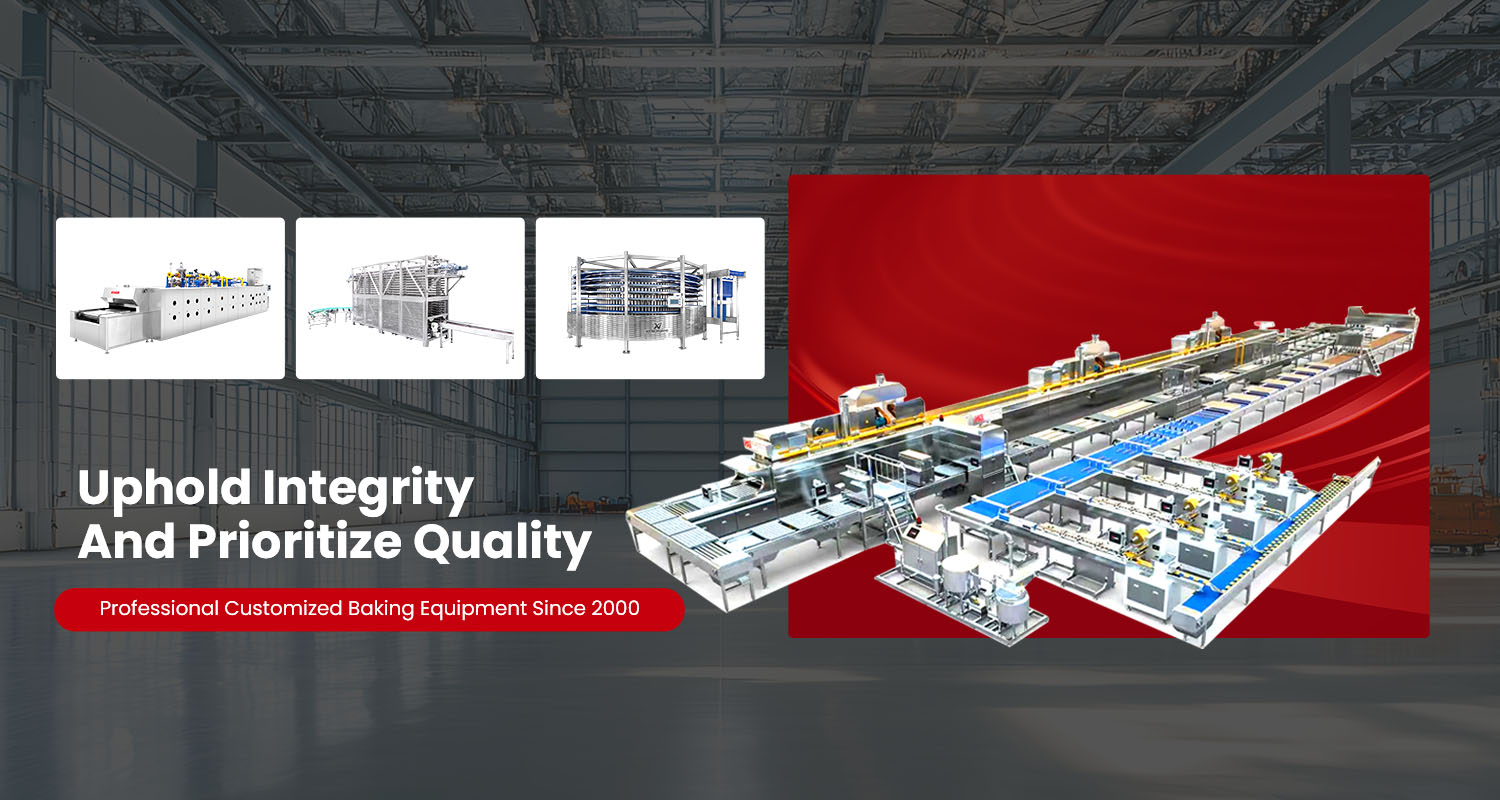
Safety standards are one of the first checkpoints serious buyers review before they approve a baking equipment supplier. In industrial baking, safety is not limited to preventing operator injury. It also covers food-contact hygiene, electrical reliability, thermal protection, machine guarding, documentation, traceability, and stable long-term operation. For lines such as dough handling, fermentation, tunnel baking, cooling, depanning, and sorting, the real question is not whether a machine looks strong, but whether it can meet the regulatory and operating demands of the target market. KC-SMART has focused on intelligent bakery equipment since 2000 and provides one-stop support from design and manufacturing to installation, commissioning, and after-sales service, which is valuable because compliance usually depends on both equipment design and delivery execution.
Why safety standards matter in bakery production
A baking line runs under heat, motion, pressure, and repeated washdown or cleaning cycles. If standards are overlooked, the result can be far more costly than a failed audit. Buyers often face hidden risks such as difficult-to-clean structures, exposed transmission areas, unstable electrical components, poor guarding, and missing compliance files. These issues affect acceptance, installation speed, operator training, maintenance cost, and even export clearance. That is why safety standards should be reviewed as part of the purchasing process, not after the machine arrives. KC-SMART’s product range covers multiple bakery stages, which helps buyers evaluate safety as a full-system issue rather than as isolated equipment decisions.
The main safety standards buyers should check
CE for the European market
For equipment entering the European market, CE marking is a core requirement for applicable machinery. It shows that the manufacturer has assessed conformity with relevant safety, health, and environmental requirements and prepared the technical documentation that supports that declaration. For bakery machinery, this usually connects to machinery safety, electrical compliance, and hygiene-oriented design expectations. CE is important because many buyers need documentation that supports installation approval and internal compliance review before production starts.
UL or ETL for North America
For the United States and Canada, buyers commonly ask for third-party certification from a Nationally Recognized Testing Laboratory such as UL or ETL. This is especially relevant for equipment with heating systems, motors, control cabinets, sensors, and other powered components. These marks help show that the equipment has been independently evaluated for electrical and broader operational safety. For importers and plant engineering teams, this reduces approval friction and lowers uncertainty during commissioning.
NSF and food equipment sanitation standards
bakery equipment must also support sanitation, not only mechanical safety. NSF standards are widely used in commercial food equipment evaluation. NSF notes that NSF/ANSI 2 covers food handling equipment and includes bakery units, while NSF/ANSI 4 applies to commercial cooking and hot food equipment, and NSF/ANSI 51 addresses materials and finishes used in commercial food equipment. For buyers, these standards matter because they relate directly to cleanability, food-contact suitability, and sanitary construction.
Hygiene design standards
In bakery production, hygiene design is often where strong suppliers separate themselves from risky ones. Standards and guidance connected to bakery hygienic design emphasize smooth food-contact surfaces, easy cleaning access, reduced residue buildup, and minimized contamination risk. EN 1672-2 sets common hygiene and cleanability requirements for food processing machinery, while bakery-sector guidance also references ANSI Z50.2 for sanitary bakery equipment design. These are practical standards, not just paperwork, because they influence downtime, cleaning labor, and food safety control.
What buyers should review beyond the certificate
A certificate alone does not tell the full story. Buyers should also check the structure of guards, emergency stop layout, control cabinet quality, wiring organization, food-contact material records, weld finishing, access for maintenance, and availability of manuals in the target language. It is also useful to confirm whether the supplier can provide a declaration of conformity, risk assessment documents, layout support, and after-sales guidance. KC-SMART presents itself as a one-stop solution provider with coverage across powder transportation, mixing, fermentation, baking, cooling, demolding, and material handling, which can help buyers reduce coordination gaps between separate suppliers.
A practical checklist for baking equipment sourcing
| Area | What to confirm | Why it matters |
|---|---|---|
| Market compliance | CE, UL, or ETL status based on destination | Supports import, installation, and acceptance |
| Hygiene design | Cleanable structure, smooth food-contact surfaces, low residue retention | Reduces contamination risk and cleaning time |
| Food-contact materials | Material certificates and traceability | Supports food safety documentation |
| Electrical safety | Control panel quality, wiring protection, emergency stops | Improves operator safety and system stability |
| Documentation | Manuals, drawings, declarations, maintenance records | Speeds up training and commissioning |
| Supplier capability | Installation, debugging, spare parts, service response | Lowers downtime after delivery |
Why KC-SMART is relevant for safety-focused buyers
A buyer looking at baking equipment standards is usually also trying to avoid fragmented responsibility. When the design team, manufacturing team, installer, and after-sales team are disconnected, safety documentation and real operating performance often drift apart. KC-SMART states that it was founded in 2000, operates from a facility of over 10,000 square meters, and provides integrated support from customized design through maintenance. That combination is useful for buyers who want not only compliant equipment, but also coordinated execution across the full bakery line.
Conclusion
The safety standards that apply to baking equipment usually fall into four core areas: machinery compliance, electrical safety, food-contact sanitation, and hygienic design. For most buyers, the safest sourcing approach is to review certificates together with drawings, material records, cleanability details, and service capability. That is how you reduce approval risk, protect production continuity, and improve long-term equipment value. KC-SMART’s integrated bakery equipment experience and one-stop delivery model make it easier to connect compliance requirements with real factory execution. If you are evaluating a new baking line or replacing key equipment, share your target market and production needs with KC-SMART to discuss a solution that matches both safety expectations and operational goals.
Previous: