





How to Optimize Bakery Production Workflow?
Production inefficiency in bakeries rarely comes from a single machine. It usually results from disconnected steps, uneven timing, and poor coordination between stages. From ingredient handling to final sorting, every section must work as a continuous system. A well-structured bakery production workflow helps reduce delays, stabilize output, and lower operating costs while maintaining product quality.
Industry data from the European Bakery Association shows that optimized production layouts can improve overall output by more than 20 percent while reducing labor dependency. This highlights the importance of workflow design as a key driver of efficiency in modern baking plants.
Understand where inefficiencies occur
Before making improvements, it is essential to identify where time and resources are being lost.
Material handling delays
Inefficient flour transfer, manual dosing, or inconsistent mixing can create bottlenecks at the very beginning of the line. When raw materials are not delivered in a stable and timely manner, every downstream stage is affected.
Process imbalance between stages
If fermentation capacity does not match oven throughput, or cooling systems cannot handle output volume, products will accumulate between stages. This imbalance interrupts flow and reduces efficiency.
Excessive manual intervention
Manual transfer between production steps increases labor cost and introduces variability. It also slows down production speed and increases the risk of handling damage.
Lack of system integration
Independent machines that do not communicate or synchronize properly can cause inconsistent timing. This leads to uneven product quality and frequent adjustments during production.
Build an efficient production structure
To optimize bakery production process, the focus should be on creating a smooth and continuous flow rather than isolated improvements.
Design a balanced production line
A strong food processing line design ensures that each stage operates at a similar capacity. Ingredient handling, fermentation, baking, cooling, and sorting must be aligned so that no section becomes a bottleneck. This balance allows the line to run continuously without unnecessary stops.
Standardize production rhythm
Consistency in timing is critical. Dough pieces should move through each stage at a controlled and predictable pace. Automated conveying systems help maintain this rhythm and reduce variation caused by manual handling.
Integrate equipment into one system
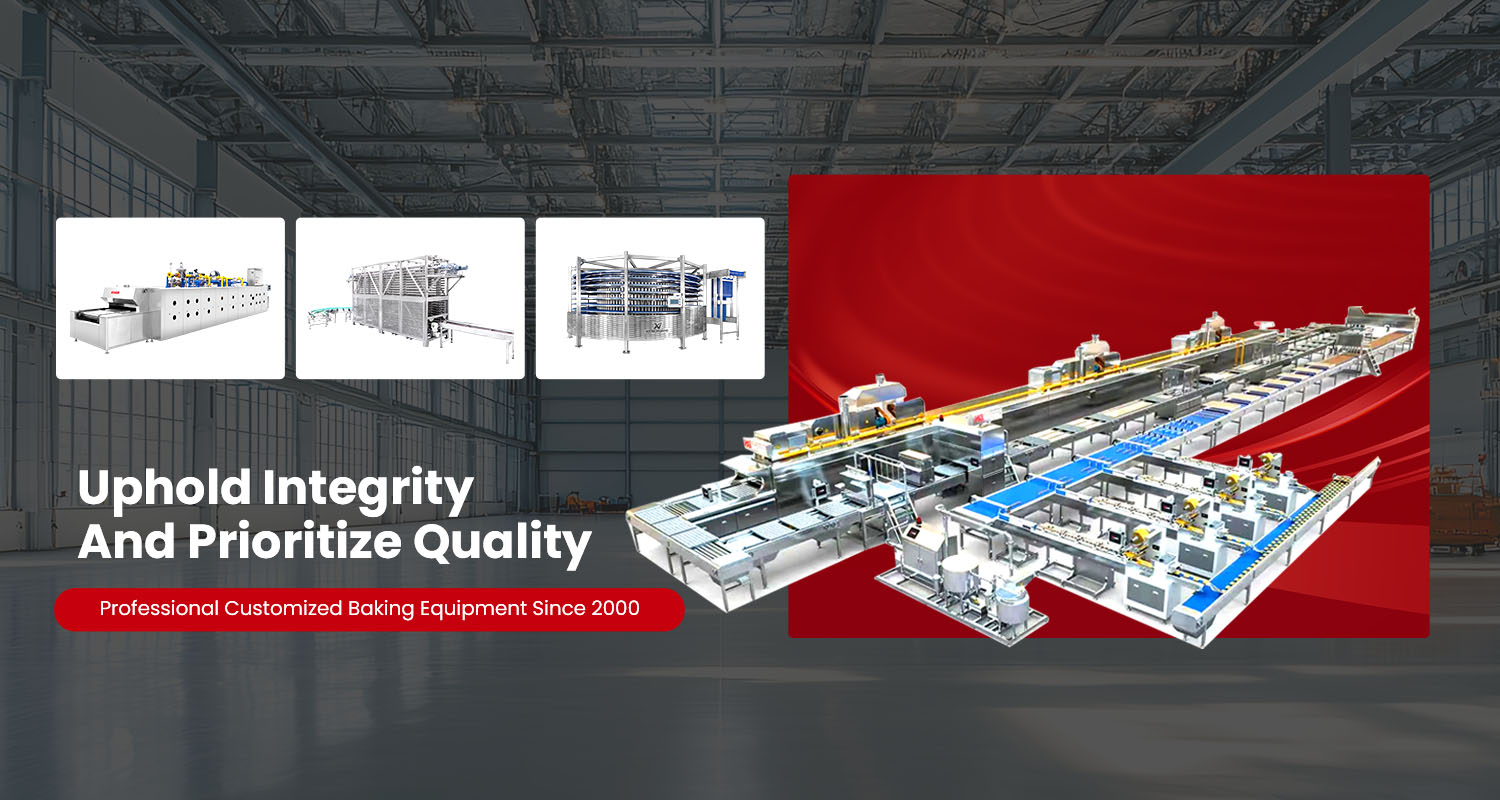
Modern bakeries benefit from integrated production lines where machines are connected and synchronized. KC-SMART provides solutions that link dough handling, fermentation, baking, cooling, and sorting into a unified system. This approach improves coordination and reduces inefficiencies caused by disconnected equipment.
Reduce manual handling
Automation is one of the most effective ways to improve factory workflow efficiency. By replacing manual transfer with automated systems, production becomes faster, more stable, and less dependent on labor availability.
Optimize key production stages
Ingredient feeding and mixing
Stable dosing systems ensure consistent dough preparation. Automated feeding improves accuracy and reduces variation at the start of the process.
Fermentation flow
Continuous fermentation systems provide controlled timing and environment. This reduces inconsistencies compared to batch-based proofing methods.
Baking synchronization
Oven speed and temperature must match upstream and downstream capacity. Stable baking conditions help maintain consistent product quality.
Cooling and handling
Cooling systems should be designed to handle full production output without creating congestion. Efficient product transfer after baking supports continuous flow.
Sorting and discharge
Automated sorting lines reduce manual work and maintain steady output at the end of the line. This ensures that finished products are handled efficiently and consistently.
Use data to support workflow improvement
Data-driven decisions play an important role in industrial workflow optimization. Monitoring production speed, downtime, and output consistency helps identify areas for improvement. Key performance indicators such as throughput rate, labor efficiency, and equipment utilization provide clear insights into how well the workflow is functioning.
Research from Lawrence Berkeley National Laboratory highlights that process optimization and equipment upgrades can significantly improve productivity while reducing energy consumption in food manufacturing environments. This reinforces the value of continuous improvement in production workflow design.
The role of integrated solutions
Workflow optimization is most effective when supported by equipment designed for system-level performance. KC-SMART offers integrated bakery production solutions that cover the entire process, from raw material handling to final sorting. Its ability to provide design, manufacturing, installation, and commissioning ensures that each stage is aligned with the overall workflow.
By focusing on system integration, KC-SMART helps reduce mismatches between equipment, improve production stability, and enhance overall efficiency.
Creating a stable and efficient production system
An optimized bakery workflow is built on balance, consistency, and integration. When each stage operates in harmony, production becomes smoother, output increases, and quality remains stable.
Improving workflow is not about adding more machines. It is about designing a process where every step supports the next. With the right structure and integrated solutions, bakeries can achieve higher efficiency, lower costs, and more reliable production performance.
Previous: