





How to Ensure Food Safety in Bakery Line?
Food safety in a bakery production line depends on how well every stage is controlled, from raw material intake to final packaging. Modern bakeries are no longer judged only by product taste or output capacity. Consistent safety performance, traceability, and compliance with international standards have become core requirements. KC-SMART, with years of experience in integrated bakery equipment manufacturing, provides complete line solutions that help manufacturers build stable, safe, and efficient production systems.
Control begins with raw material management
The first step in effective bakery food safety control is strict management of incoming materials. Flour, yeast, sugar, fats, and additives must be sourced from verified suppliers and inspected before entering production. According to FAO and WHO data, contamination in raw materials is one of the leading causes of food safety incidents in processed foods. Establishing clear supplier qualification systems and batch traceability ensures that any issue can be quickly identified and isolated.
Storage conditions are equally important. Temperature, humidity, and pest control must be monitored to prevent deterioration. Dry storage areas should remain clean and well-ventilated, while perishable ingredients must be kept within defined temperature ranges to reduce microbial growth risks.
Hygienic production environment and equipment
A clean production environment is essential to maintaining food processing hygiene. Bakery facilities should implement zoning principles that separate raw handling areas from baked product zones. This reduces cross-contamination risks and aligns with international food safety systems such as HACCP.
Equipment plays a critical role in this process. Adopting hygienic equipment design ensures that machinery surfaces are smooth, corrosion-resistant, and easy to clean. Stainless steel structures, minimal dead corners, and accessible cleaning points help reduce residue buildup and microbial risks. KC-SMART designs its bakery equipment with these principles, allowing operators to maintain sanitation efficiency without slowing down production.
Airflow control also matters. Positive pressure systems in clean zones help prevent dust and contaminants from entering critical areas such as cooling and packaging sections.
Process control during production
Each stage in the bakery line must be monitored to ensure bakery hygiene standards are consistently met. Mixing, fermentation, baking, cooling, and slicing all involve different risk factors.
Fermentation is one of the most sensitive stages. Temperature and humidity must be precisely controlled to prevent unwanted microbial activity. Equipment such as a spiral food Fermentation Tower allows stable and uniform fermentation conditions while reducing manual handling. This improves both product consistency and hygiene control.
Baking acts as a key kill step, where high temperatures eliminate most harmful microorganisms. However, safety risks do not end after baking. Improper handling during cooling or transfer can reintroduce contaminants. Controlled conveyor systems and enclosed cooling environments help maintain product integrity.
Personnel hygiene and operational discipline
Human factors remain one of the most critical elements in food safety. Workers must follow strict hygiene protocols, including hand washing, protective clothing, and controlled access to production areas. Training programs should be continuous rather than one-time events.
Data from the World Health Organization indicates that improper food handling contributes significantly to foodborne illness cases worldwide. Clear standard operating procedures and regular audits help reduce human-related risks and improve consistency across shifts.
Cleaning and sanitation systems
Regular cleaning and sanitation are essential to improve food safety compliance. A structured cleaning schedule should cover all equipment, floors, walls, and contact surfaces. Cleaning-in-place systems can be integrated into certain equipment to reduce downtime and ensure repeatable sanitation performance.
Sanitation chemicals must be selected carefully to ensure effectiveness without leaving harmful residues. Verification methods such as surface swab testing and ATP monitoring provide measurable proof that cleaning standards are met.
Traceability and quality monitoring
Traceability systems allow manufacturers to track every batch from raw material to finished product. This is essential for rapid response in case of quality issues. Digital monitoring systems can record temperature, humidity, and process parameters in real time, creating a transparent production history.
Below is a simplified example of key control points in a bakery line:
| Process Stage | Key Control Parameter | Safety Focus |
|---|---|---|
| Raw material intake | Supplier verification | Contamination prevention |
| Mixing | Time and cleanliness | Cross-contact control |
| Fermentation | Temperature and humidity | Microbial stability |
| Baking | Core temperature | Pathogen elimination |
| Cooling | Air quality and speed | Recontamination prevention |
| Packaging | Environment control | Shelf life protection |
Integrated solutions from equipment manufacturers
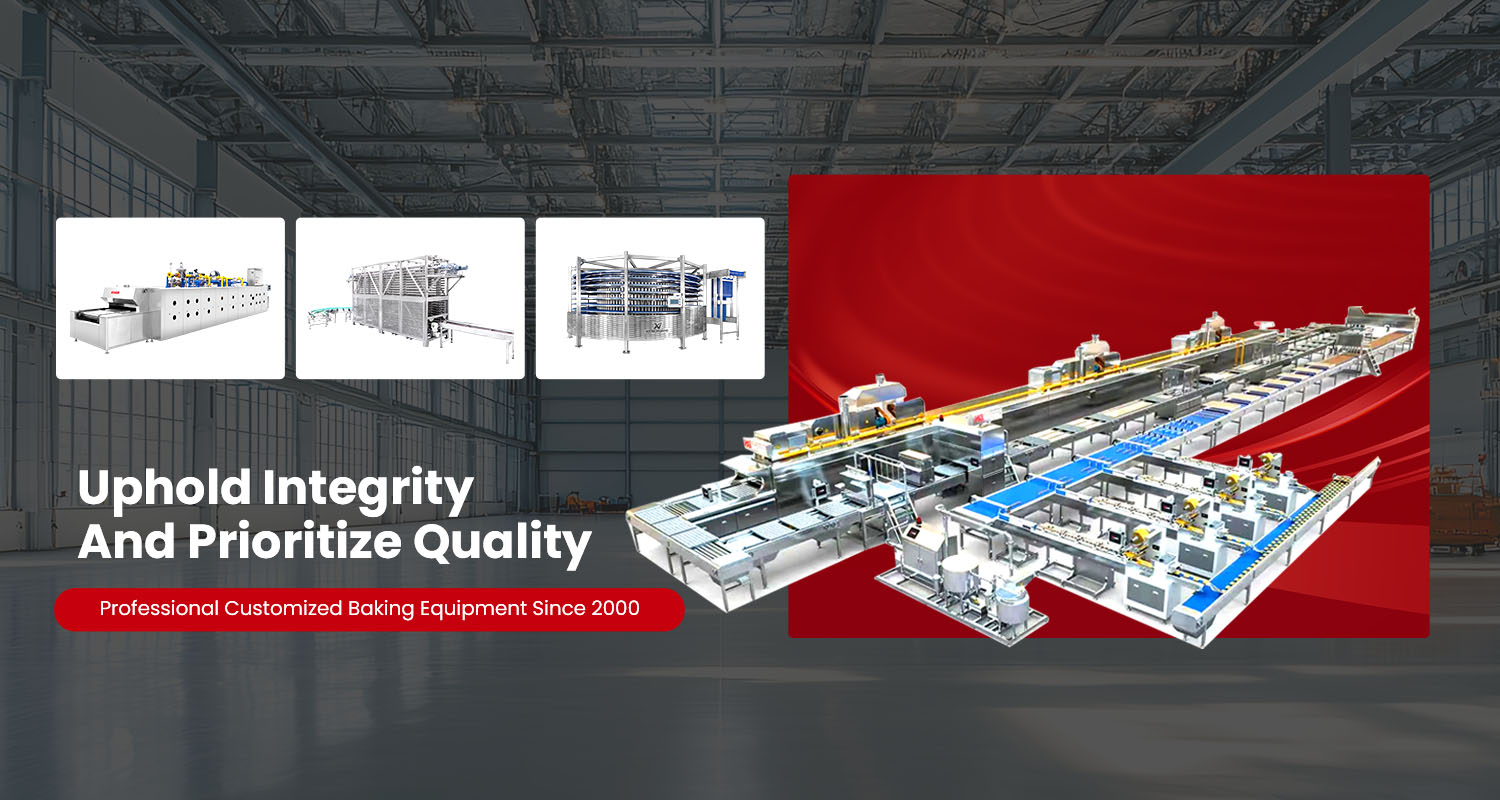
Ensuring food safety is not only about individual machines but about how the entire line works together. KC-SMART provides integrated bakery processing solutions that connect mixing, fermentation, baking, cooling, and packaging into a coordinated system. This reduces manual intervention, lowers contamination risks, and improves production efficiency.
The company operates with a complete in-house capability covering design, manufacturing, installation, and after-sales support. With a production facility of over 10,000 square meters and years of industry experience, KC-SMART focuses on delivering reliable, hygienic, and scalable solutions that support long-term operational stability.
Conclusion
Food safety in a bakery line requires a combination of strict raw material control, hygienic equipment, disciplined operations, and continuous monitoring. Every stage must be aligned to prevent contamination and maintain product integrity. By integrating advanced equipment design with structured process management, manufacturers can achieve consistent safety performance while supporting efficient production growth.