





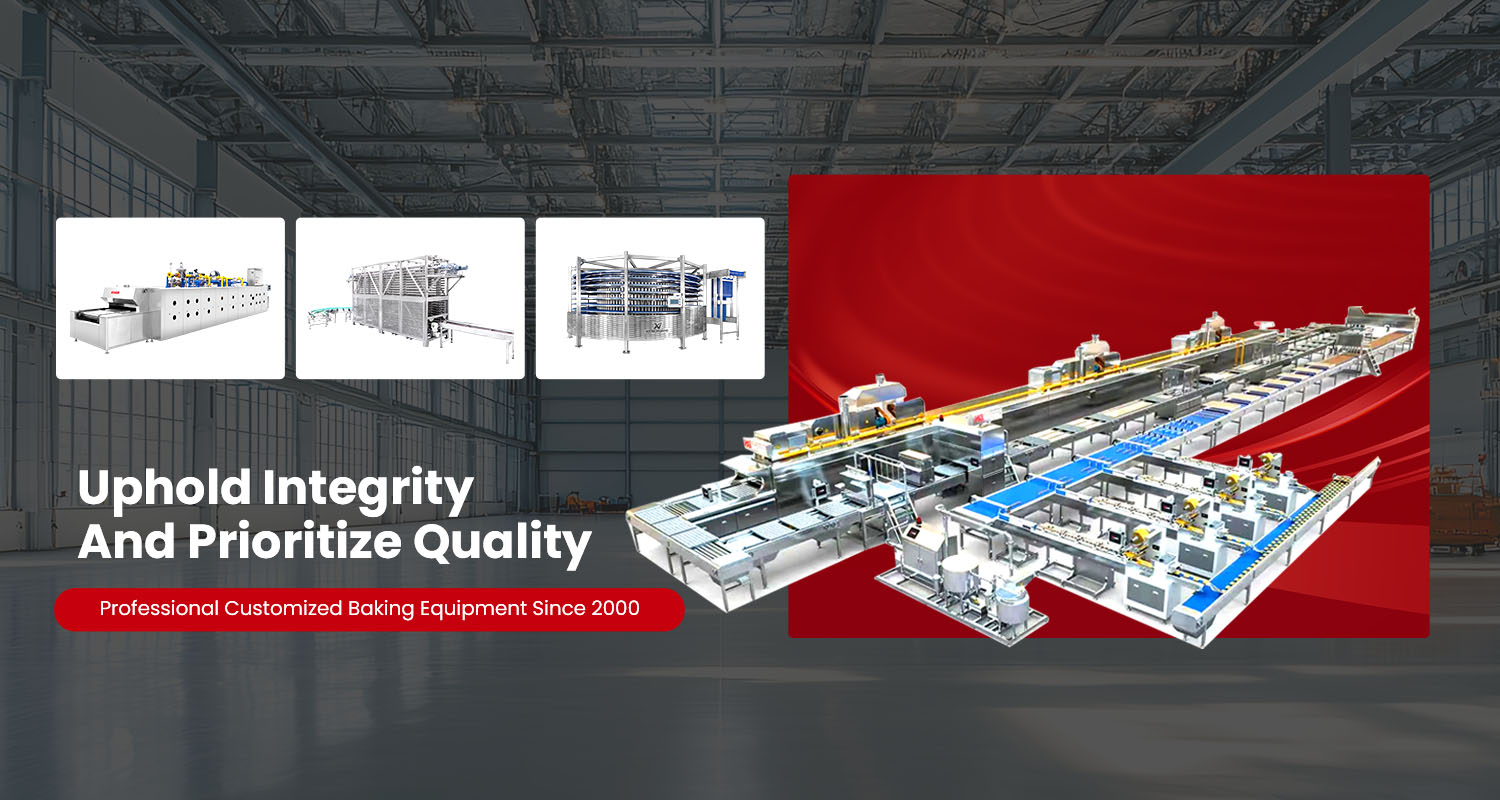
What Is Gas Fired Tunnel Oven?
Continuous bakery production needs controlled heating, product movement, and repeatable discharge conditions. A gas fired tunnel oven uses gas burners as the main heat source while products travel through a long insulated chamber on a conveyor or supporting surface. It is designed for steady operation.
How the Oven Works
Products enter at controlled spacing and move continuously through several heating sections. Each section may have its own temperature setting, burner control, airflow arrangement, and exhaust condition. Conveyor speed determines residence time, while zone settings shape the baking profile.
The tunnel oven system must match heat input with product load. When loading changes, the controls should respond without large temperature swings that affect color, moisture, or internal texture.
Main Components
A typical configuration includes:
Insulated oven body and heating chamber
Gas burners and combustion controls
Conveyor or baking belt
Temperature sensors and zone controllers
Air circulation and exhaust devices
Drive system and speed controls
Safety interlocks and alarms
Loading and discharge connections
The design varies with product type and capacity.
Role of Heating Zones
Separate zones allow the baking process to change as the product moves through the oven. Early sections may support expansion, middle sections develop the internal bake, and final sections control color and surface finish.
| Baking stage | Main objective | Typical observation |
|---|---|---|
| Entry section | Begin heat transfer | Product rise and surface condition |
| Middle section | Develop internal bake | Structure, moisture, firmness |
| Final section | Complete color | Surface finish and discharge texture |
| Exhaust control | Remove vapor | Crust and chamber balance |
An industrial baking oven should allow these settings to be adjusted and stored for different products.
Suitable Bakery Products
The equipment can be configured for bread, buns, cakes, biscuits, pastries, and other products. Shape, recipe, unit weight, tray material, and loading density affect the required chamber length and heat profile.
A gas tunnel oven for bakery use should not be selected only by nominal output. Product testing is needed to confirm residence time, zone arrangement, belt width, and burner capacity.
Temperature and Speed Coordination
Temperature and conveyor speed work together. A higher setting cannot always compensate for shorter baking time, while a slower belt may cause excessive moisture loss or dark color. Stable results come from an approved combination of zone temperatures, speed, loading pattern, and exhaust settings.
Operators should compare set values with trends. Repeated overshoot, slow recovery, or left-to-right color differences may indicate sensor, airflow, burner, seal, or loading issues.
Gas Supply and Safety
Gas pressure, ventilation, exhaust, ignition control, and emergency shutoff must be confirmed during planning. Flame monitoring and interlocks should trigger a controlled response to abnormal combustion. Utilities must support startup and continuous operation.
Cleaning and Preventive Maintenance
Crumbs and residue can collect inside the oven and around the conveyor. Access doors and service points help teams inspect the chamber, belt, drives, burners, and exhaust path. Planned work should include sensor calibration, burner inspection, belt tracking, lubrication, airflow review, and safety-device testing.
Integration With the Full Line
An industrial baking oven solution should match proofing output, loading, depanning, cooling, and sorting. When a connected section changes speed, the oven needs a controlled response that protects products already inside.
KC-SMART manufactures gas-fired tunnel ovens and bakery equipment for fermentation, depanning, cooling, conveying, and sorting. Product samples, recipes, output targets, baking time, fuel conditions, tray details, and layout drawings provide the basis for a reliable configuration.