





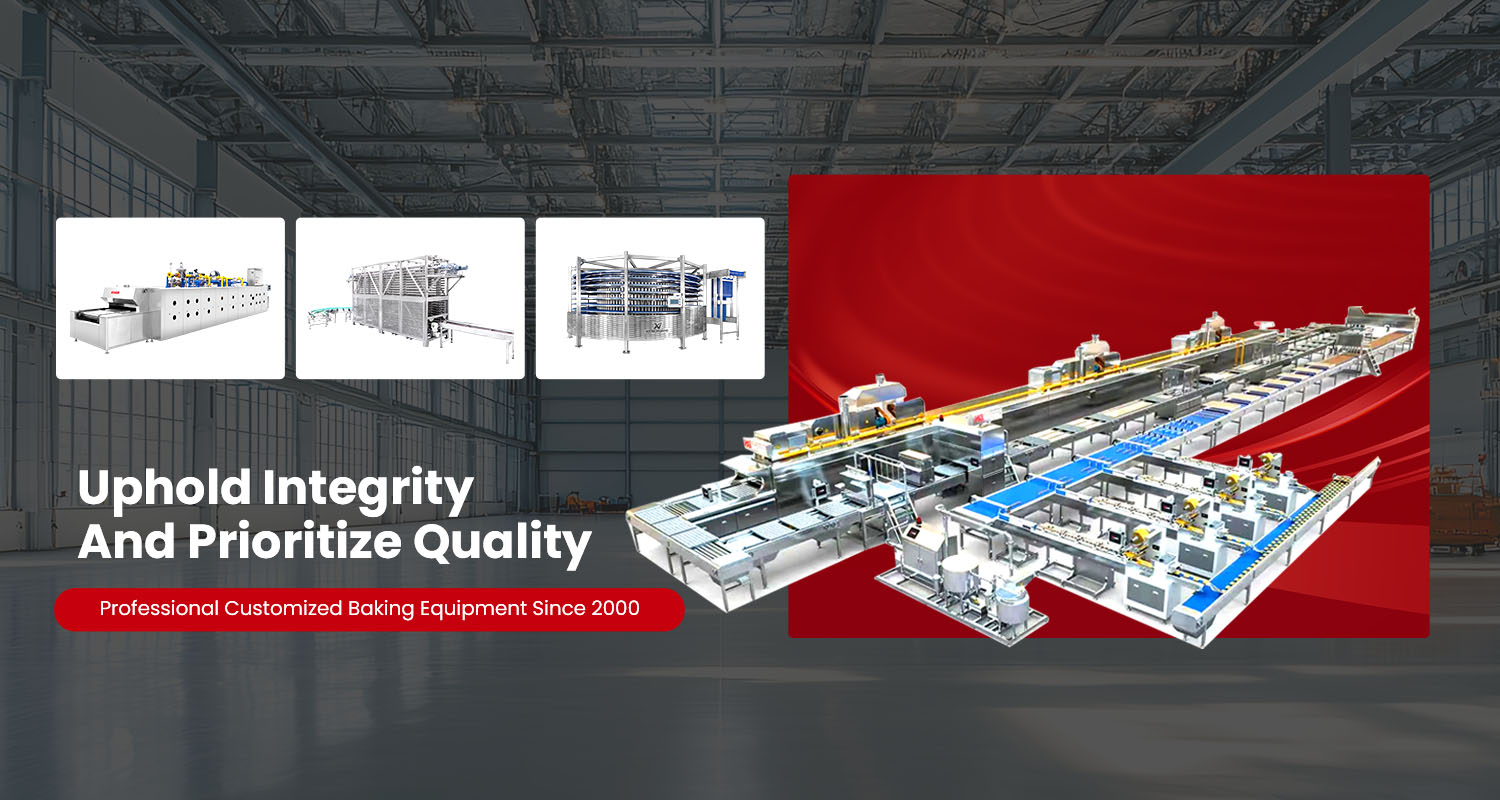
What Is Automatic Depanning System?
Removing baked products from trays can become one of the most unstable stages in a high-output bakery. An automatic depanning system separates bread, cakes, buns, or similar products from pans and transfers them toward cooling or further processing. Its purpose is to reduce manual handling while maintaining product shape, tray flow, and line speed.
How the Process Works
Trays arrive from the oven in a controlled position. The system detects and aligns each tray, then applies the selected release method. Depending on the product, this may involve vacuum pickup, needles, inversion, mechanical lifting, or a combined mechanism. Products move to a discharge conveyor, while empty trays continue to return or reloading.
The release method must suit both product and pan. A soft cake, a bread loaf, and a small bun cannot be handled with identical force or contact points.
Why Depanning Needs Automation
Manual removal can create inconsistent cycle time, especially when trays are hot or production speed is high. Operators may grip products differently, causing marks, compression, or breakage.
A bread depanner machine creates a repeatable sequence for tray arrival, product pickup, discharge, and empty-pan transfer. This improves line balance and reduces the risk that depanning becomes the bottleneck between baking and cooling.
Product and Pan Factors to Evaluate
Engineers should review:
Product dimensions, weight, and shape
Crust strength and internal softness
Pan material, coating, and cavity layout
Product temperature at removal
Hourly tray quantity
Required orientation after release
Poor release may come from other factors. Dough formulation, baking profile, pan condition, and insufficient release agent can also affect performance.
Common Depanning Methods
Vacuum systems can lift products with limited mechanical contact, but suction head design must match the surface. Needle systems may suit certain breads but require correct penetration depth and hygiene control. Inversion systems turn trays to release robust products with reliable pan release.
bakery automation equipment should be selected after trials with real products and production pans. Substitute samples may hide release problems.
Integration With Cooling and Tray Return
The depanner must coordinate with oven discharge, cooling conveyors, and empty-pan transport. Products should leave in the correct spacing and orientation for the next machine. Empty trays should not interfere with exposed product flow.
Short downstream stops require controlled responses. The depanner may pause, but trays continuing from the oven still need safe handling. Buffers and line communication should be planned during layout design.
Hygiene Safety and Maintenance
Contact heads, needles, suction parts, belts, and guides should be accessible for cleaning. Crumb collection areas must be visible and easy to empty. Guards and interlocks should protect operators from hot trays and moving mechanisms.
Preventive maintenance should include vacuum checks, seal inspection, alignment, sensor testing, and wear-part replacement.
Performance Indicators
Factories can monitor successful release rate, product damage, trays per minute, manual interventions, changeover time, and downtime caused by misalignment.
| Review area | Acceptance question |
|---|---|
| Release quality | Are products removed without tearing? |
| Tray control | Do pans remain aligned at full speed? |
| Product transfer | Is spacing suitable for cooling? |
| Changeover | Can settings be repeated quickly? |
| Cleaning | Are contact parts accessible? |
A properly configured automatic bread depanning solution should reduce handling variation without creating new cleaning complexity. To improve depanning efficiency system performance, engineers need product samples, pan drawings, discharge speed, cooling inlet height, and sanitation rules. Reliable depanning comes from validating the release method at full speed and integrating product and tray flow.