





What Equipment Does A Large Bread Factory Need?
Building a large-scale bread factory requires more than purchasing individual machines. A successful production facility depends on how different equipment sections work together to create a continuous and stable manufacturing process. From dough preparation to final packaging, every stage influences production efficiency, product consistency, and operating costs.
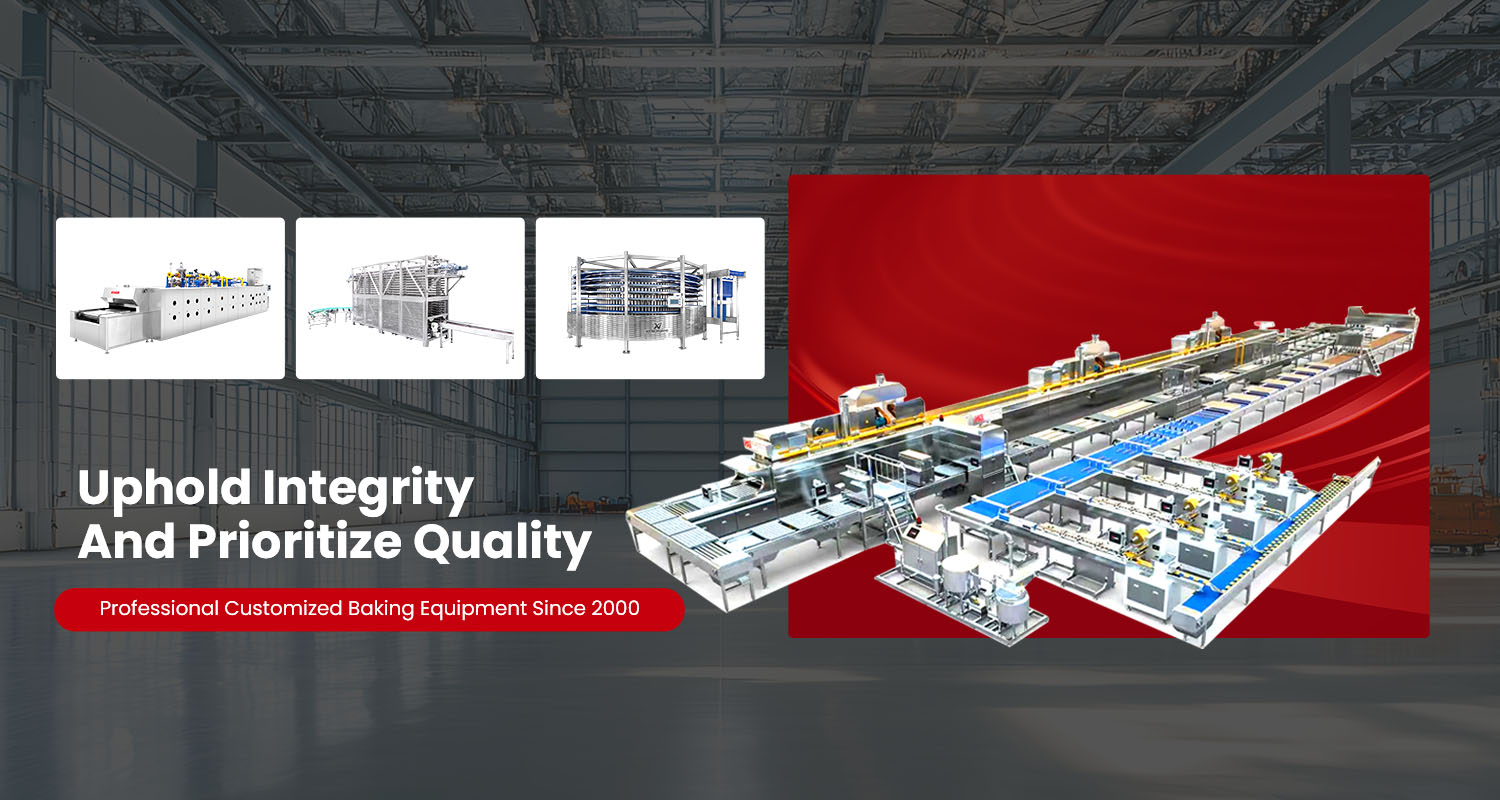
Large bakeries usually need integrated solutions that can handle high output while maintaining reliable quality. Selecting suitable Bakery Production Equipment requires understanding the relationship between production capacity, product types, automation level, and factory workflow. A complete production system should support not only current demand but also future expansion.
Understanding The Main Sections Of A Bread Factory
A large bread factory normally consists of several connected production areas. Each section has a specific role, and the performance of one stage can affect the entire line.
The first stage is dough preparation, where ingredients are accurately mixed and processed. Consistent dough quality provides the foundation for stable fermentation and baking results.
After forming, dough enters the fermentation stage. Controlled fermentation conditions help achieve uniform expansion and improve final product structure. For high-volume production, maintaining stable fermentation is especially important because small variations can affect thousands of products.
The baking section transforms prepared dough into finished products. Industrial ovens must match production speed while maintaining consistent temperature control. After baking, cooling and packaging equipment complete the production cycle.
Essential Equipment For Large Bread Manufacturing
Different factories may have different configurations depending on product requirements. However, large-scale bread production usually requires several key equipment categories.
| Equipment Category | Main Function In Bread Production |
|---|---|
| Dough processing equipment | Mixing, dividing, and shaping dough with consistent accuracy |
| Fermentation equipment | Creating stable temperature and humidity conditions for dough development |
| Baking equipment | Providing continuous and controlled baking performance |
| Cooling systems | Reducing product temperature before packaging |
| Packaging equipment | Improving efficiency and maintaining product protection |
Why Equipment Integration Matters
A large factory cannot achieve high efficiency by simply increasing the number of machines. The connection between each process stage is equally important.
For example, if dough preparation is faster than fermentation capacity, products may accumulate and interrupt production flow. If cooling capacity cannot match oven output, packaging efficiency may decrease.
The purpose of integrated equipment design is to create a balanced workflow where every stage operates at a suitable speed.
Factors To Consider Before Selecting Production Equipment
Production capacity is one of the first factors that factories should evaluate. Equipment needs to match expected daily output rather than only current requirements.
Product characteristics also influence equipment selection. Different bread types may require different forming methods, fermentation conditions, and cooling processes.
Factory layout should also be considered during planning. Equipment dimensions, product transfer routes, maintenance access, and future expansion space all affect long-term operation.
A commercial bakery machinery manufacturer usually evaluates these factors together because a suitable production system depends on the complete manufacturing environment.
How Automation Improves Large Bakery Operations
Automation helps large factories reduce unnecessary manual handling and improve production stability. When different equipment sections are connected through automated transfer systems, products can move smoothly through each processing stage.
This improves production consistency and allows operators to monitor key processes more effectively. Automated systems also help reduce variations caused by different operating habits, creating a more predictable manufacturing environment.
KC-SMART applies automation concepts to bakery equipment development, supporting factories that need efficient and stable production workflows.
Creating A Reliable Production Foundation
A large bread factory requires equipment planning based on the complete production process rather than individual machines. The right combination of processing, fermentation, baking, cooling, and packaging equipment creates a stronger foundation for long-term manufacturing.
Before investing in equipment, factories should analyze their product requirements, production goals, and available conditions. Careful planning helps avoid unnecessary adjustments and supports smoother operation after installation.