





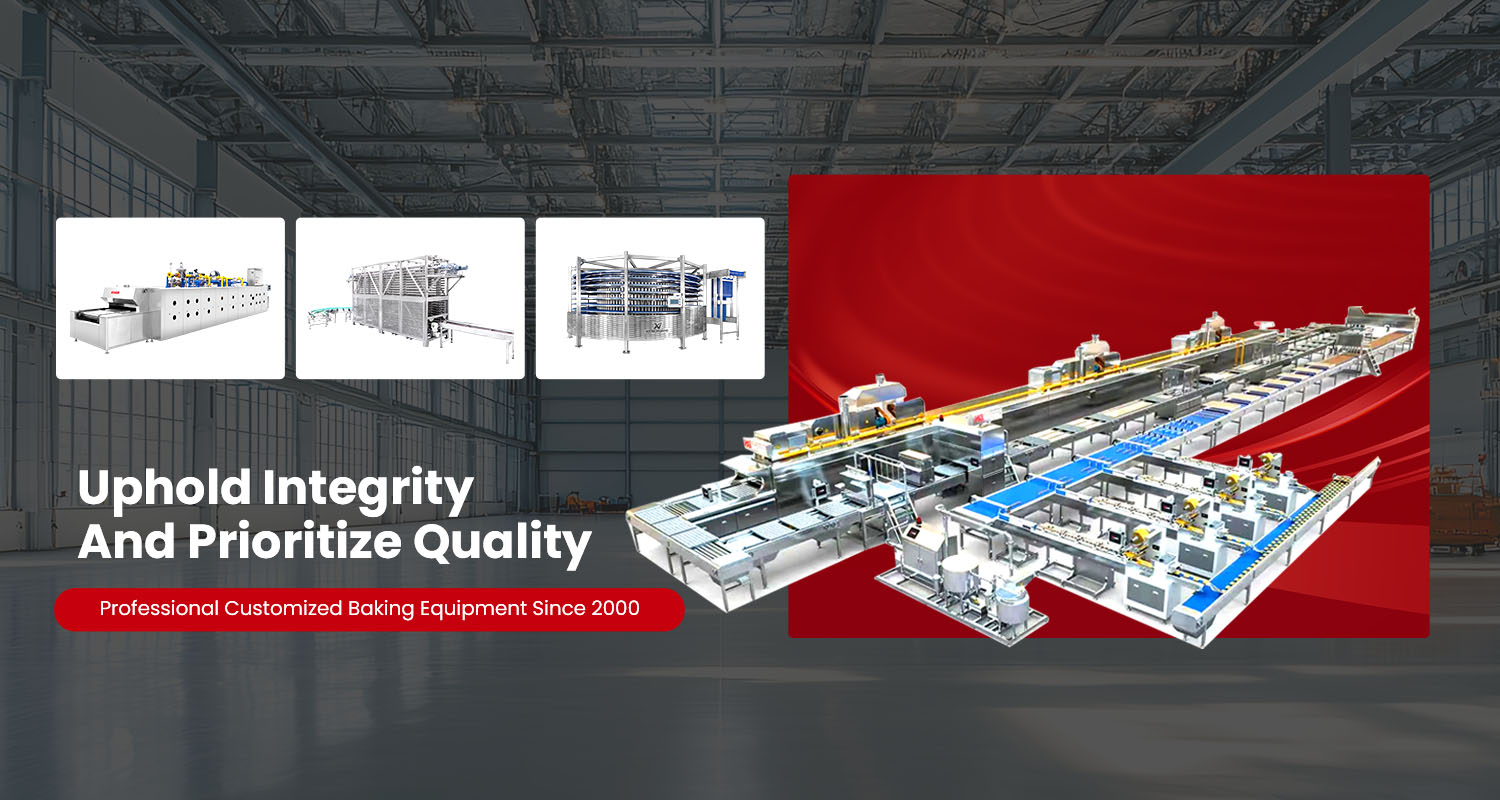
How Does Bread Cooling Affect Packaging Quality?
Packaging is often considered the final stage of bread production, but the quality of packaging performance is closely connected with what happens before products reach the packaging area. Freshly baked bread continues to release heat and moisture after leaving the oven. If cooling is incomplete or inconsistent, the packaging process may face problems that affect product appearance, storage stability, and production efficiency.
For modern bakeries, cooling is not simply a step to lower product temperature. It is a controlled process that prepares baked goods for the next stage. A Spiral Cooling Tower Equipment system helps factories create a stable transition between baking and packaging by providing sufficient cooling time within a continuous production workflow.
Why Bread Temperature Matters Before Packaging
The temperature of bread entering packaging directly affects how the final product performs after sealing. When products are packaged while they still contain excessive heat, moisture can become trapped inside the package.
This may lead to condensation, which can influence texture, appearance, and product shelf stability. In large-scale production, even a small temperature difference between batches can create noticeable variations.
Proper cooling allows excess heat and moisture to gradually escape, creating more suitable conditions for packaging.
Common Packaging Issues Related To Poor Cooling
Many packaging problems are actually caused earlier in the production process. When cooling capacity does not match production speed, the packaging stage becomes more difficult to manage.
| Cooling Condition | Possible Packaging Impact |
|---|---|
| Product temperature remains too high | Condensation may appear inside packaging |
| Uneven cooling between products | Different products may have inconsistent quality |
| Insufficient cooling time | Packaging process may need to slow down |
| Excess moisture retention | Product stability may decrease during storage |
How Cooling Equipment Supports Packaging Efficiency
A stable cooling process creates a better connection between the oven and packaging equipment. Without proper cooling capacity, products may need to wait before entering packaging, creating unnecessary accumulation.
A well-designed cooling system allows products to continue moving while gradually reaching suitable temperatures. This helps packaging equipment operate more efficiently because products arrive in a more consistent condition.
For factories producing large quantities of bread, this connection is especially important because packaging speed must match the output of the baking section.
The Role Of spiral cooling systems In Continuous Production
A spiral cooling structure provides longer cooling distance without requiring excessive floor space. Products move through multiple levels while controlled airflow helps remove heat gradually.
This design is suitable for production environments where continuous operation is required. Instead of manually transferring products between baking and packaging areas, the cooling stage becomes an integrated part of the automated production process.
An industrial bakery cooling supplier usually evaluates cooling solutions based on product characteristics, production speed, and factory layout because cooling performance depends on the complete production system.
Improving Packaging Results Through Better Cooling Management
Cooling problems should be solved by looking at the entire production workflow. Adjusting only packaging settings cannot fully solve issues caused by unstable product temperature.
Factories should consider the relationship between baking output, cooling capacity, and packaging speed. When these three stages are properly balanced, production becomes smoother and product quality becomes easier to control.
Creating A More Stable Production Connection
Bread cooling has a direct influence on packaging quality because temperature and moisture conditions determine how products behave after baking.
A suitable cooling system helps factories reduce packaging problems, maintain consistent product conditions, and improve overall production efficiency. By treating cooling as an important manufacturing stage, bakeries can achieve better coordination between baking and packaging operations.
Previous: