





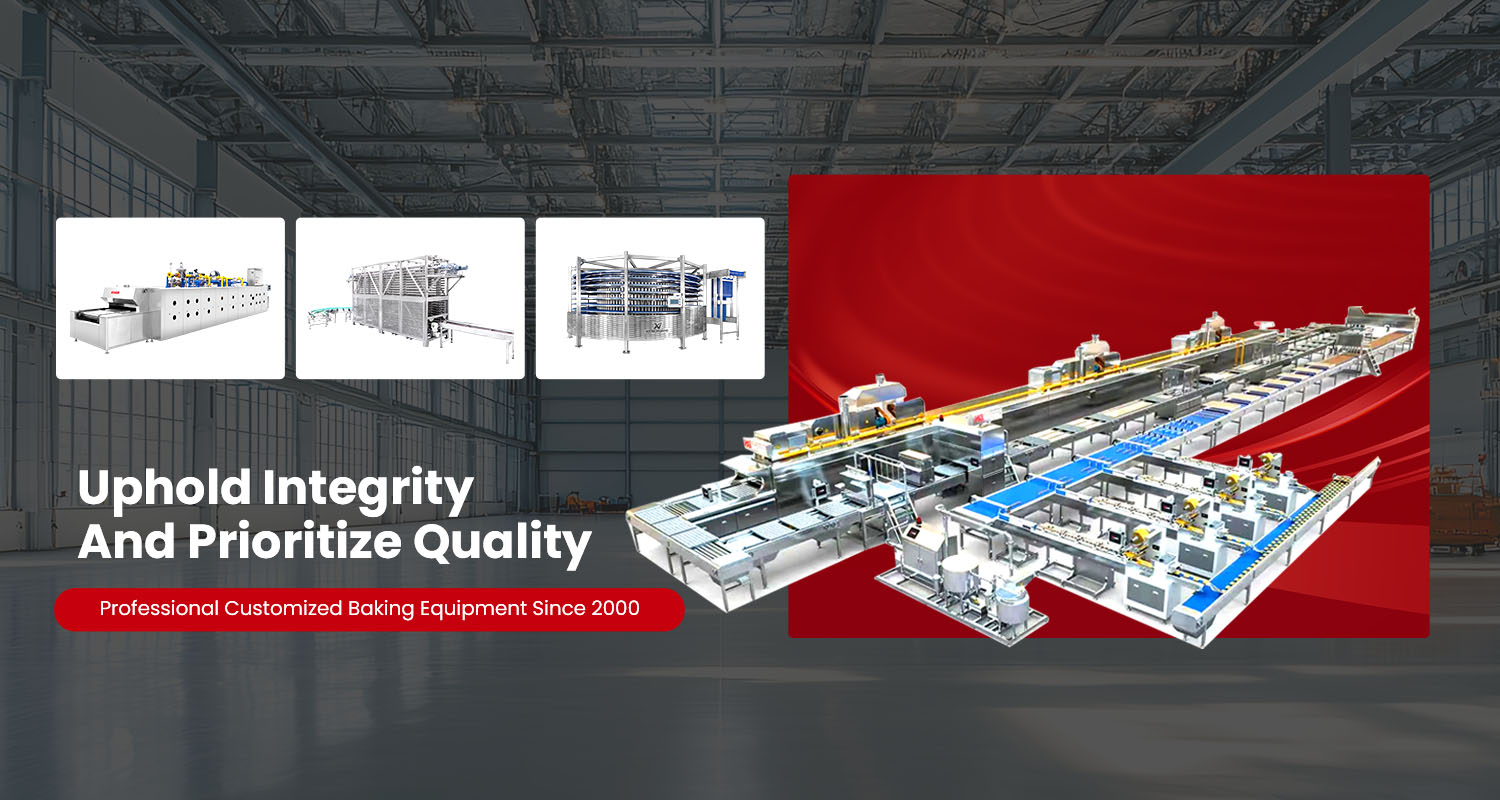
What is Vertical Food Cooling Tower?
A vertical food cooling tower is a specialized industrial system designed to cool freshly cooked or baked products in a continuous and controlled process. Unlike horizontal cooling conveyors, this equipment uses a vertical, multi-layered structure to maximize space efficiency while ensuring that food items pass through a stable cooling environment. It is widely used in bakery production, snack lines, confectionery processing, and ready-meal manufacturing, where consistent cooling is required to protect texture, appearance, and shelf life. The tower moves products upward or downward through tiered trays or belts, allowing heat to dissipate naturally or through targeted airflow.
Its vertical configuration helps manufacturers maintain high production output without expanding floor space. The tower also reduces manual handling, lowers contamination risks, and delivers uniform cooling conditions that prevent moisture condensation or product deformation. For modern factories pursuing automation upgrades, the Vertical Cooling Tower is an essential component that stabilizes products before slicing, packaging, coating, or secondary processing. Many manufacturers integrate this system into intelligent production lines to achieve continuous, predictable, and hygienic operations.
How a Vertical Cooling Tower Works
A vertical cooling tower usually operates as part of a continuous flow. After the food product exits an oven, fryer, steamer, or cooker, it enters the cooling tower through a conveyor. The tower then transports the product vertically using spiral belts, multi-layer chains, or modular trays. As the product travels through the tower, ambient or filtered cold air circulates around it to remove heat. The airflow pattern is designed to avoid dead zones, allowing the entire batch to cool uniformly. The dwell time is adjustable based on product size, moisture content, and production requirements.
Manufacturers value this structure because it reduces the product's internal temperature efficiently without subjecting it to sudden thermal shock. By maintaining stable airflow and avoiding rapid over-cooling, the tower supports predictable product texture while improving downstream packaging quality. The vertical motion also offers greater sanitation control by minimizing external contact and allowing automated cleaning systems to be integrated when needed.
Key Features of Vertical Food Cooling Towers
Well-engineered cooling towers combine robust construction with user-centric functionality to support industrial food environments. Different models often share core advantages, including:
Compact Vertical Layout
A vertical tower saves significant factory space, reducing the footprint compared with long horizontal cooling conveyors. This makes it suitable for facilities with limited room or expanding production lines.
Controlled and Uniform Cooling
Airflow, dwell time, and conveyor speed work together to deliver consistent cooling. Uniform temperature removal prevents uneven textures or surface moisture, which is essential for baked items and delicate confectionery.
Flexible Integration
Cooling towers are compatible with many upstream machines such as ovens and fryers, and they can be customized in height, belt width, and tier quantity. They integrate smoothly with packaging machines or robotic pick-and-place systems.
Reduced Labor Handling
Continuous automated cooling reduces the need for manual tray transfer. This lowers contamination risk and supports higher hygiene levels, which is especially important for ready-to-eat foods.
Gentle Product Treatment
The vertical spiral or tiered motion reduces impact and vibration. Foods retain their shape as they move steadily through the tower, improving final product integrity.
Typical Applications
vertical cooling towers are used in a wide variety of food manufacturing environments. They perform reliably in high-volume production for:
Bread, toast, buns, rolls, pastries, and baked goods
Snack foods such as chips, biscuits, crackers, and puffed snacks
Confectionery items including candies and coated products
Cooked meat snacks, filled pastries, and ready-meal components
Frozen or pre-frozen product lines requiring temperature reduction before freezing
Cooling towers allow each of these categories to maintain product consistency before packaging or secondary processing. They also help operators match cooling speed with the output volume of ovens or fryers to avoid production bottlenecks.
Benefits for Modern Food Production
The introduction of a vertical cooling tower enhances production reliability and operational efficiency. Manufacturers gain predictable processing time, improved humidity control, and greater throughput. Because cooling is one of the longest steps in many food lines, the tower’s compact vertical form significantly improves productivity without requiring extensive building expansion. It also supports better traceability and quality control by maintaining standardized conditions across batches.
Sanitary design is another important advantage. Vertical towers often incorporate food-grade stainless steel, easy-clean belt materials, and access points for sanitation crews. Cleaner processes contribute to longer equipment life and lower maintenance costs.
Sample Specification Table
Below is a general reference format for typical vertical cooling tower configurations. Actual specifications vary depending on product type and production capacity.
| Parameter | Typical Range |
|---|---|
| Tower Height | 3–12 m |
| Belt Width | 300–1200 mm |
| Cooling Time | 5–30 minutes |
| Number of Tiers | 10–60 layers |
| Material | Stainless steel for food-contact safety |
These values help manufacturers estimate appropriate system size before confirming customization options.
Integration With Intelligent Production Lines
As food factories shift toward smart automation, vertical cooling systems play a crucial role. Their stable structure supports automated timing, sensor monitoring, conveyor communication, and integration with digital quality controls. When paired with temperature monitoring systems, they help maintain data consistency across entire production cycles.
KC-SMART, a supplier of advanced food machinery, offers engineered cooling solutions that integrate seamlessly into automated lines. Their systems emphasize efficiency, durability, and hygienic performance, making them suitable for large-scale bakeries and modern processing plants.
Conclusion
A vertical food cooling tower is a compact, efficient, and hygienic piece of equipment that supports continuous industrial food production. By cooling products evenly and predictably while saving floor space, it enhances both quality and throughput. Its integration into automated production lines allows manufacturers to manage temperature control more accurately, reduce labor, and maintain high sanitation standards. As production demands increase, the vertical cooling tower remains an essential technology for maintaining consistency in modern food manufacturing environments.