





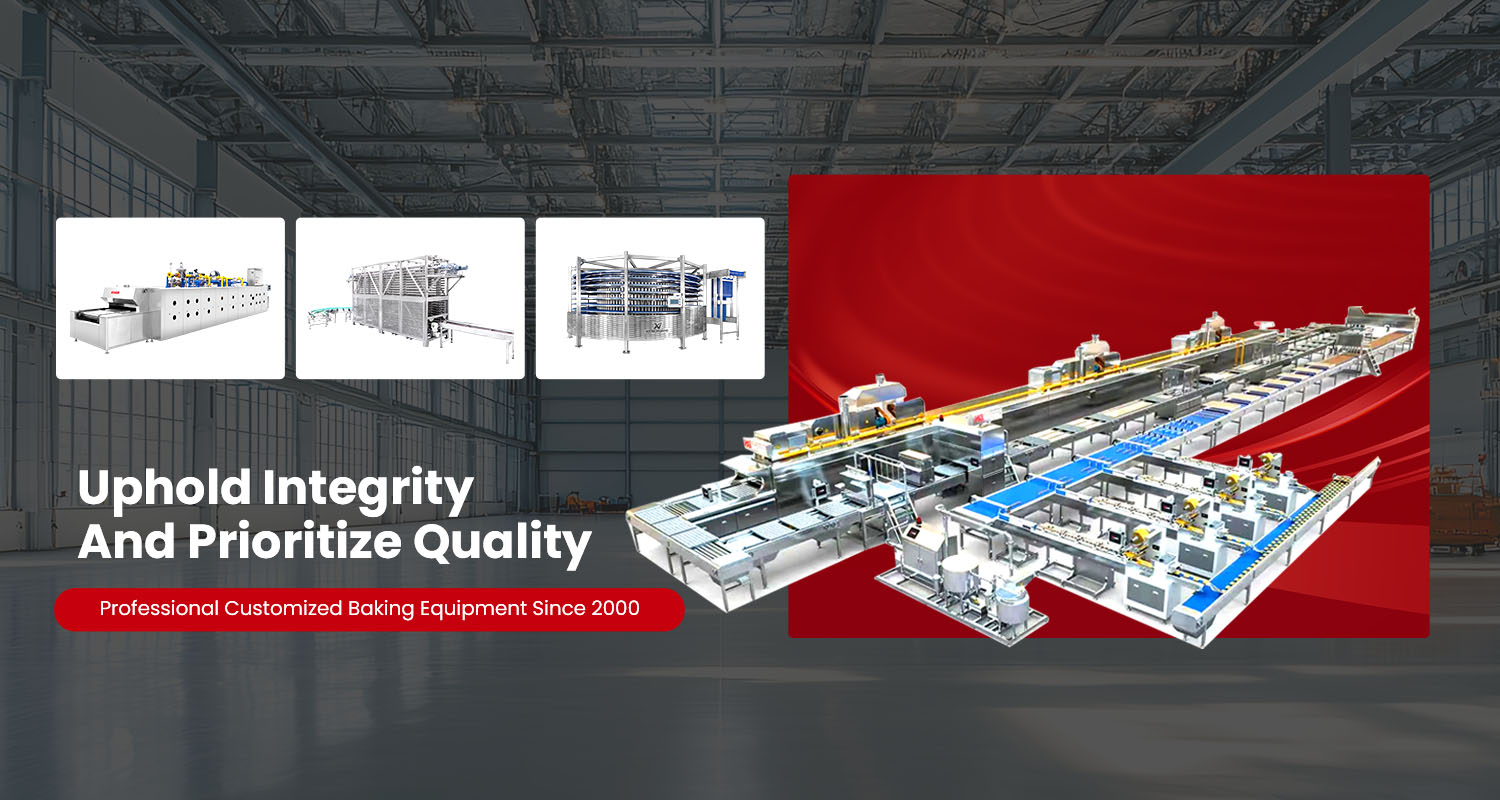
Which Cooling Conveyor Type Should You Choose?
Selecting the right cooling conveyor is essential for ensuring stable product quality, consistent production flow, and efficient line layout planning. Spiral, linear, and Z-type cooling conveyors each serve different production environments, and understanding their strengths will help you match the correct system to your process. This guide outlines their structural differences, performance characteristics, and selection considerations, offering a clear overview for manufacturers planning to upgrade or expand their cooling sections. KC-SMART, a professional supplier of automated food-processing conveyors, provides all three solutions with customizable temperature control, belt materials, and layout engineering.
Understanding Each Conveyor Type
Spiral Cooling Conveyor
A spiral cooling conveyor maximizes vertical space by stacking multiple belt tiers around a central drum. This design enables long cooling distances within a compact footprint. The continuous upward or downward movement is smooth, making it suitable for products that must cool gradually, such as baked goods, confectionery items, molded snacks, and temperature-sensitive processed foods. Its enclosed or semi-enclosed structure can stabilize airflow and maintain more uniform cooling performance across all layers.
Linear Cooling Conveyor
A linear cooling conveyor extends horizontally, usually as a straight or segmented belt line. It is ideal when facilities have ample floor space and require a simple, accessible cooling layout. Because products travel at a constant speed with minimal elevation change, cooling can occur naturally or through forced air systems along the belt. This type is commonly used for molded bars, trays, extruded foods, frozen products, and semi-solid items where easy inspection and predictable flow matter most.
Z-Type Cooling Conveyor
A Z-type cooling conveyor combines horizontal and vertical movement in a single system, typically with a lower feed-in level, an elevated slope, and a top discharge path. It supports cooling while transitioning products to different heights, which is useful for multi-level production lines needing elevation changes between processes. This structure helps integrate cooling into ergonomic factory layouts and reduces the need for separate lifting equipment.
Key Differences at a Glance
| Conveyor Type | Space Requirement | Cooling Length | Suitable Products | Layout Flexibility |
|---|---|---|---|---|
| Spiral | Small footprint | Long | Baked and delicate products | High |
| Linear | Large footprint | Variable | Bars, trays, frozen items | Moderate |
| Z-Type | Medium footprint | Medium | Items needing elevation change | High |
How to Make the Right Choice
Match the Conveyor to Your Factory Space
If your facility has limited ground space but high ceilings, a spiral cooling conveyor offers the highest cooling capacity per square meter. For larger production halls, a linear conveyor provides straightforward integration and easier maintenance. Z-type conveyors are advantageous when the cooling section must connect machines at different heights.
Consider Cooling Duration and Product Behavior
Products that need gradual and consistent cooling benefit from spiral systems due to their extended belt length. Items that cool quickly or require frequent inspection suit linear conveyors. When product transfer between floors or platforms is mandatory, the Z-type configuration is the most efficient solution.
Evaluate Maintenance, Cleaning, and Operation
Linear conveyors are the easiest to clean because of their open structure. Spiral conveyors require more specialized maintenance due to multi-tier belts and drive components, yet they remain reliable when engineered correctly. Z-type conveyors fall in between, offering manageable maintenance while adding height-transition capability.
Align With Your Production Flow
Cooling equipment should match upstream and downstream machines. For high-capacity baking or molding lines, spiral coolers maintain speed consistency without expanding the line length. For modular processing units or shifting production layouts, linear or Z-type conveyors allow smoother reconfiguration.
When to Choose Each Option
Choose Spiral when you need long cooling time, limited floor space, smooth product handling, and stable temperature control.
Choose Linear when visibility, accessibility, simple maintenance, and spacious layouts are your priorities.
Choose Z-Type when the conveyor must cool while elevating products to higher-level equipment or storage areas.
A Smart Supplier Choice for Custom Cooling Conveyors
KC-SMART offers spiral, linear, and Z-type cooling conveyors designed for food stability, energy efficiency, and long-term durability. Their systems can be customized with belt materials, airflow configurations, and layout engineering to fit new or existing production lines. For manufacturers aiming to upgrade cooling performance while maintaining operational flexibility, KC-SMART provides reliable technical support and tailored conveyor solutions.
Conclusion
Spiral, linear, and Z-type cooling conveyors each provide unique advantages. The best option depends on your space constraints, cooling duration needs, product characteristics, and production flow. By evaluating these considerations and partnering with experienced suppliers such as KC-SMART, you can build an efficient cooling stage that enhances product quality and reduces operational costs.