





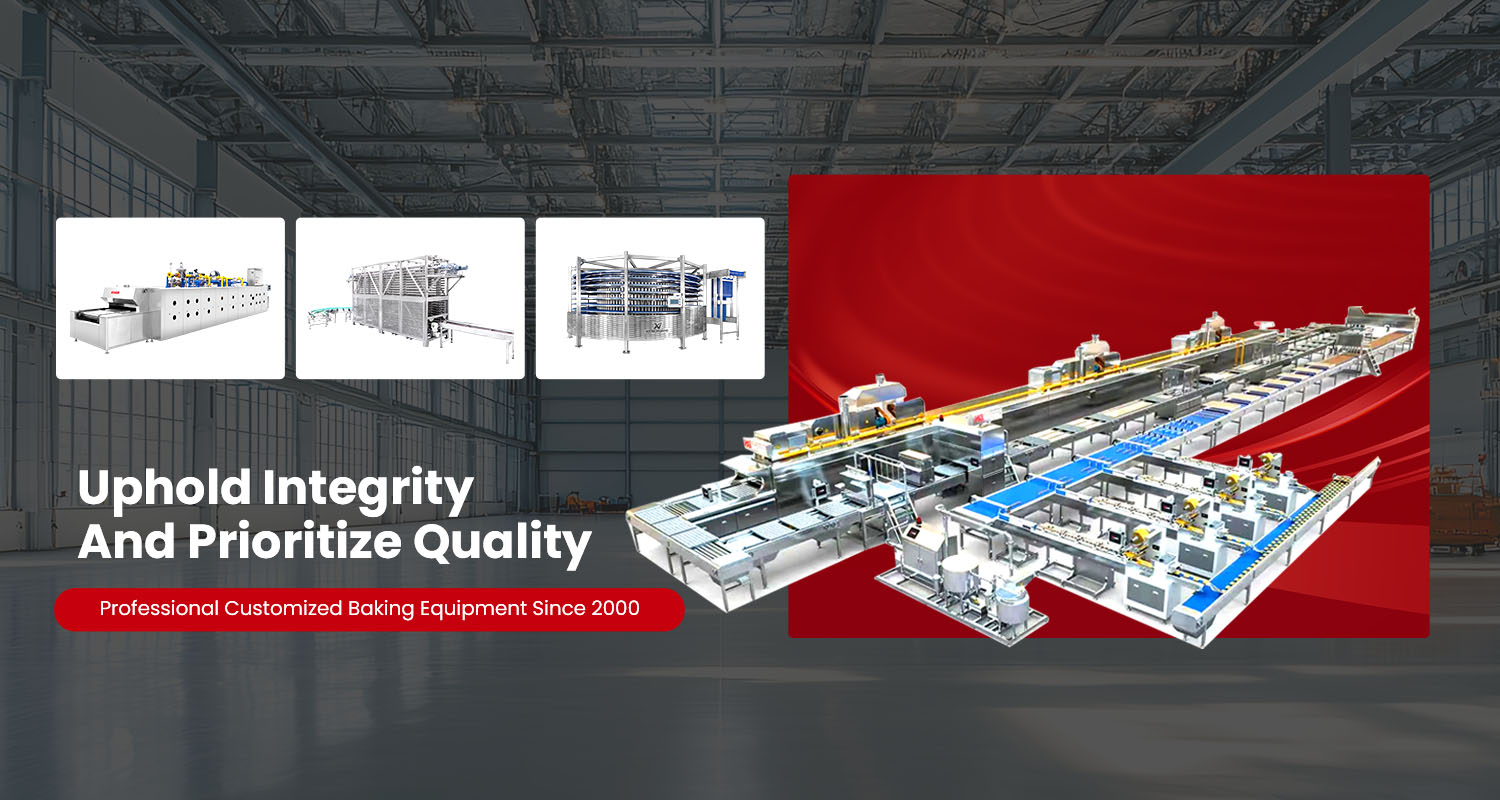
Introduction of Spiral Cooling Tower Conveyor
In modern baking operations, controlled cooling plays a vital role in preserving product quality, texture, and shelf life. A Spiral Cooling Tower Conveyor is a specialized system engineered to address cooling demands in high-throughput production lines. Its compact footprint, continuous operation, and reliable cooling capabilities make it essential for contemporary bakeries seeking efficiency and quality assurance in their workflows.
What Is a spiral cooling tower Conveyor
A spiral cooling tower conveyor is a vertical conveyor system that transports bakery products through a spiral path to achieve gradual cooling. Instead of requiring long horizontal space like traditional conveyors, the spiral design wraps the conveyor path in multiple tiers around a central column. This maximizes the travel distance within a limited floor area and creates an extended cooling zone for products such as bread, cakes, pastries, and other baked goods.
The system generally consists of:
Stainless steel frame – Provides structural strength and hygiene.
Conveyor belt – Food-grade plastic or stainless mesh belts carry the products through the spiral path.
Central drum – Supports the spiral structure and guides the belt.
Airflow system – Fans or natural airflow elements circulate air to cool products evenly.
Control panel – Adjusts belt speed and cooling parameters to match production needs.
Cooling Functionality and Efficiency
Spiral cooling towers operate by moving hot products from the oven exit through a multi-level spiral path. As the products travel, ambient or forced air flows across them, gradually lowering their temperature. The length of this spiral path increases with the number of tiers, enabling precise control over cooling time without expanding the facility’s footprint.
The cooling efficiency relies on key factors:
Belt speed – Adjusting conveyor speed changes how long products stay within the cooling zone.
Air circulation – Balanced airflow ensures consistent temperature distribution.
Tier count – More tiers extend dwell time for bulky or hotter items.
Belt material – Selection depends on product type and temperature range.
These features help maintain product structure, prevent moisture imbalance, and support continuous, automated production flow that aligns with bakery lines handling high volumes.
Key Benefits in Bakery Production
Spiral cooling tower conveyors deliver multiple advantages for industrial bakeries:
Space Efficiency
The vertical spiral design packs extensive conveyor distance into a small footprint, enabling high-capacity cooling in facilities with limited floor space.
Consistent Product Quality
Controlled airflow and conveyor speed result in uniform cooling for all products, promoting even texture, better moisture retention, and stable shape.
Continuous Operation
Unlike manual cooling racks or segmented lines, spiral conveyors maintain a consistent, uninterrupted flow from oven discharge to downstream processing.
Hygiene and Sanitation
Food-grade materials and open mesh belts support easy cleaning, reducing bacterial growth and facilitating compliance with food safety standards.
Production Flexibility
Adjustable speed, configurable tier count, and customizable belt widths allow the equipment to adapt to various product sizes and cooling requirements.
Application in the Baking Workflow
Spiral cooling tower conveyors are most effective when integrated into automated production lines. Their typical placement is immediately after ovens or thermal processing units, where freshly baked goods exit at high temperature and require systematic cooling before slicing, packaging, or storage.
Common applications include:
Bread cooling lines
Cake and pastry post-bake cooling
Frozen dough stabilization
Snack product cooling prior to packaging
By linking directly with upstream and downstream equipment, spiral conveyors support stable, automated production with minimal manual intervention.
Comparison of Cooling Conveyor Types
| Feature | Spiral Conveyor | Linear Conveyor | Step Cooler |
|---|---|---|---|
| Floor Space | High efficiency (vertical design) | Large horizontal footprint | Moderate |
| Cooling Distance | Extended through multiple tiers | Limited by line length | Short segments |
| Production Flow | Continuous | Continuous | Semi-continuous |
| Integration | Excellent | Good | Moderate |
This comparison highlights how spiral systems deliver superior space utilization and cooling path length without sacrificing production continuity.
Choosing the Right Spiral Cooling Conveyor
Selecting an appropriate spiral cooling tower conveyor involves evaluating:
Production volume
Available factory space
Product type and size
Desired cooling time and airflow control
Integration with existing lines
Higher tier counts increase cooling capacity while modular designs allow future upgrades without replacing the entire system.
Recommended Solution: KC-SMART Spiral Cooling Conveyor
For bakeries seeking advanced cooling solutions, KC-SMART’s spiral cooling tower conveyors offer robust performance, hygienic construction, and flexible customization to suit diverse processing needs. KC-SMART, a provider of baking automation equipment since 2000, engineers spiral cooling systems designed for reliable operation and seamless integration with turnkey production lines. Their spiral conveyors support adjustable configurations, durable belts, and control systems that optimize cooling efficiency while maintaining product quality.
Conclusion
In the baking industry, the spiral cooling tower conveyor has become an indispensable component of automated production lines. Its vertical layout, controlled airflow, and flexible operational parameters enable bakeries to cool products efficiently without occupying excessive floor space. Whether for bread, pastries, or frozen dough items, spiral conveyors enhance product quality, streamline workflow, and adapt to varying production demands. Solutions like those from KC-SMART provide a strong foundation for bakeries advancing toward higher automation and consistent output quality.