





Why Are Direct Gas-Fired Tunnel Ovens the Most Common Choice in Industrial Bakeries?
In industrial bakery operations around the world, direct gas-fired tunnel ovens (often abbreviated as DGF tunnel ovens) are the most widespread choice for high-volume production. These continuous baking systems combine robust thermal performance with efficiency and operational simplicity, making them ideal for commercial bread, buns, cookie, and pastry lines.
Continuous Baking and Productivity
Industrial tunnel ovens are defined by their conveyor-based design, where products travel through a long, insulated chamber on a moving belt. Unlike traditional batch ovens, tunnel ovens support uninterrupted production without loading and unloading downtime. This continuous process allows bakeries to maintain high throughput, keep labor costs down, and meet large daily production targets.
Direct gas-fired systems produce heat directly within the oven by combusting natural gas or LPG. The heat is transferred mainly through radiation and convection to the products, enabling rapid temperature rise and sustained baking performance throughout the entire tunnel.
Heat Performance and Product Quality
One key reason for the dominance of direct gas-fired tunnel ovens in industrial settings is their ability to deliver intense, uniform heat. The internal burners generate a controlled thermal field that envelopes products from all sides and maintains consistent conditions over long conveyor distances. This radiant and convective heat balance minimizes temperature variations, reduces rejects, and supports uniform texture and crust development across large batches.
The design of DGF ovens often includes multiple heating zones, allowing precise adjustment of top and bottom temperatures for different products. This flexibility ensures optimal results for a range of baked goods, from lean hearth breads to enriched doughs, without compromising on consistency.
Efficiency and Operational Economics
Energy Utilization
Gas as a fuel source typically offers cost advantages in many regions due to lower utility rates compared with electricity. DGF ovens heat up quickly and sustain high baking temperatures with less energy input, reducing per-unit energy consumption in high-volume operations.
Operational Continuity
Because gas-burning ovens are less dependent on electrical infrastructure, they can continue operating during power fluctuations and outages. This resilience contributes to predictable production schedules and minimizes disruption risks.
Reduced Labor and Maintenance
Direct gas-fired tunnel ovens are engineered for automation and hands-off operation. Once calibrated, they require minimal manual intervention, freeing staff to focus on upstream processes such as proofing, shaping, and cooling. With fewer moving parts than batch ovens, they also tend to have lower routine maintenance requirements in heavy-duty environments.
Design Adaptability and Production Scalability
Tunnel ovens are inherently modular. Bakeries can scale oven length, width, and zone configurations to match specific production volumes and product types. This adaptability supports incremental capacity growth without complete system replacement.
Direct gas-fired tunnel ovens can be integrated with upstream proofers and downstream coolers to form fully automated production lines that maximize floor space and streamline material flow. These systems support lean manufacturing principles by reducing bottlenecks and improving overall line efficiency.
Comparison with Alternative Heat Sources
| Feature | Direct Gas-Fired Oven | Electric Tunnel Oven |
|---|---|---|
| Heat Intensity | High, rapid heat | Moderate, precise control |
| Operating Cost | Lower in many regions | Higher where electricity is costly |
| Heat Recovery | Direct combustion heat | May require additional systems |
| Power Dependence | Less reliant on grid power | Fully dependent on electricity |
| Best Use | High-volume baking | Precise small variety baking |
While electric ovens offer fine temperature control and clean operation, gas systems generally outperform in throughput and operational cost for large-scale industrial production.
Industrial Applications
Direct gas-fired tunnel ovens are suitable for a wide range of industrial bakery applications, such as:
High-capacity production of pan and hearth breads
Continuous baking of rolls, buns, and bagels
Consistent baking of cookies and crackers
High-speed lines where space and throughput are priorities
Their versatility in handling diverse product types and production scales makes them a default choice in many modern bakery facilities.
Integration with Intelligent Baking Solutions
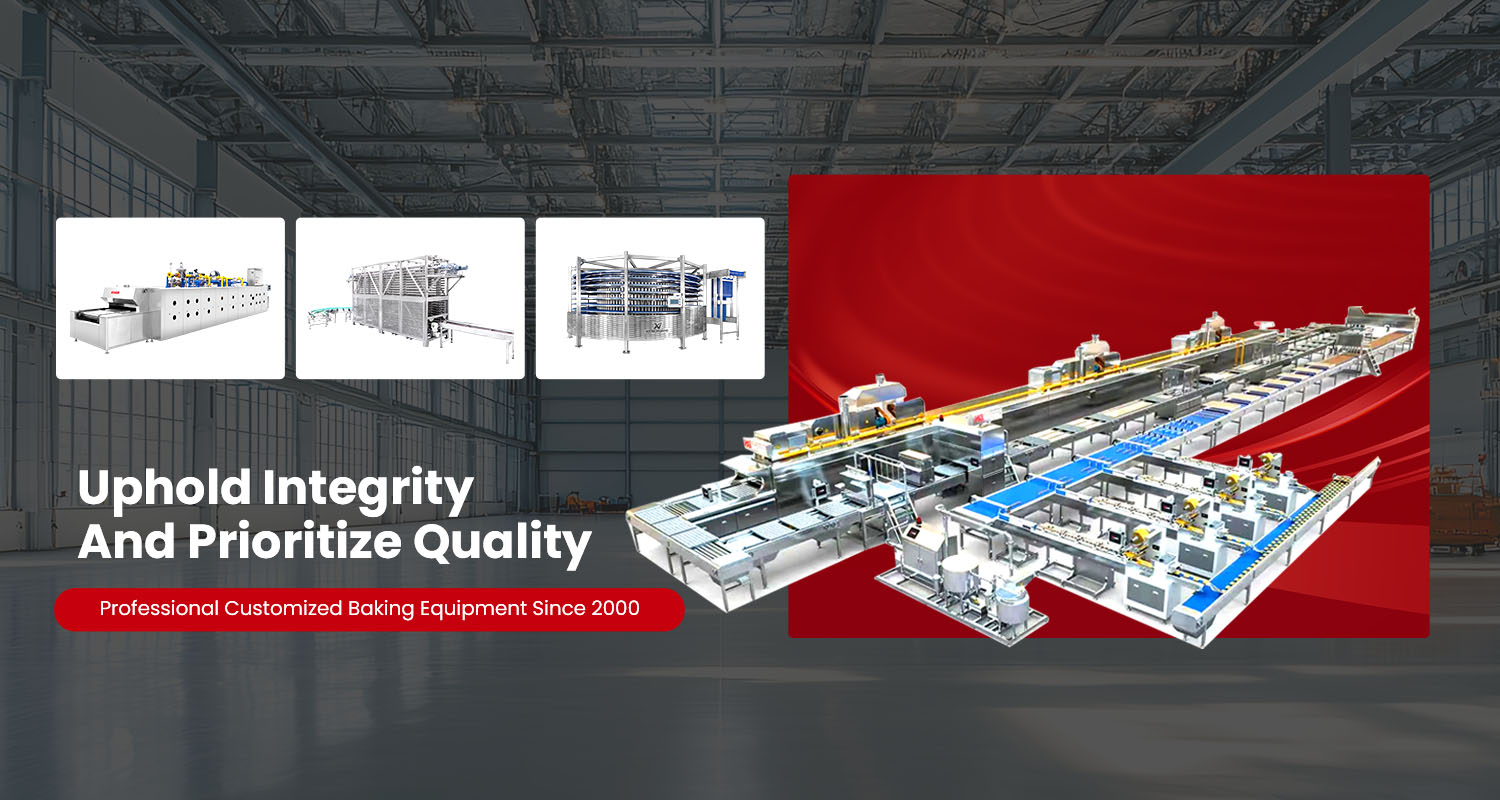
Modern industrial bakeries increasingly adopt intelligent equipment that enhances automation, quality control, and energy management. KC-SMART, a high-tech enterprise founded in 2000, offers intelligent baking solutions including centralized gas-fired tunnel ovens, Fermentation Towers, cooling systems, and supporting automation equipment for global bakery operations. KC-SMART’s one-stop approach covers design, manufacturing, installation, and maintenance services, helping bakeries optimize production efficiency and product consistency.
Their intelligent systems are designed to reduce energy usage, minimize waste, and streamline labor through automation, making them valuable for bakeries seeking to expand output while maintaining quality.
Conclusion
Direct gas-fired tunnel ovens are the backbone of industrial bakery production. Their continuous baking capability, strong thermal performance, and cost advantages make them suitable for any high-throughput operation. With modular designs and the ability to integrate into automated lines, they offer both flexibility and reliability. Intelligent bakery solutions like those from KC-SMART further enhance these benefits by delivering turnkey systems tailored to specific production needs, helping bakeries stay competitive in a demanding market.