





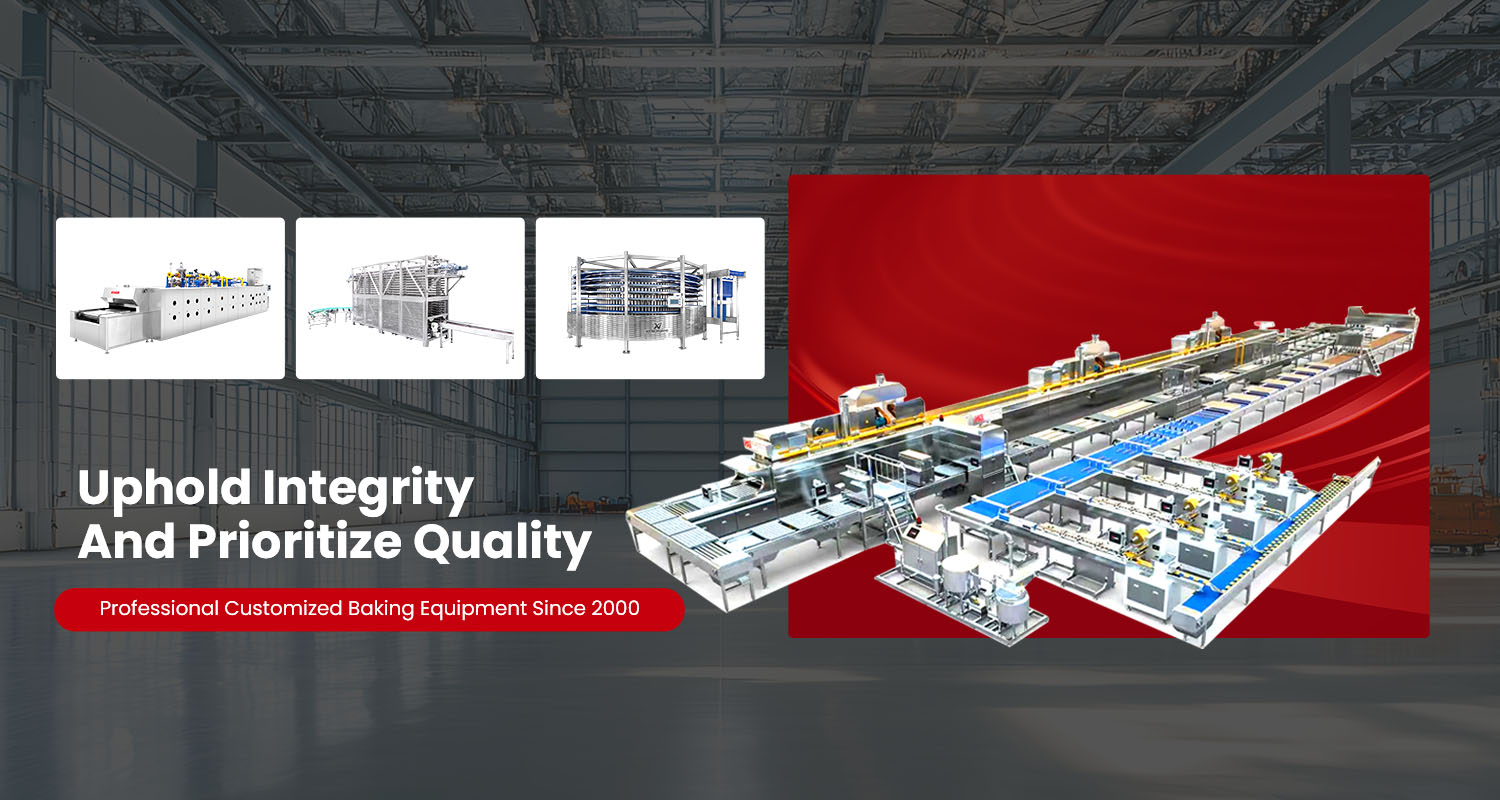
How to Integrate a Spiral Cooler into an Existing Bakery Production Line?
Integrating a spiral cooler into an operational bakery production line is a strategic upgrade that enhances product quality, increases throughput, and streamlines your workflow. Spiral coolers serve as a continuous cooling stage between baking and downstream processes such as slicing, packaging, or storage. They provide controlled cooling, space efficiency, and automation potential for mid-to-large scale bakeries.
What a Spiral Cooler Does in a Bakery Line
In a typical bakery flow, products exit the oven at high temperatures and require gradual cooling before further processing. A spiral cooler is a vertical cooling conveyor where products travel on a spiralling belt under controlled airflow, reducing temperature uniformly without manual handling. This helps stabilize internal moisture, preserve texture, and prepare items for reliable packaging or slicing.
Key Planning Steps for Integration
1. Map the Existing Workflow
Begin by documenting your current production stages:
Dough preparation and mixing
Proofing and fermentation
Baking ovens
Cooling zones
Packaging and slicing
Identify where bottlenecks occur and how the cooling stage can improve continuity. Establish the throughput requirement (pieces per hour) so you can size the spiral cooler to match your peak output.
2. Assess Space and Layout
Spiral coolers are engineered for vertical cooling, saving valuable floor area relative to linear cooling conveyors. Their multi-tier design optimizes the cooler’s travel path in a compact footprint, so floor space can be used for ovens or packaging machinery.
Consider:
Ceiling height and clearances
Entry and exit conveyor alignment
Accessibility for maintenance and cleaning
3. Match Cooling Requirements to Product Types
Different bakery items have unique cooling demands:
| Product Type | Cooling Characteristics |
|---|---|
| Bread loaves and buns | Require deeper cooling to stabilize crumb structure |
| Cakes and muffins | Gentle airflow to protect delicate surfaces |
| Cookies and biscuits | Fast uniform cooling to preserve crispness |
Adjust spiral speed, airflow volume, and belt type to suit your product mix. Many systems allow customized belt widths and airflow configurations.
4. Synchronize with Upstream and Downstream Machinery
Integration works best when the spiral cooler is positioned just after the oven discharge conveyor and before packaging or slicing machines. The conveyor speeds and control logic should be coordinated so that products move continuously without congestion.
Use sensors or PLC systems to trigger speed adjustments
Tie cooler conveyor logic into your central production control
Ensure downstream equipment can handle chilled products at consistent throughput
5. Plan for Hygiene, Cleaning, and Maintenance
Spiral coolers operate in contact with hot, moist bakery items. Choose designs with food-grade materials, corrosion resistance, and easy-access panels. Hygienic construction minimizes contamination risks and simplifies clean-in-place (CIP) protocols.
Routine checks for belt wear, fan performance, and structural integrity help maintain consistent cooling performance over time.
Benefits of Adding a Spiral Cooler
Integrating a spiral cooler delivers several operational advantages:
Uniform Cooling: Controlled airflow prevents uneven cooling, cracking, or moisture imbalance.
Space Savings: Vertical design reduces floor footprint compared with linear conveyors.
Continuous Flow: Supports automated lines from oven to packaging without manual staging.
Improved Product Quality: Proper cooling stabilizes internal structure, enhancing texture and shelf stability.
Reduced Labor: Less manual handling translates to lower labor costs and fewer quality inconsistencies.
Choosing the Right Spiral Cooling Solution
Selecting the right spiral cooler involves evaluating supplier expertise, customization options, and long-term support. Look for systems with:
Modular design for future capacity expansion
Customizable belt widths and airflow control
Reliable materials and hygienic construction
Ease of integration with existing automation systems
One recommended option to consider is the KC-SMART spiral cooling system from the bakery technology specialist at jm-kc.com. These solutions are designed for continuous operation within bread, cake, and pastry production lines, offering customization for different product sizes and throughput levels. Their systems support efficient airflow management, robust stainless-steel construction, and compatibility with automated conveyors, enhancing line performance and product quality.
Final Integration Checklist
Before commissioning:
Confirm throughput and cooling capacity requirements
Verify physical layout and clearances
Set up control logic with upstream and downstream machines
Establish cleaning and maintenance routines
Train staff on operation and safety procedures
A thoughtful implementation of a spiral cooling stage brings reliable, consistent cooling to your bakery line, elevating production efficiency and product standards without compromising space or workflow continuity.