





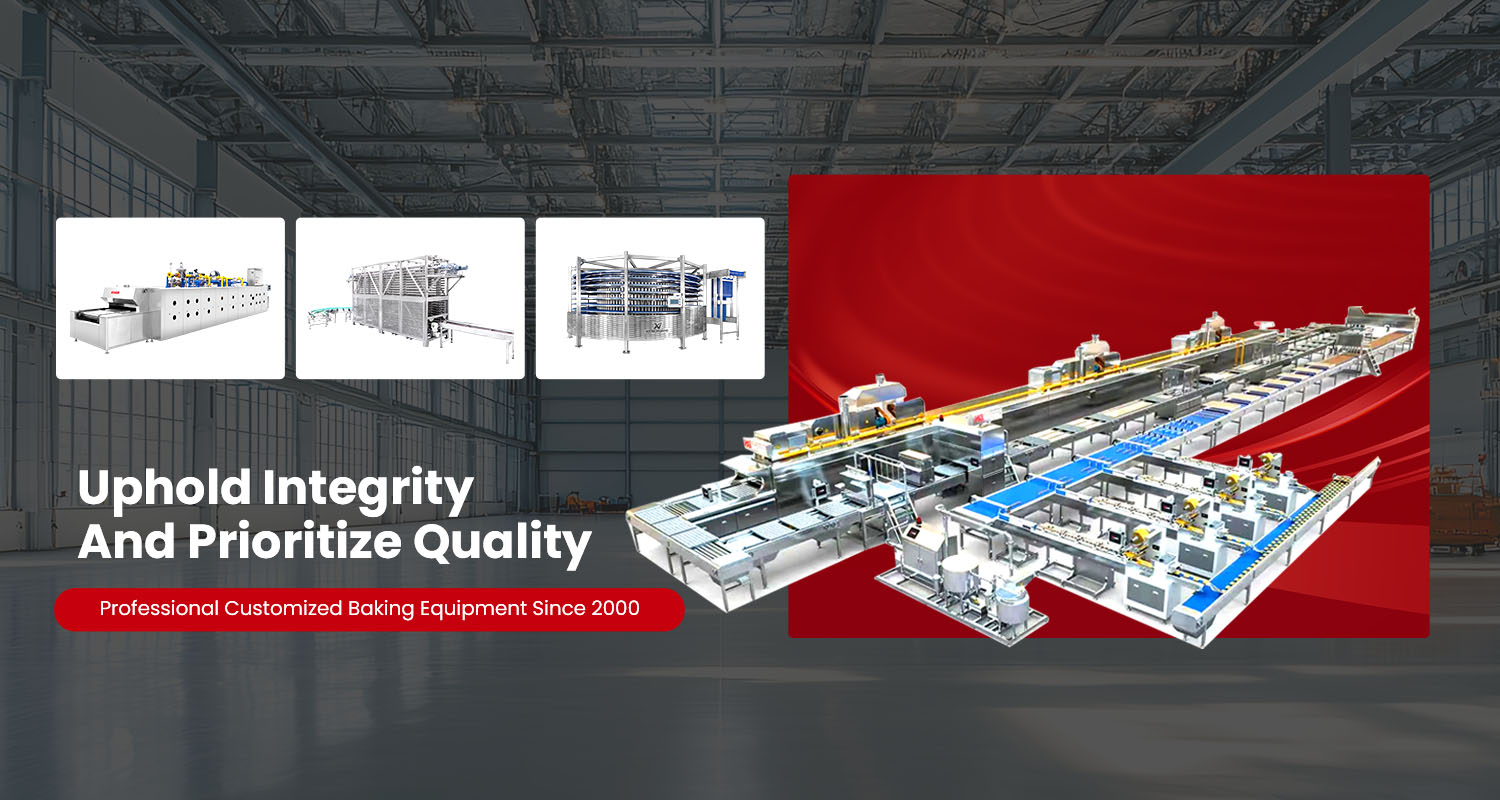
Large bakeries operate under strict production schedules where every stage must keep pace with the next one. After baking, thousands of products may leave the oven within a short period, but these products cannot immediately enter packaging because they still contain significant heat and moisture.
-
2026-09-29
-
2026-09-28Bread production is a continuous process where each stage must connect smoothly with the next one. After baking, products cannot immediately move into packaging because internal heat and moisture still need to be released. The cooling stage provides the necessary transition between high-temperature baking and final handling.
-
2026-09-28The investment cost of bakery equipment is not determined by the machine itself alone. For factories planning to install a Spiral Cooling Tower System, understanding the factors behind pricing helps create a more accurate production budget and avoid unexpected costs during equipment selection.
-
2026-09-26Cooling is a necessary transition stage between baking and packaging in modern bakery production. Freshly baked products leave the oven at high temperatures and require controlled cooling before they can enter the next process. Without sufficient cooling time and suitable conditions, factories may experience packaging difficulties, product quality changes, and production interruptions.
-
2026-09-23Bread factories often focus on improving baking capacity, but the cooling stage can become a hidden limitation when production volume increases. After products leave the oven, they must reach suitable temperatures before packaging, slicing, or further processing.
-
2026-09-22Cooling is a critical stage that connects baking with packaging and storage. After leaving the oven, baked products still contain internal heat and moisture that need to be released under controlled conditions. When cooling capacity cannot match baking speed, production flow becomes interrupted, creating delays and affecting product quality.
-
2026-08-27Cooling time depends on the product rather than a fixed industry rule. Bread, buns, cakes, toast, and filled pastries differ in weight, moisture, shape, crust, and packaging requirements. An industrial spiral cooling tower must therefore provide enough residence time for each product to reach a stable packaging condition without causing excessive drying, surface cracking, or unnecessary delays.
-
2026-03-05A spiral cooling tower is often the last “open” step before slicing, packing, or freezing, which makes maintenance a direct driver of hygiene stability, uptime, and consistent product cooling. From a manufacturer viewpoint, the goal is simple: keep the cooling path clean, keep motion components within tolerance, and keep airflow and controls repeatable shift after shift.
-
2026-01-23In automated baking lines, “cooling tower” usually means a vertical, enclosed cooling conveyor system that extends dwell time while protecting product quality. KC-SMART focuses on these food-grade cooling towers to help plants hit stable packaging conditions without sacrificing floor space.
-
2025-12-22In commercial baking operations, controlling the temperature of baked goods after they exit the oven is a critical step in ensuring final product quality, structural integrity, and shelf stability. Among the cooling solutions available, the spiral cooling tower stands out for its efficiency, space-saving footprint, and ability to handle high production volumes.
-
2025-12-17In compact bakeries, production efficiency and space utilization are constant challenges. As product volumes increase and recipes become more diversified, traditional linear cooling solutions often struggle to meet modern demands.
-
2025-12-15In modern baking operations, controlled cooling plays a vital role in preserving product quality, texture, and shelf life. A Spiral Cooling Tower Conveyor is a specialized system engineered to address cooling demands in high-throughput production lines.