





How To Scale Bakery Production Capacity?
Growing demand, tighter delivery timelines, and higher quality expectations are pushing bakery factories to rethink how they expand output. Scaling production is not only about adding more machines. It requires a structured approach that balances equipment, workflow, labor, and process control.
According to data published by the Food and Agriculture Organization, global demand for processed grain-based foods has grown steadily at over 3 percent annually in the past decade. This trend continues to drive bakery manufacturers to optimize production systems rather than rely on traditional batch expansion methods.
Understand current production bottlenecks
Before planning any bakery capacity expansion, it is critical to identify where the real limitations exist. In many factories, output is not restricted by oven size alone. Instead, bottlenecks often appear in dough preparation, proofing, cooling, or manual handling.
Typical bottleneck areas include:
Mixing inconsistency leading to uneven batch timing
Limited fermentation space slowing down flow
Manual demolding and transfer reducing speed
Cooling delays affecting packaging efficiency
A detailed production audit helps determine whether the issue lies in machine capacity, process imbalance, or labor dependency.
Upgrade to industrial baking equipment
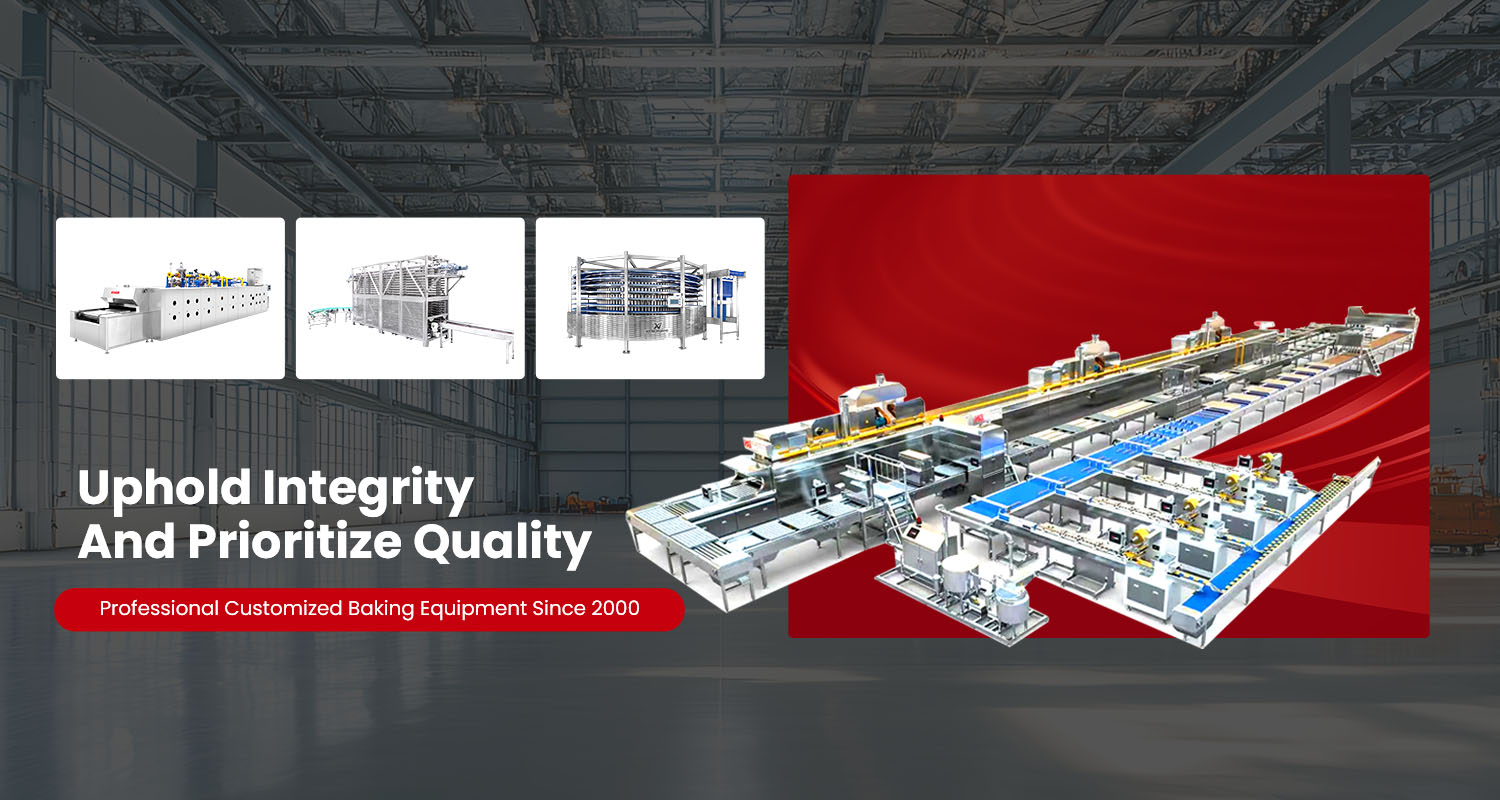
Scaling efficiently requires moving from semi-manual setups to industrial baking equipment designed for continuous operation. High-capacity systems allow stable output with controlled process parameters.
Key upgrade directions include:
Continuous mixers with stable dough output
Automated proofing systems with precise environmental control
tunnel ovens with adjustable heating zones
Integrated conveying systems to reduce manual transfer
Industry data from European Bakery Industry Associations shows that automated baking lines can increase production efficiency by up to 40 percent while reducing labor requirements by nearly 30 percent in large-scale operations.
KC-SMART focuses on intelligent equipment design that supports continuous production while maintaining product consistency across batches.
Optimize process flow for food production scaling
Food production scaling is not just about equipment size. It depends heavily on how each process connects to the next. A well-balanced production line ensures that no section operates faster or slower than the rest.
Important flow optimization principles:
| Process Stage | Optimization Focus | Result |
|---|---|---|
| Mixing | Batch timing alignment | Stable upstream supply |
| Fermentation | Controlled residence time | Consistent dough quality |
| Baking | Heat distribution uniformity | Even product color |
| Cooling | Sufficient conveyor length | Moisture stability |
| Packing | Speed matching | Reduced backlog |
When process flow is aligned, factories can increase bakery production capacity without unnecessary downtime or product waste.
Reduce manual handling with automation
Manual operations are one of the biggest barriers when scaling production. Tasks such as tray unloading, product transfer, and sorting can slow down the entire line and introduce inconsistency.
The Bakery Food Depanner Machine plays a critical role in automation by removing baked products from trays efficiently and consistently. Compared to manual demolding, automated depanning improves speed and reduces product damage, especially for delicate items like cakes and soft bread.
Benefits of depanning automation:
Faster cycle time between baking and cooling
Reduced labor intensity
Improved product appearance consistency
Better hygiene control
Automation in this stage allows factories to maintain high output without increasing workforce proportionally.
Expand capacity without expanding space
Many factories face physical space limitations. Instead of expanding the building, smart layout and vertical equipment design can significantly improve output within the same footprint.
Strategies include:
Using multi-layer conveyors for cooling
Installing vertical fermentation systems
Optimizing equipment placement for linear flow
Reducing unnecessary product handling paths
This approach helps factories scale bread manufacturing process efficiency while keeping operational costs under control.
Ensure consistent quality during scaling
Increasing output should not lead to quality variation. Maintaining product consistency becomes more challenging when production speed increases.
Key quality control points:
Dough temperature monitoring during mixing
Fermentation humidity and timing control
Oven temperature curve stability
Cooling time consistency before packing
Food safety systems such as HACCP highlight the importance of controlling critical points in production. Maintaining these controls ensures that higher output does not compromise product standards.
Plan for flexible production
Market demand can change quickly, especially for bakeries producing multiple product types. Flexible production lines allow factories to adjust recipes, sizes, and formats without major system changes.
Flexibility considerations:
Adjustable forming equipment
Modular conveyor systems
Multi-product compatible ovens
Quick cleaning and changeover design
KC-SMART designs systems that support both high-volume production and product variation, helping factories respond to changing market requirements.
Evaluate long-term production strategy
Scaling production is not a one-time decision. It requires a long-term strategy that considers future demand, labor cost trends, and energy efficiency.
Important factors include:
| Factor | Impact |
|---|---|
| Energy consumption | Affects operating cost at higher output |
| Labor structure | Determines automation investment level |
| Maintenance planning | Ensures stable long-term operation |
| Expansion capability | Supports future growth without redesign |
Factories that plan with a long-term perspective can achieve sustainable growth rather than temporary output increases.
Conclusion
Scaling bakery production capacity requires a combination of equipment upgrade, process optimization, and automation integration. By identifying bottlenecks, improving production flow, and adopting intelligent machinery, factories can increase output while maintaining product quality.
KC-SMART supports bakery manufacturers with advanced equipment solutions, from mixing and fermentation to depanning and conveying. With a focus on system integration and practical production efficiency, KC-SMART helps build scalable bakery operations that meet modern manufacturing demands.