





What Causes Products to Stick to Trays?
Freshly baked products should move smoothly from baking trays to cooling or packaging processes, but tray sticking remains a common production issue in many bakeries. When bread, pastries, or other baked goods cannot be released properly, it may lead to product damage, increased waste, slower production speed, and additional manual handling. Understanding the reasons behind sticking problems helps manufacturers improve production stability and select suitable solutions for automated baking lines.
An efficient production process depends not only on baking conditions but also on how products interact with trays during demoulding. Factors such as dough formulation, tray surface condition, baking temperature, and release methods all influence the final result. With the development of automated bakery production, an industrial food depanner has become an important solution for improving product handling efficiency and reducing unnecessary losses after baking.
Main Reasons Why Baked Products Stick to Trays
Tray sticking does not usually come from a single factor. It is often caused by several production conditions working together. Identifying the exact cause allows factories to adjust processes more effectively.
| Cause | How It Affects Product Release |
|---|---|
| Insufficient oiling or coating | Products may directly contact the tray surface and become difficult to remove |
| Improper dough moisture | Excess moisture can increase adhesion between products and trays |
| Incorrect baking conditions | Under-baking may leave the bottom structure too soft and sticky |
| Damaged tray surfaces | Scratches or worn coatings can reduce release performance |
| Formula differences | Ingredients such as sugar, fat, and protein influence sticking behavior |
How Dough Formula Influences Tray Sticking
The composition of dough has a direct impact on product release performance. Recipes with higher sugar content, increased moisture, or certain fillings may create stronger adhesion during baking.
For example, products with soft textures often contain more water and require better control of baking parameters. Excessive moisture remaining at the bottom of the product can create a bonding effect between the baked item and the tray surface.
Manufacturers usually evaluate:
Dough hydration level
Fermentation condition
Ingredient ratio
Baking temperature profile
Cooling time before depanning
A stable production process requires coordination between these factors rather than adjusting only one step.
Why Tray Condition Matters In Automated Production
Trays are repeatedly used in industrial bakery environments, which means their surface condition directly affects product release. Over time, coating wear, deformation, or contamination may increase the possibility of sticking.
Regular inspection of trays helps maintain consistent results. Production lines handling large quantities need equipment that can adapt to different tray conditions and product characteristics.
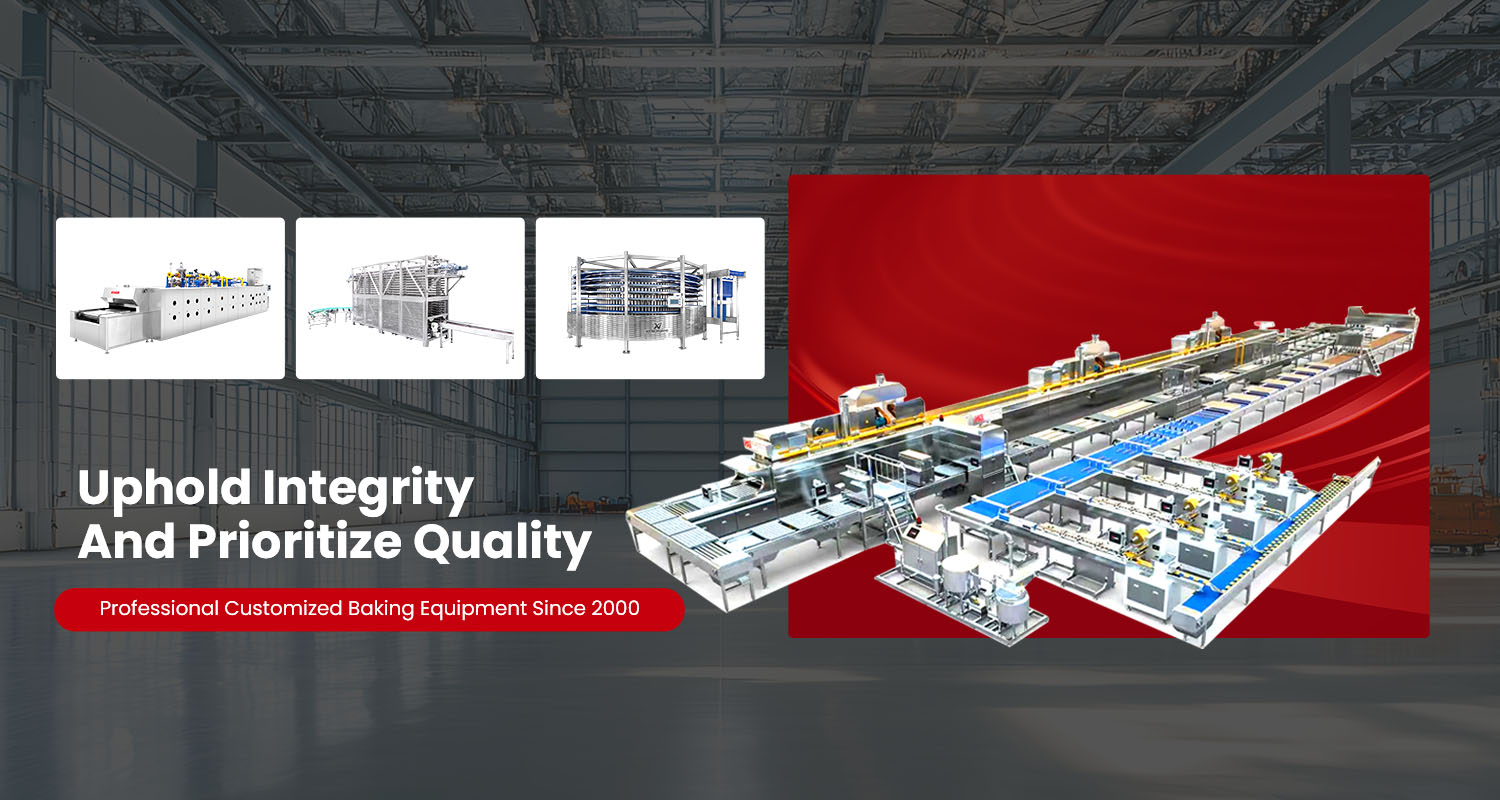
Modern depanning solutions are designed to improve product separation while reducing manual intervention. KC-SMART develops bakery automation equipment that supports stable product transfer and efficient handling after baking.
How An Automatic Depanning System Improves Production
Manual product removal may work for small-scale production, but it becomes challenging when factories increase output. Workers need to remove products quickly while avoiding deformation, especially for soft bread and delicate bakery items.
An automatic depanning line manufacturer focuses on creating systems that improve release accuracy and production consistency. Automated depanning equipment can provide several advantages:
Reducing product damage caused by manual handling
Improving production speed after baking
Lowering labor requirements
Supporting continuous bakery operations
Maintaining cleaner production conditions
The depanning process can be adjusted according to product size, tray design, and production requirements, making it suitable for different bakery applications.
How To Reduce Tray Sticking Problems Before Depanning
Although automation improves efficiency, preventing sticking at the production source remains important. Bakeries can reduce problems by optimizing several areas:
1. Maintain Proper Baking Conditions
Baking temperature and time should match product characteristics. Products removed too early may have insufficient structure development, increasing the risk of sticking.
2. Keep Trays In Good Condition
Cleaning procedures and regular replacement of damaged trays help maintain consistent release performance.
3. Control Dough Processing
Stable mixing, fermentation, and moisture control create more predictable product behavior during baking and depanning.
4. Match Equipment With Product Requirements
Different bakery products require different handling methods. Bread, toast, cakes, and specialty products may need customized depanning solutions to achieve reliable results.
Building A More Stable Bakery Production Process
Tray sticking is not only a product quality issue but also an efficiency challenge. When products fail to release smoothly, the impact can extend from baking operations to cooling, packaging, and delivery schedules.
A well-designed automated system combined with proper process control helps bakeries achieve smoother production flow. Equipment selection should consider product characteristics, tray types, output capacity, and future expansion needs.
Understanding the causes behind tray sticking allows manufacturers to improve production reliability and create a more efficient bakery operation with fewer interruptions and reduced product waste.