





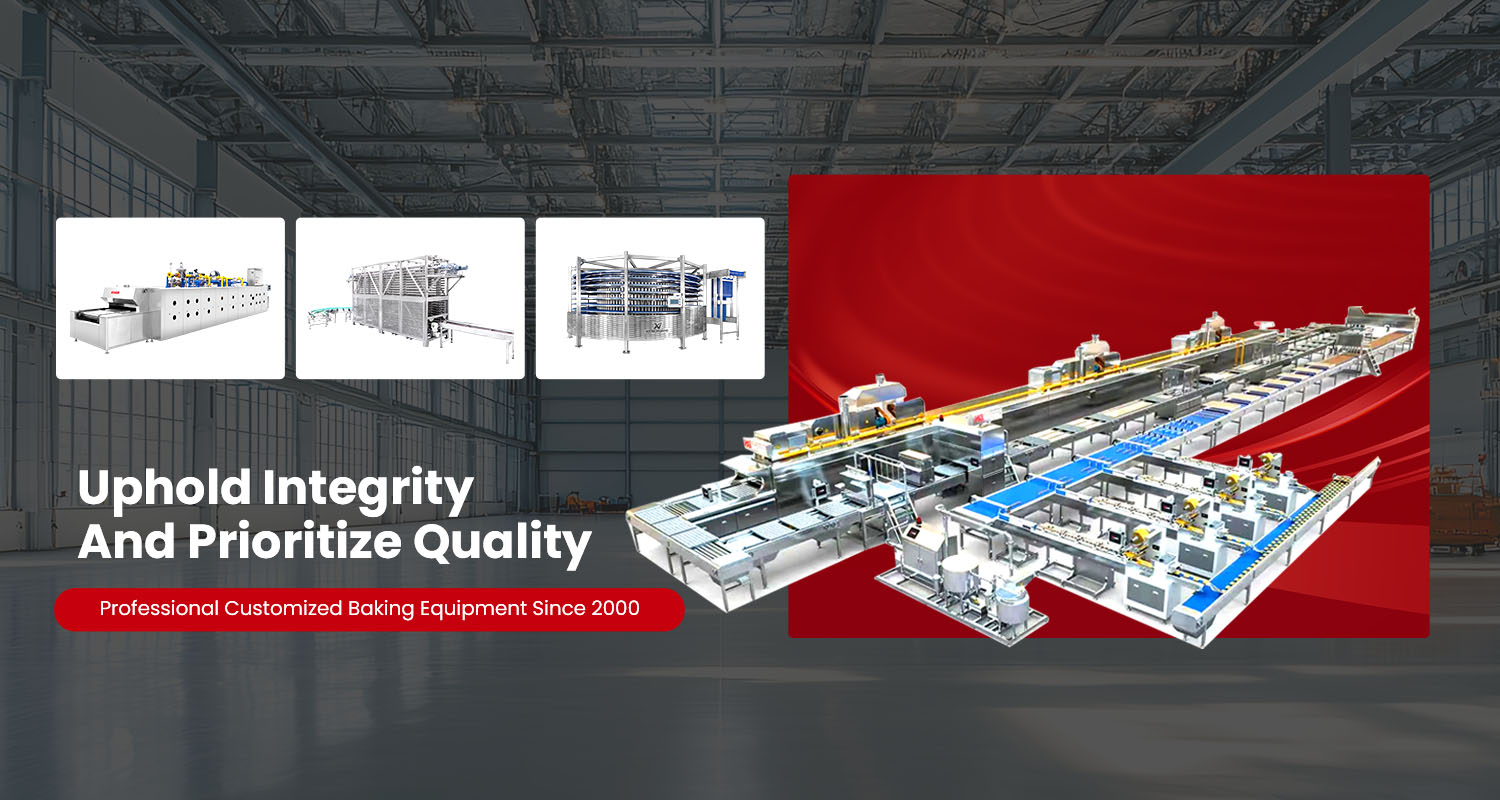
Why Production Line Flexibility Matters?
In today’s competitive food processing landscape, manufacturers face increasing pressure to balance efficiency with adaptability. The bakery industry alone is projected to grow at a compound annual growth rate of 3.8 percent through 2030, driven by demand for diverse baked goods and specialty items. This trend highlights the importance of a flexible production line that can quickly respond to changes in product type, production volume, and customer preferences without sacrificing quality or output speed.
Understanding Flexible Production Line Benefits
Flexible systems are not just an operational luxury; they are a strategic necessity. A flexible manufacturing system enables rapid changeovers between product formats, reduces downtime, and supports a wide variety of products on a single line. For example, bakeries producing bread, rolls, and pastries on the same line can reduce idle time by up to 30 percent compared to rigid, single-product lines. This efficiency gain directly contributes to higher throughput and lower operational costs.
Manufacturers that adopt adaptable technologies can also respond to market trends faster. When consumer demand shifts toward healthier options or seasonal specialties, a modular bakery system allows components to be reconfigured without full line replacement. This adaptability can reduce retooling costs by an estimated 40 percent over traditional designs and extend the useful life of production assets.
Design Principles That Drive Flexibility
An effective flexible production line begins with thoughtful design. A design flexible bakery line prioritizes modular units that can be rearranged or expanded as needed. Key considerations include:
Standardized interfaces between modules to enable plug-and-play changes
Scalable conveyors and handling systems that support varying product sizes
Quick-release tooling and fixtures for faster changeovers
These principles allow manufacturers to scale capacity up or down based on seasonal demand or order fluctuations. For instance, a bakery line that can adapt production line capacity from 2,000 to 8,000 units per hour enables efficient response to both small batch specialty orders and large contract requirements.
Economic and Operational Impacts
The financial impact of flexible production extends beyond capital savings. By reducing downtime and maximizing uptime, companies can improve overall equipment effectiveness (OEE). Best-in-class food processors often achieve OEE scores above 85 percent, compared to industry averages near 60 percent. Flexible equipment contributes to higher scores by minimizing losses associated with equipment changeover and adjustment.
Operational flexibility also improves labor utilization. Cross-trained operators can manage multiple product formats on the same line, lowering training and staffing costs. Research shows that manufacturing facilities with adaptable systems report 20 percent lower labor turnover due to greater job variety and engagement.
Meeting Regulatory and Quality Requirements
In highly regulated environments like food and beverage manufacturing, flexibility must complement compliance. Flexible systems that include advanced automation and real-time monitoring help ensure consistent product quality. Automated systems can maintain precise temperature, dough proofing conditions, and baking times with minimal human intervention, reducing variation and improving food safety outcomes.
Case for Investment and Long-Term Value
Choosing flexible production technology is an investment in future-proofing your operation. Instead of replacing entire lines to meet new product demands, modular and adaptable systems allow incremental upgrades. Over a ten-year lifecycle, flexible systems can reduce total cost of ownership by up to 25 percent compared to fixed systems.
Moreover, the ability to adapt quickly supports strategic expansion into new markets. Whether responding to export demand or local customer preferences, manufacturers with adaptable lines enjoy a competitive edge. This dynamic capability sets the foundation for sustainable growth in an uncertain marketplace.
Comparative Equipment Specification
| Feature | Traditional Line | Flexible Line |
|---|---|---|
| Changeover Time | 120 minutes | 30 minutes |
| Product Format Variety | Low | High |
| Capacity Scalability | Limited | Extensive |
| Downtime for Retooling | High | Minimal |
| Estimated Long-Term Cost Savings | Baseline | 25% Lower |
Final Thoughts
Production flexibility enables manufacturers to thrive amid uncertainty and evolving consumer demands. Investing in systems that support varied outputs, rapid changeovers, and scalable capacity enhances operational performance and financial resilience. Adopting flexible, modular approaches empowers manufacturers to harness innovation while maintaining quality standards and cost control.