





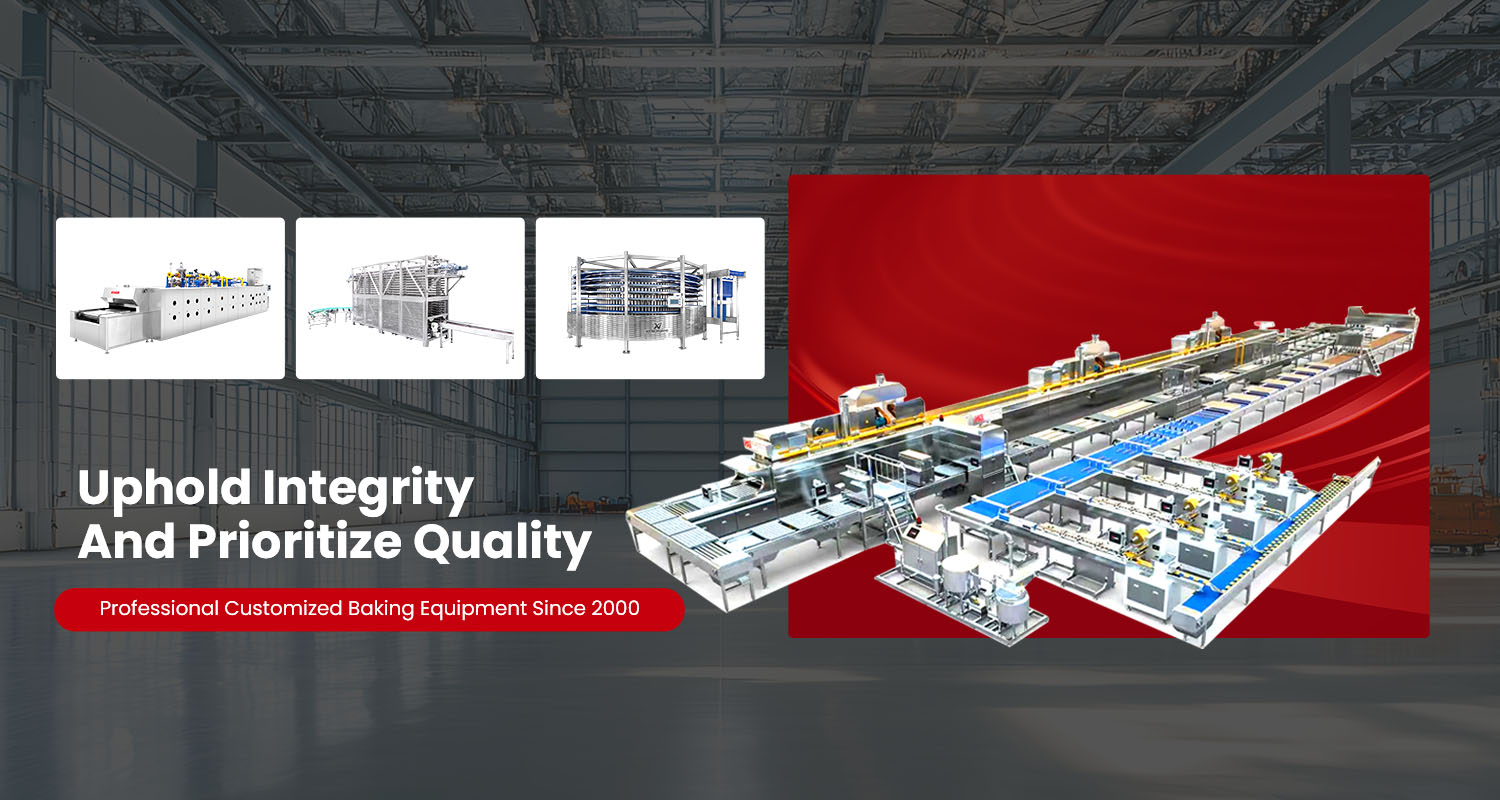
What Is Industrial Bakery Automation System?
Industrial bakery automation system has transformed the landscape of commercial baking and wholesale production. Modern bakeries face rising demand, tight delivery windows, and pressure to maintain consistent quality across all product lines. To meet these challenges, bakeries are increasingly integrating technology to automate repetitive tasks, increase throughput, and reduce labor costs. This article explores how automation works in industrial baking, highlights measurable benefits, and explains how KC‑SMART supports large scale operations.
The evolution of bakery production
Traditional bakeries relied on manual labor to mix, shape, proof, and bake products. This approach limited output and made consistent quality difficult to achieve. Over the last decade, automation has reshaped the sector. According to industry research, automated lines can increase production capacity by up to 300% while reducing waste by at least 15 percent.
An industrial baking equipment layout typically includes systems for ingredient dosing, dough mixing, molding, proofing, baking, cooling, and packaging. When these stages are linked in an automatic production line, the flow of materials is continuous, errors are minimized, and operational efficiency rises.
Core components of a bakery automation system
A complete automated production line for bakery typically includes the following key modules:
Dough preparation unit: Measures and mixes ingredients with precision. Accurate dosing reduces raw material waste and improves dough consistency.
Forming and shaping machines: Convert dough into final shapes with exacting standards. These machines handle long loaves, rolls, and specialty shapes.
Proofing tunnels: Maintain controlled temperature and humidity to allow proper dough fermentation.
Ovens with controlled heat zones: Ensure uniform baking and reduce energy consumption by optimizing heat distribution.
Cooling conveyors: Bring products to stable temperatures before handling.
Packing systems: Seal products in bags or trays, readying them for distribution.
Integrating these modules creates a seamless process from raw ingredients to final delivered goods.
Key benefits of automating bakery operations
Investing in an automated solution delivers measurable gains across production metrics. Notable benefits include:
Increased output: Fully integrated lines can produce between 2,000 and 10,000 units per hour depending on product type and equipment configuration.
Labor optimization: Automation reduces reliance on manual operators. Facilities report up to 30 percent reduction in labor hours required per shift.
Quality consistency: Machines perform repeatable actions with precision, ensuring products meet defined specifications every time.
Energy efficiency: Advanced ovens and conveyors optimize heat use and lower utility costs by as much as 20 percent.
Traceability and data capture: Modern systems record production data at each stage, enabling better quality control and compliance reporting.
The ability to quantify improvements allows bakeries to forecast returns on investment and justify upgrades to existing facilities.
How KC‑SMART enhances automated bread production system
KC‑SMART has developed tailored solutions to help bakeries upgrade legacy lines and adopt full automation. Our systems are built with modular design principles, allowing facilities to expand capabilities incrementally. Key strengths include:
Custom configuration: KC‑SMART works with clients to design layouts based on production volume, product mix, and floor space constraints.
Advanced control systems: PLC driven operations manage timing, speed, and temperature with high accuracy.
Robust construction: Industrial grade components ensure long service life under continuous operation.
Ease of maintenance: Accessible tooling and clear diagnostic interfaces reduce downtime for repairs or adjustments.
Integration with upstream and downstream processes: Our solutions support expansion into packaging warehouses and logistics systems.
With more than ten years of experience in automation engineering, KC‑SMART delivers solutions that match the needs of large scale baking operations.
Practical impact on efficiency and quality
To illustrate improvements from automation, the table below compares typical performance indicators before and after automation was implemented at a mid‑size bakery:
| Performance Indicator | Before Automation | After Automation |
|---|---|---|
| Production capacity (loaves per hour) | 1,200 | 6,800 |
| Labor hours per 1,000 units | 8 hours | 3 hours |
| Product waste rate | 7 percent | 3 percent |
| Energy cost per 1,000 units | 45 kWh | 36 kWh |
| Quality rejection rate | 5 percent | 1 percent |
This example shows how integrating automated units across stages reduces bottlenecks and improves overall efficiency.
Planning for automation implementation
Successfully adopting an automation solution requires careful planning. Key steps include:
Assessing current workflows: Map existing processes, identify bottlenecks, and determine areas where automation would deliver the greatest impact.
Setting measurable goals: Define target metrics such as throughput, labor reduction, and quality improvements.
Choosing scalable technology: Select components that accommodate future growth in production demand.
Training personnel: Equip staff with skills to operate and maintain automated equipment.
KC‑SMART’s project team supports each step with industry insights and engineering expertise. By aligning operational goals with technology choices, bakeries can achieve smoother transitions to automated operations.
Conclusion
To understand bakery automation solution thoroughly, it is important to focus on how technology integrates with existing practices and delivers tangible results. Automated systems streamline production, improve quality control, and help bakeries remain competitive in a demanding market. KC‑SMART’s comprehensive offerings guide facilities through design, implementation, and ongoing optimization of their automated bakery systems. Continuous innovation in automation assures that bakeries of every size can benefit from reliable, high volume performance.