





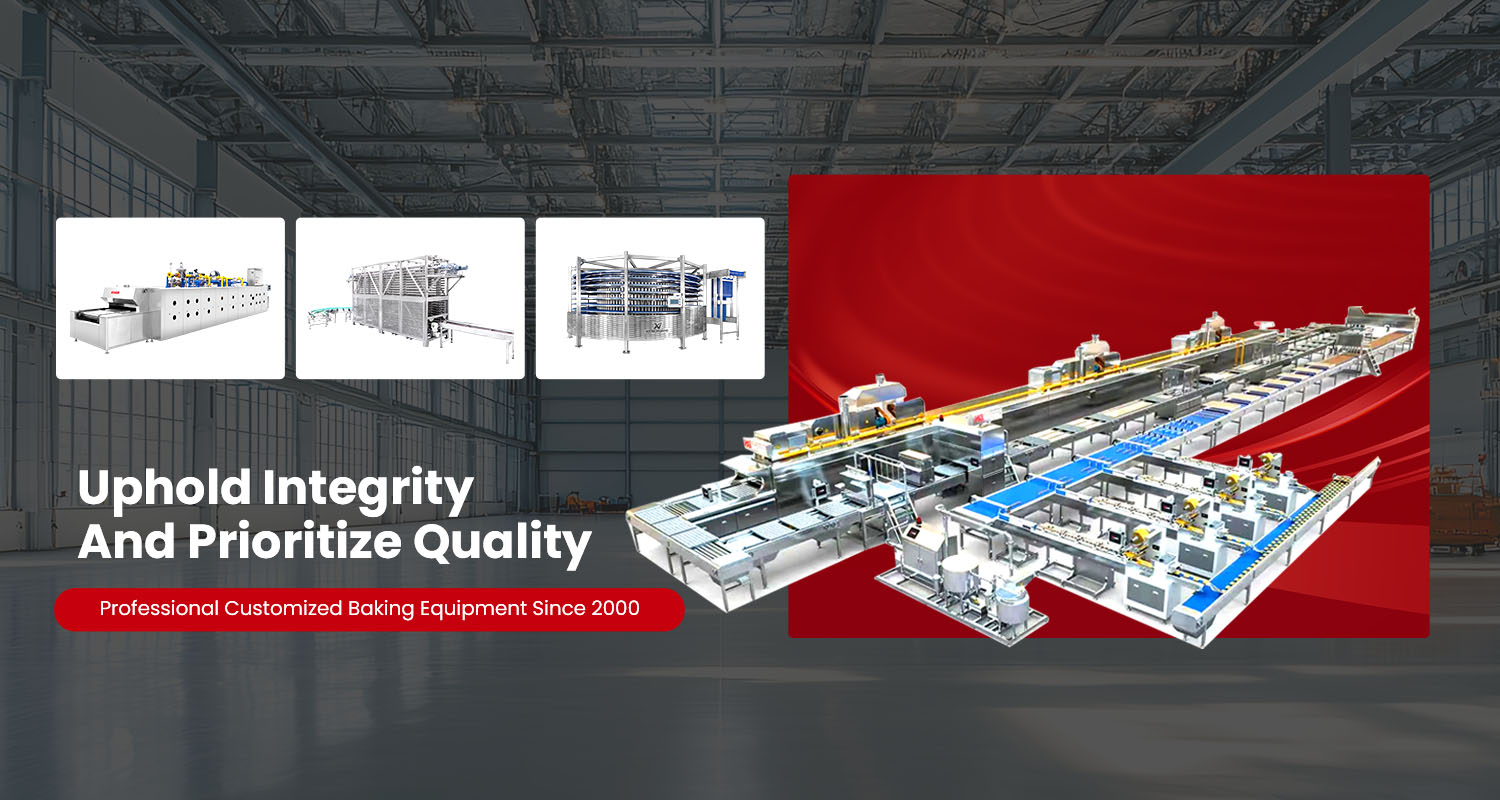
What is Spiral Cooling System Used for?
Fresh baked products cannot move directly from oven discharge to packing. Bread, cakes, buns, mooncakes, and similar foods need controlled cooling so heat can leave the product gradually while shape, surface, and internal moisture remain stable. This is the main spiral cooling system use in modern bakery production: keeping products moving continuously while cooling them inside a compact vertical structure.
Cooling After Continuous Baking
When products leave a tunnel oven, the surface temperature drops faster than the center. If they are packed too early, condensation may form inside the package, which can affect texture and shelf stability. Food processing guidance commonly treats safe cooling and temperature control as important parts of hygiene management, especially before slicing, bagging, or freezing.
A spiral cooler gives products a longer travel path without requiring a long straight conveyor. The belt moves around a central tower in multiple layers, allowing products to stay in controlled airflow for the required time. This makes it suitable for factories that need stable output but have limited floor space.
Common Products Suitable For Spiral Cooling
Different foods need different cooling times, belt widths, and air settings. A soft bread loaf may need gentle movement to protect its shape, while mooncakes or small cakes may need even spacing to avoid surface contact.
| Product Type | Cooling Purpose | Production Concern |
|---|---|---|
| Bread | Reduce core heat before slicing | Avoid deformation and moisture return |
| Buns | Stabilize surface after baking | Keep shape consistent |
| Cakes | Protect texture before packing | Reduce cracking and sticking |
| Mooncakes | Prepare for sorting and packaging | Maintain surface appearance |
| Pastries | Lower heat after oven discharge | Reduce oil or moisture imbalance |
This is why a bakery cooling conveyor should be selected according to product size, weight, surface condition, cooling time, and line speed rather than only by capacity.
Why Bakeries Use Spiral Cooling
Many bakery plants use long cooling conveyors, but they require large workshop space. A spiral structure extends conveyor length vertically, which helps save layout area. KC-SMART’s website shows Spiral Cooling Tower and vertical food cooling tower solutions designed for bread, cake, and mooncake production lines, with customized design, manufacturing, installation, debugging, and after-sales maintenance support.
A spiral cooling system is mainly used to:
Cool products continuously after baking
Connect the oven with slicing, sorting, or packing
Reduce manual handling between process stages
Save floor space in high-output workshops
Support more stable product temperature before packing
How It Improves Cooling Efficiency
To improve product cooling efficiency, the system must balance belt speed, airflow direction, product spacing, and residence time. Faster speed does not always create better efficiency. If the center temperature remains too high, the product may still need extra waiting time before packing.
The better approach is to design the cooling path around the real baking process. Our engineers usually review oven output, product dimensions, cooling target, workshop height, and downstream packing speed before selecting the tower size. This helps the cooler work as part of the complete line instead of becoming a separate bottleneck.
Where Spiral Cooling Fits In A Bakery Line
The system is usually installed after the oven and before depanning, slicing, sorting, packing, or freezing, depending on the product flow. For bread lines, a Bread cooling spiral conveyor can help reduce product temperature before slicing and bagging. For cakes or mooncakes, it can help stabilize surface condition before automatic sorting.
A typical flow may look like this:
Oven discharge → transfer conveyor → spiral cooling tower → inspection → sorting → packing
When this section is designed well, products move smoothly from hot processing to final handling with less manual transfer and fewer interruptions.
Material And Hygiene Considerations
Food cooling equipment must be easy to clean because cooling is often the last open process before packaging. KC-SMART’s Spiral Conveyor Cooling Tower information mentions a 304 stainless steel frame and high-strength food-grade plastic conveyor belt, supporting wear resistance, corrosion resistance, easier cleaning, and gentle product handling.
For daily operation, factories should pay attention to crumb build-up, belt condition, airflow cleanliness, and drainage design. A cooling system that is hard to clean can increase maintenance pressure, even when the cooling performance is acceptable.
Choosing The Right Spiral Cooling System
A suitable spiral cooler is not chosen only by tower height or belt length. It should match the real production line.
Key selection points include:
Product size and weight
Hourly oven output
Required cooling time
Workshop height and available footprint
Belt type and surface contact requirement
Cleaning access and maintenance space
Connection with upstream and downstream equipment
For a new line, early layout planning is important. For an existing line upgrade, we can review the current oven discharge height, available workshop space, and target packing speed to recommend a more practical configuration.
Final Thoughts
A spiral cooling system is used to cool baked foods continuously, save production space, reduce manual handling, and keep product temperature more stable before the next process. For bakery factories, the value is not only faster cooling. The deeper value is smoother line connection, better temperature control, cleaner handling, and more reliable production rhythm.