





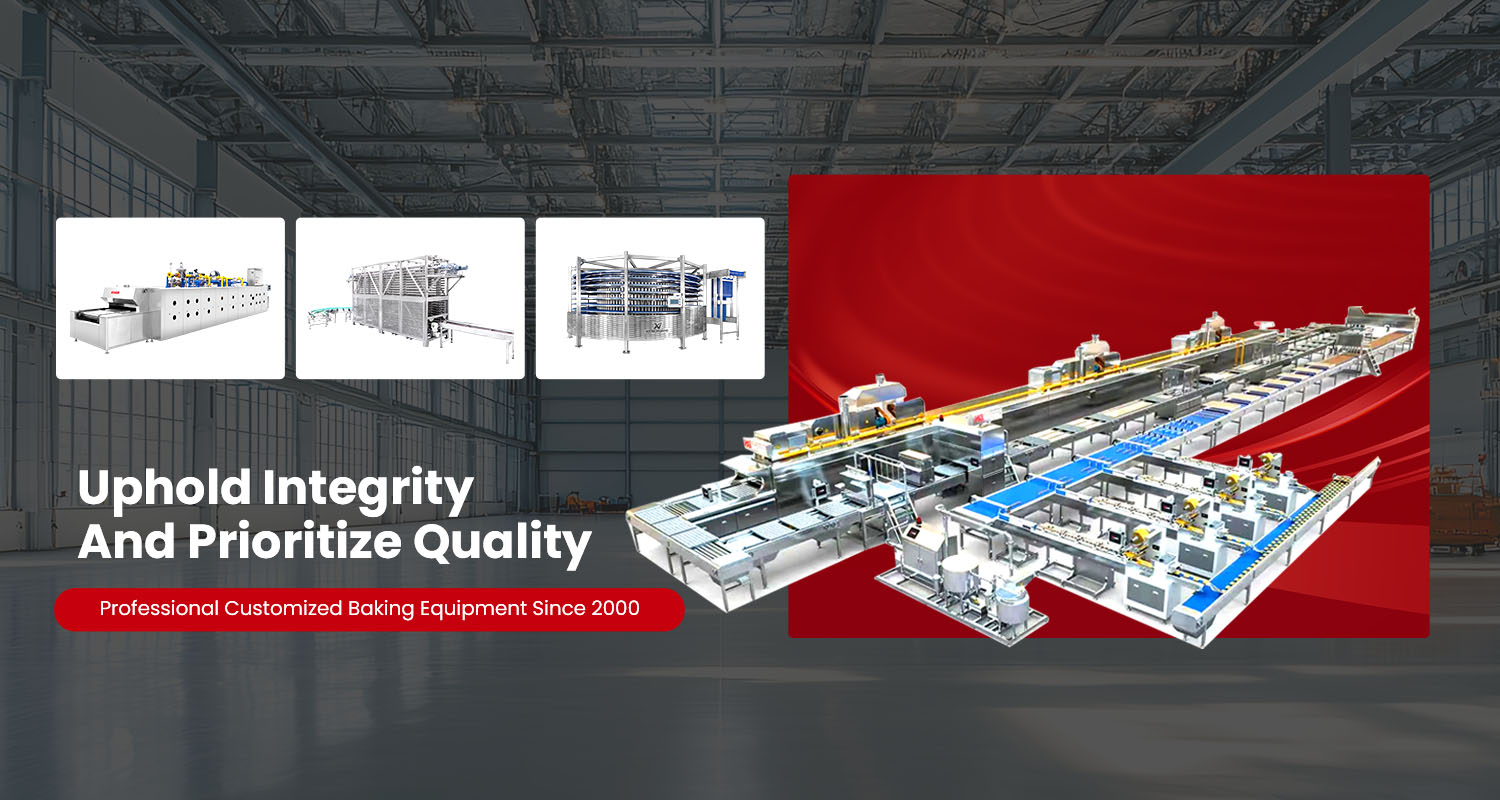
What Is Complete Bakery Production Solution?
Modern bakery production is no longer built around one machine only. A factory needs stable ingredient handling, mixing, forming, baking, cooling, conveying, packing connection, and after-sales support. A complete bakery solution connects these steps into one workable production flow, so the factory can reduce repeated adjustment and improve daily operation stability.
More Than Separate Bakery Machines
Buying single machines may solve one process problem, but it may also create new problems between processes. For example, a mixer may produce enough dough, but the forming section may not match the same capacity. An oven may bake fast, but the cooling section may not have enough holding time before packing.
A complete solution looks at the full process before equipment selection. The supplier needs to understand product type, workshop layout, output target, power conditions, cleaning requirements, and labor arrangement. Only then can the line design become practical for real production.
What Does A Complete Line Usually Include?
Different bakery factories need different equipment combinations. Bread, cakes, buns, cookies, pastries, and filled products may require different process routes. However, a full bakery production solution usually covers several key stages.
Ingredient storage and dosing help control recipe accuracy. Mixing equipment prepares dough or batter according to production demand. Forming equipment gives the product its size and shape. Proofing, baking, cooling, and conveying keep the process moving continuously. Packing connection helps reduce manual transfer at the final stage.
This is why an industrial baking system should be planned as a coordinated workflow instead of a simple equipment list.
Why Integrated Design Matters
Factory space is often limited. Equipment height, conveyor direction, maintenance access, operator movement, and finished product flow all affect efficiency. If the layout is not planned early, the production line may look complete on paper but become difficult to operate after installation.
An integrated bakery system design can help the factory avoid common problems such as:
Crossed material flow
Too many manual transfer points
Unmatched capacity between machines
Insufficient cooling time before packing
Difficult cleaning access
Poor maintenance space around key equipment
Good design makes the production line easier to run, not just easier to purchase.
Key Data Buyers Should Review
| Item | Why It Matters |
|---|---|
| Hourly output | Helps match mixer, oven, cooler, and packing speed |
| Product size | Affects mold, conveyor width, oven belt, and cooling time |
| Baking temperature | Influences oven design and energy planning |
| Cooling requirement | Prevents condensation and shape deformation |
| Workshop layout | Decides line direction and equipment footprint |
| Cleaning method | Affects hygiene control and maintenance workload |
Food safety management references from Codex HACCP principles emphasize process control, hygiene, and hazard prevention across production steps. For bakery factories, this supports the need to consider the whole line instead of treating each machine separately.
Turnkey Production Line Support
A turnkey production line is useful when the factory wants one supplier to coordinate equipment planning, manufacturing, installation, commissioning, and operator training. This reduces communication gaps between different machine sections and helps the project move with clearer responsibility.
From a manufacturer’s perspective, we usually review the product recipe, process target, available space, and expected daily output before proposing equipment. The goal is not to recommend the largest machine. The goal is to build a line that can run smoothly, match the buyer’s product range, and leave enough space for future adjustment.
Practical Value For Bakery Factories
A complete bakery production solution can help factories improve production in several ways. First, it reduces repeated manual handling, which can improve hygiene and lower labor pressure. Second, it helps stabilize product quality because each process is designed to match the next one. Third, it makes future maintenance easier because the full line logic is clear from the beginning.
For growing factories, complete-line planning also supports product expansion. When the original layout has enough flexibility, the factory can add new product sizes or adjust capacity without rebuilding every section.
How To Start Planning
Before selecting equipment, the factory should prepare basic production information. This includes product photos, target output, product weight, workshop drawing, power supply, fuel type, packing method, and cleaning expectations. With these details, our team can create a more accurate layout and recommend suitable machine combinations.
A complete bakery production solution is not just a set of machines. It is a production method that connects process design, equipment matching, installation support, and long-term operation. For bakery factories that want stable output and cleaner workflow, complete-line planning can make the whole project easier to manage from the first design stage.