





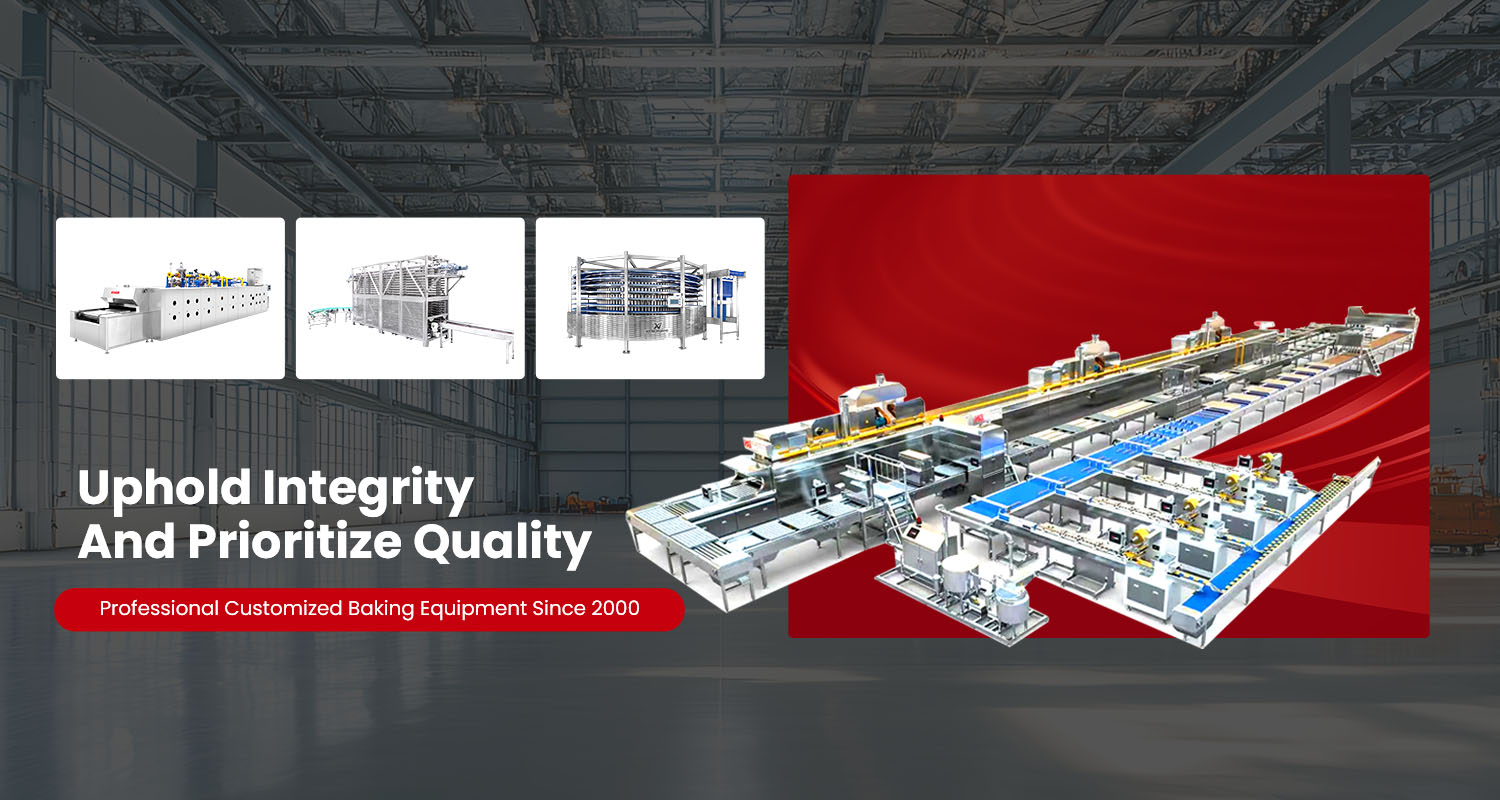
How To Design Bakery Production System?
Designing a bakery production system begins with one practical question: how should raw materials become stable finished products with less waste, smoother movement, and easier control? For industrial bakeries, the answer cannot come from one machine alone. It comes from process planning, equipment matching, space layout, hygiene design, and production data.
Define The Product Before The Machine
Bread, cakes, buns, pastries, and tray-baked foods each need different handling logic. A soft cake may require gentle depanning, while bread may need stronger dough processing, proofing, baking, cooling, slicing, and packing connection.
Before line design, the factory should confirm product size, target weight, recipe characteristics, tray type, hourly capacity, cooling time, and packing method. These details decide the real equipment route and help avoid buying machines that cannot match the final production goal.
Plan The Flow From Raw Material To Packing
A clear food processing system should reduce unnecessary turning, waiting, and manual transfer. The production flow usually starts with ingredient preparation, then moves through mixing, forming, proofing, baking, depanning, cooling, inspection, and packing.
The best layout is not always the shortest layout. It should allow operators to clean machines, check products, move trays, handle waste, and maintain equipment without blocking the line. A well-planned route can reduce confusion during busy production hours.
Match Capacity Across Each Section
An industrial baking line works well only when each section supports the next one. If the oven produces faster than the cooling section can handle, products may wait in the wrong area. If the depanning section is too slow, trays may accumulate after baking.
| Section | Design Focus |
|---|---|
| Mixing | Batch time and dough volume |
| Forming | Product shape and spacing |
| Proofing | Holding time and humidity |
| Baking | Temperature zones and belt speed |
| Depanning | Product release and tray return |
| Cooling | Product temperature before packing |
| Packing Link | Arrangement and transfer height |
This capacity check should be done before final layout confirmation.
Use Depanning To Protect Product Shape
Tray-baked products need careful release after baking. Manual depanning may damage product edges, slow down production, and create unstable handling between shifts. A Bakery Food Depanner Machine can help lift or separate products from trays more consistently, especially when product size, tray format, and output speed are fixed.
For cakes, bread, and similar tray products, depanning design should consider suction method, product softness, tray depth, release timing, and downstream conveyor height. Gentle transfer is important because damage after baking cannot be corrected later.
Control Hygiene And Maintenance Access
Food equipment design should support cleaning, inspection, and safe operation. HACCP-based food safety references emphasize controlling risks throughout production instead of relying only on final product checks. In bakery factories, this means equipment surfaces, transfer points, crumb collection, drainage, and access space should be reviewed during layout design.
A machine that is difficult to clean may slow daily shutdown work. A conveyor that is hard to inspect may create hidden maintenance problems. Good design helps the factory keep production stable over time.
Build The System Around Real Operation
To design bakery production line system projects properly, we usually review workshop drawings, product samples, target output, energy conditions, labor arrangement, and future product plans. The purpose is to build a line that can run well under real factory conditions, not only look complete in a proposal.
KC-SMART can support industrial baking solution design from equipment selection to layout coordination, installation guidance, debugging, and after-sales service. This helps factories reduce communication gaps between process stages and makes the full system easier to manage.
Final Thoughts
A bakery production system should connect ingredients, dough preparation, forming, baking, depanning, cooling, and packing into one practical workflow. When the system is designed around product behavior, output demand, hygiene control, and operator access, the factory can reduce bottlenecks and improve daily production stability.