





Why Equipment Reliability Affects Production
Reliable machinery does more than keep a bakery line running. It protects output plans, labor schedules, product quality, and delivery commitments. When one oven, conveyor, cooling section, or transfer unit becomes unstable, the effect can spread across the entire line. For managers planning capacity growth, industrial equipment reliability should therefore be treated as a production variable rather than a maintenance topic handled only after a breakdown.
Reliability Is a Measurable Production Variable
Equipment condition influences how closely output follows the production plan. A line may have sufficient nominal capacity yet miss targets because of micro-stops, sensor errors, or slow restarts. Monitoring machine uptime stability helps teams identify whether lost output comes from a major fault or from many small interruptions that accumulate during each shift.
| Operating signal | What it may indicate | Recommended response |
|---|---|---|
| Frequent short stops | Sensor, alignment, or product-transfer issues | Review stop codes and inspect the affected station |
| Longer heating recovery | Burner, airflow, or control-loop deviation | Check temperature response and calibration |
| Rising motor load | Friction, contamination, or mechanical wear | Inspect drive parts and lubrication points |
| Uneven line speed | Poor synchronization between connected machines | Verify communication and speed references |
Reliable data also improves factory performance metrics because output, rejection, changeover, and energy figures become more meaningful under stable operating conditions.
Where Reliability Loss Creates Hidden Cost
Repair is only the most visible cost. Operators may wait for restart while products remain too long in fermentation or cooling. Repeated interruptions also increase manual handling and create inconsistent product spacing.
Several risks deserve regular review:
Wear parts are replaced only after visible failure.
Cleaning procedures disturb sensors or mechanical settings.
Different machines use incompatible speed logic.
Spare parts are not available when a critical component fails.
Operators rely on experience instead of documented fault steps.
A reliability program should therefore connect maintenance, production, quality, and spare-parts planning rather than leaving each team to solve interruptions separately.
Designing Reliability Into bakery equipment
The most effective way to reduce machine failure risks is to address them during line design. Access space, component selection, guarding, drainage, alarm logic, and maintenance points influence future service work. Equipment should match the product, tray format, operating hours, cleaning method, and environment.
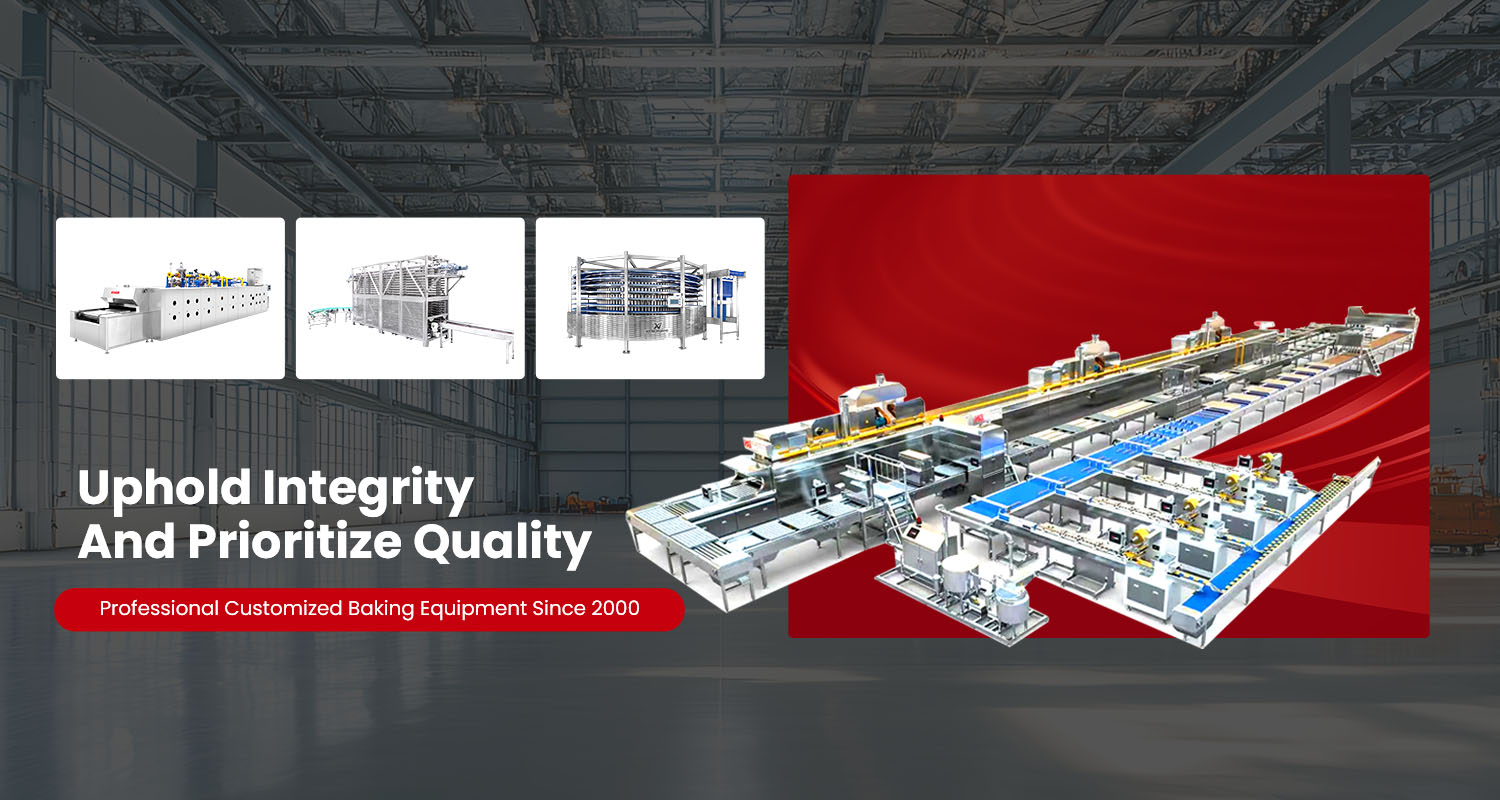
KC-SMART develops bakery solutions covering customized design, manufacturing, installation, commissioning, and after-sales maintenance. Its equipment range includes tunnel ovens, fermentation systems, cooling towers, Depanning Machines, and Automatic Sorting Lines, allowing reliability considerations to be coordinated across connected stages instead of machine by machine.
Building a Practical Reliability Plan
Teams seeking to improve bakery equipment reliability can begin with a simple hierarchy. First, identify the machines whose failure would stop the entire line. Next, record interruption frequency, repair time, recurring alarm codes, and affected output. Then define inspection intervals, essential spare parts, operator checks, and escalation procedures.
Reliability improves when the production line is designed around predictable operation and supported by maintenance information. A manufacturer should not only provide equipment capacity figures, but also explain service access, control logic, wear-part planning, and restart procedures. Share the product type, target output, space, and operating schedule with KC-SMART to begin a reliability-focused equipment assessment.