





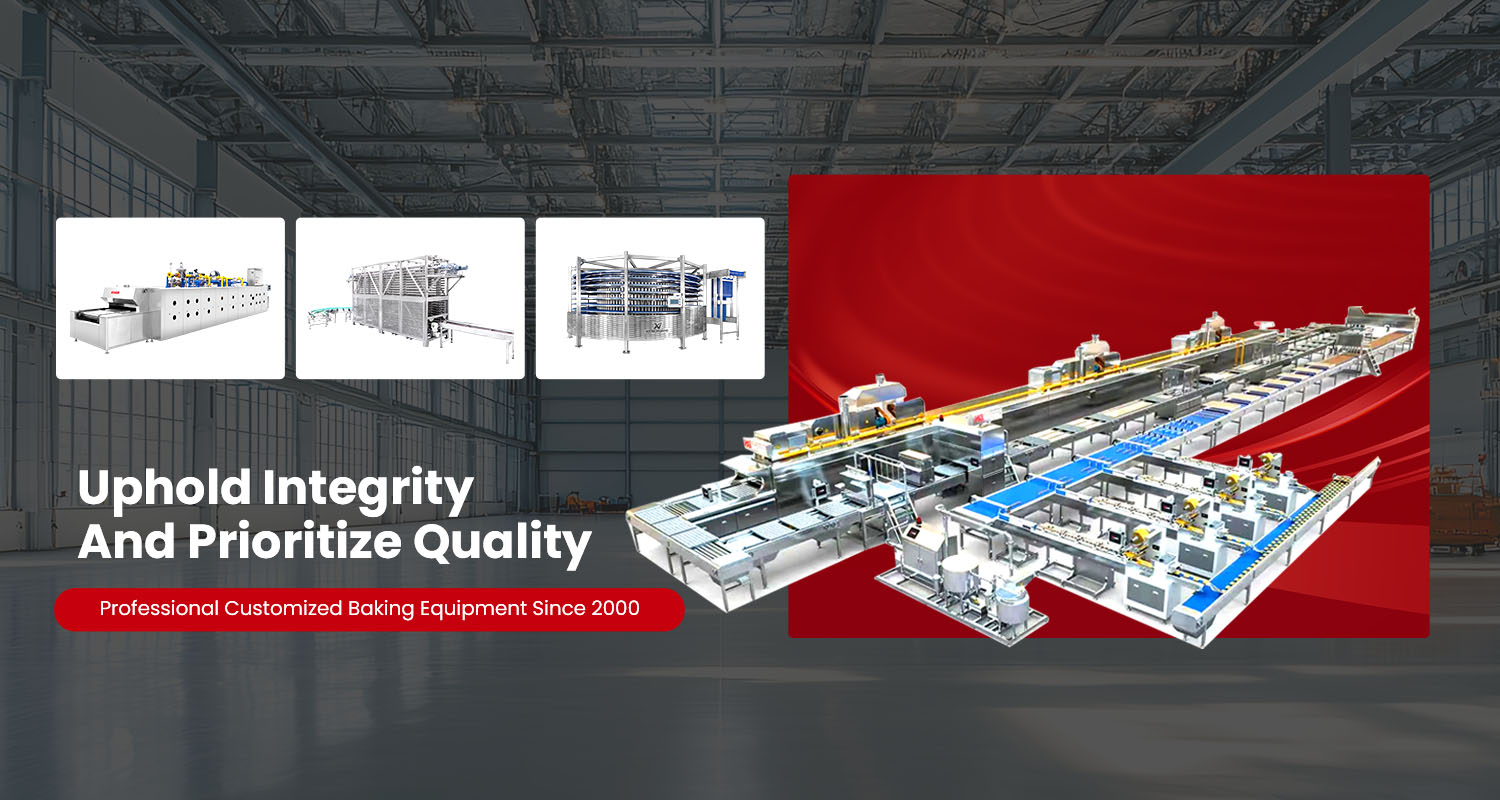
Why Is Automatic Sorting System Needed?
High-speed bakery production can lose efficiency near the end of the line. Products may leave cooling in large volumes but still need separation, orientation, counting, or rejection before packing. An automatic sorting system turns this transition into a controlled process. It maintains spacing, reduces handling, and supplies a predictable flow to downstream equipment.
Manual Sorting Becomes a Capacity Constraint
Manual output changes with product volume, fatigue, staffing, and product condition. When arrivals exceed operator capacity, products may accumulate, overlap, deform, or reach packing in the wrong orientation. Adding people may increase capacity temporarily, but it also requires more space and coordination.
The sorting section should be evaluated as part of line capacity, not as a simple finishing task. Compare incoming rate, product spacing, rejection criteria, packing demand, and time between cooling and packaging.
What Automated Sorting Actually Controls
Food sorting equipment can perform several connected functions. It may divide lanes, align direction, maintain gaps, count units, reject pieces, or route output to packing points.
The main control tasks usually include:
Receiving: accepting variable product flow without creating sudden congestion.
Separating: preventing overlapping pieces from entering the next stage.
Orienting: guiding products into the position required for packing.
Inspecting: detecting conditions defined by sensors or vision devices.
Distributing: balancing products across lanes or downstream machines.
These functions improve product sorting efficiency, but each requires product validation. Cakes, biscuits, bread, and filled products behave differently under guides, belts, air, and acceleration.
Matching the System to the Product
An industrial sorting line should be designed around product dimensions, weight range, surface condition, fragility, temperature, and permitted contact. Engineers also need the production rate, lane quantity, pack format, floor space, and connection heights.
Trials are important when products vary after baking or cooling. Natural size variation may require wider guides, gentler transfers, or different detection logic. Cleaning access and allergen-change requirements should also influence belt selection, frame structure, removable parts, and guarding.
Evaluating Return Beyond Labor
Labor reduction is only one reason to automate bakery sorting process activities. Stable sorting can protect packing utilization, reduce damage, improve count control, and support consistent records. It also reduces repetitive work.
A practical evaluation should consider:
Current labor hours and staffing difficulty
Product loss caused by overlap or poor transfer
Packing interruptions linked to irregular feeding
Changeover time between product formats
Cleaning and maintenance requirements
Space, utilities, and integration work
The business case should combine these factors with expected volume rather than headcount alone.
Planning a Reliable Sorting Section
KC-SMART offers Automatic Sorting Lines within a broader bakery equipment range that also includes fermentation, baking, depanning, cooling, and supporting equipment. The company provides customized design, manufacturing, installation, commissioning, and after-sales maintenance, supporting integration between the sorting section and the complete production process.
Successful planning starts with operating information. Product samples, hourly output, acceptable reject rules, packing requirements, line drawings, cleaning procedures, and future capacity targets help engineers define the correct handling method. Share these details with KC-SMART to develop a sorting solution that supports stable flow from cooling discharge to final packing.