





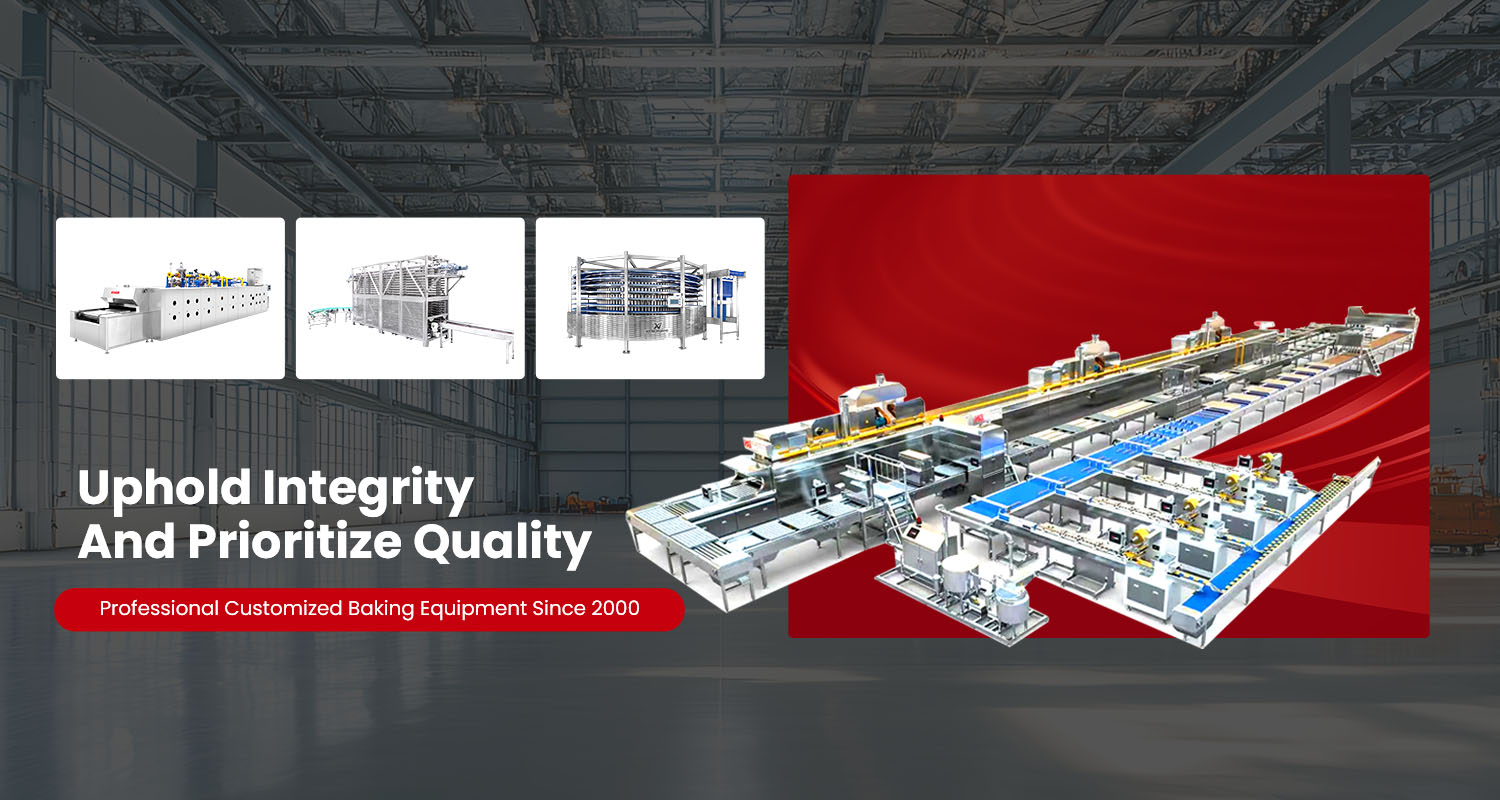
What Is Bakery Automation Equipment?
bakery automation equipment includes machines, controls, conveyors, sensors, and software used to perform or coordinate production tasks with less repetitive manual intervention. It can cover ingredient handling, mixing, forming, fermentation, baking, depanning, cooling, sorting, and packaging feed. The objective is to make output more repeatable, measurable, and scalable.
Automation Is More Than One Machine
Installing a faster machine does not automatically create an automated factory. Real automation connects process stages so products, trays, and information move in a controlled sequence. Each section must know when the next machine is ready, blocked, stopped, or running at reduced speed.
Industrial baking machines may have independent controls, but they need communication logic to work as a line. Without coordination, one machine can perform correctly while the complete process experiences queues and repeated stops.
Typical Areas of Application
Common uses include ingredient dosing, mixing, forming, fermentation control, continuous baking, depanning, spiral cooling, sorting, and packaging feed. The correct scope depends on product type, volume, labor, and factory maturity.
How a Connected Line Operates
A bakery automation production line uses sensors and control signals to maintain flow. Conveyors synchronize speed, buffers absorb short interruptions, and alarms identify the source of faults. Recipe data helps operators repeat approved settings.
The control strategy should define startup, running, shutdown, cleaning, changeover, and recovery. Safe restart logic matters when products remain inside ovens or cooling systems.
Benefits and Limits
Automation can improve consistency, reduce repetitive handling, support traceability, and improve working conditions around hot trays or heavy ingredients.
However, a food automation system does not remove the need for trained operators and maintenance teams. Unstable recipes, poor product data, weak cleaning procedures, or neglected maintenance can reduce its value.
| Evaluation area | Expected benefit | Risk to control |
|---|---|---|
| Product flow | Fewer manual transfers | Congestion between stages |
| Recipe control | Better repeatability | Incorrect settings |
| Labor use | Less repetitive work | Insufficient training |
| Production records | Easier performance review | Incomplete data |
| Line speed | Higher sustainable output | Damage at transfers |
Selecting the Right Automation Level
Factories should map the process and identify the largest losses, such as labor-intensive depanning, irregular cooling, inaccurate dosing, or packaging misfeeds. Product samples, output targets, space, utilities, cleaning rules, and changeover frequency then guide the design.
Controls and Operator Usability
An industrial baking automation system should present information clearly. Operators need visible machine status, logical alarm messages, recipe selection, and guided recovery steps. Maintenance teams need diagnostics, event history, sensor status, and manual test functions.
Data collection should focus on output, downtime, rejects, temperature stability, and changeover duration.
Hygiene and Maintenance Considerations
Conveyors, sensors, guards, cable routes, belt returns, and transfer points must remain accessible for cleaning. Maintenance plans should cover drives, bearings, pneumatic parts, heating components, and safety devices. Critical spares should be defined before operation.
Planning a Complete Solution
A complete industrial baking automation system project should include process confirmation, layout design, capacity balance, installation, commissioning, training, and validation. Each machine must be tested alone and within the line.
The strongest automation strategy starts with stable products and clear goals. When process data, operator knowledge, and engineering design are combined, automation becomes a practical tool for improving capacity and long-term factory control.