





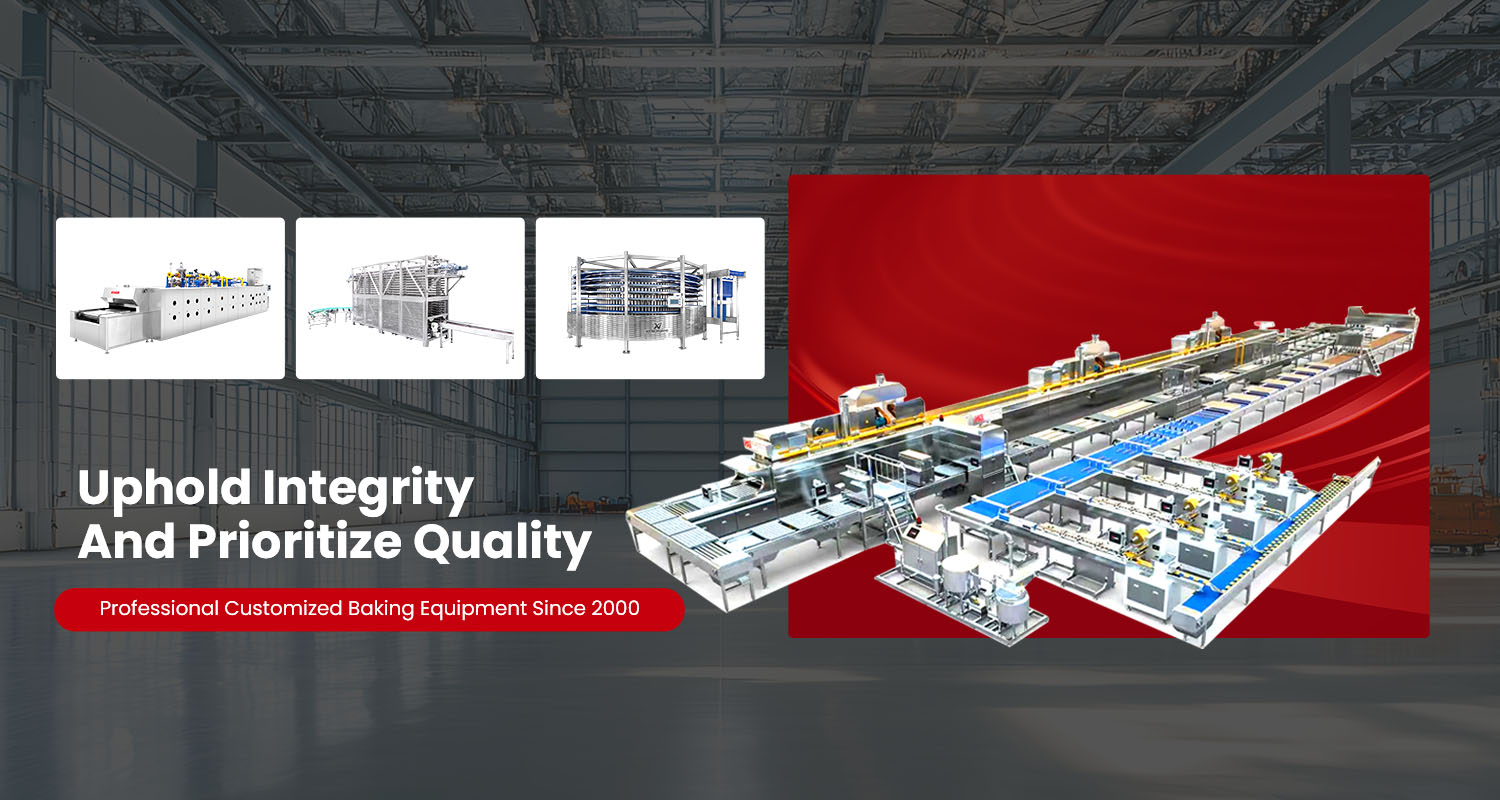
How to Choose Industrial Cooling Equipment?
Reliable cooling protects product structure, packaging quality, and line stability. Baked products continue releasing heat after leaving the oven, so cooling must lower temperature before slicing, sorting, or packing. The right system should be selected according to product data, output, space, and discharge requirements.
Define the Required Cooling Result
Begin with oven-discharge temperature, acceptable temperature before the next process, unit weight, dimensions, hourly quantity, and cooling time. These values determine residence time and usable belt area.
Insufficient cooling may create condensation or deform soft products. Excessive cooling can increase moisture loss and occupy unnecessary production time. Check surface and internal temperatures because a cool exterior does not always mean the center is ready for packing.
Compare Cooling Layouts
Straight conveyors provide easy access, but require more floor space when long dwell time is needed. Multi-pass systems create a longer route through several horizontal levels. A spiral cooling conveyor uses building height to provide extended travel within a compact footprint, making it suitable for continuous lines with limited floor area.
Ambient cooling may work where room conditions remain stable. Enclosed or conditioned systems provide stronger control when seasonal changes or production heat affect performance. A food cooling system should maintain even airflow without overdrying products.
Calculate Sustainable Capacity
Maximum conveyor speed is not the same as usable output. Product spacing, belt width, loading rows, transfer gaps, cleaning stops, and interruptions affect actual capacity. Overcrowding restricts airflow and creates temperature differences.
Capacity calculations should include:
Pieces or kilograms per hour
Required product spacing
Validated cooling time
Usable belt width
Shift length and changeovers
The system should support peak demand without overlapping products or shortening cooling time below the approved requirement.
Check Product Handling and Hygiene
Belt material, opening size, guides, turning radius, and transfer height must suit the product. Small biscuits may tip on an unsuitable belt, while cakes and soft bread can be marked by abrupt drops. Trials should check sticking, slipping, deformation, and unstable orientation.
Crumbs and oil can collect beneath belts, near drives, and around lower transfers. Removable trays, accessible belt returns, visible cleaning zones, and practical guards support sanitation. Fans, filters, bearings, motors, and sensors also need safe maintenance access.
Confirm Line Integration
The cooler must accept the oven or depanner discharge rate and deliver stable flow to sorting, slicing, or packaging. Control signals should communicate ready, running, blocked, and fault conditions. During short downstream stops, the system should respond without losing product order or creating uncontrolled accumulation.
| Selection factor | Information to confirm | Design influence |
|---|---|---|
| Product condition | Entry and exit temperature | Time and airflow |
| Output target | Pieces or kilograms per hour | Belt area and speed |
| Factory space | Length, width, and height | System layout |
| Cleaning method | Dry cleaning or washdown | Materials and access |
| Next process | Sorting, slicing, or packing | Discharge setup |
Make the Final Selection From Verified Data
To select cooling system for bakery production correctly, compare proposals using the same product information and operating assumptions. Review residence time, capacity, footprint, energy demand, cleaning time, maintenance access, control logic, and downstream compatibility.
Factories seeking to improve industrial cooling efficiency should monitor discharge temperature, product damage, belt loading, stoppages, and energy use after commissioning. A properly specified system maintains consistent cooling, protects product quality, and supplies predictable flow to the next stage.