





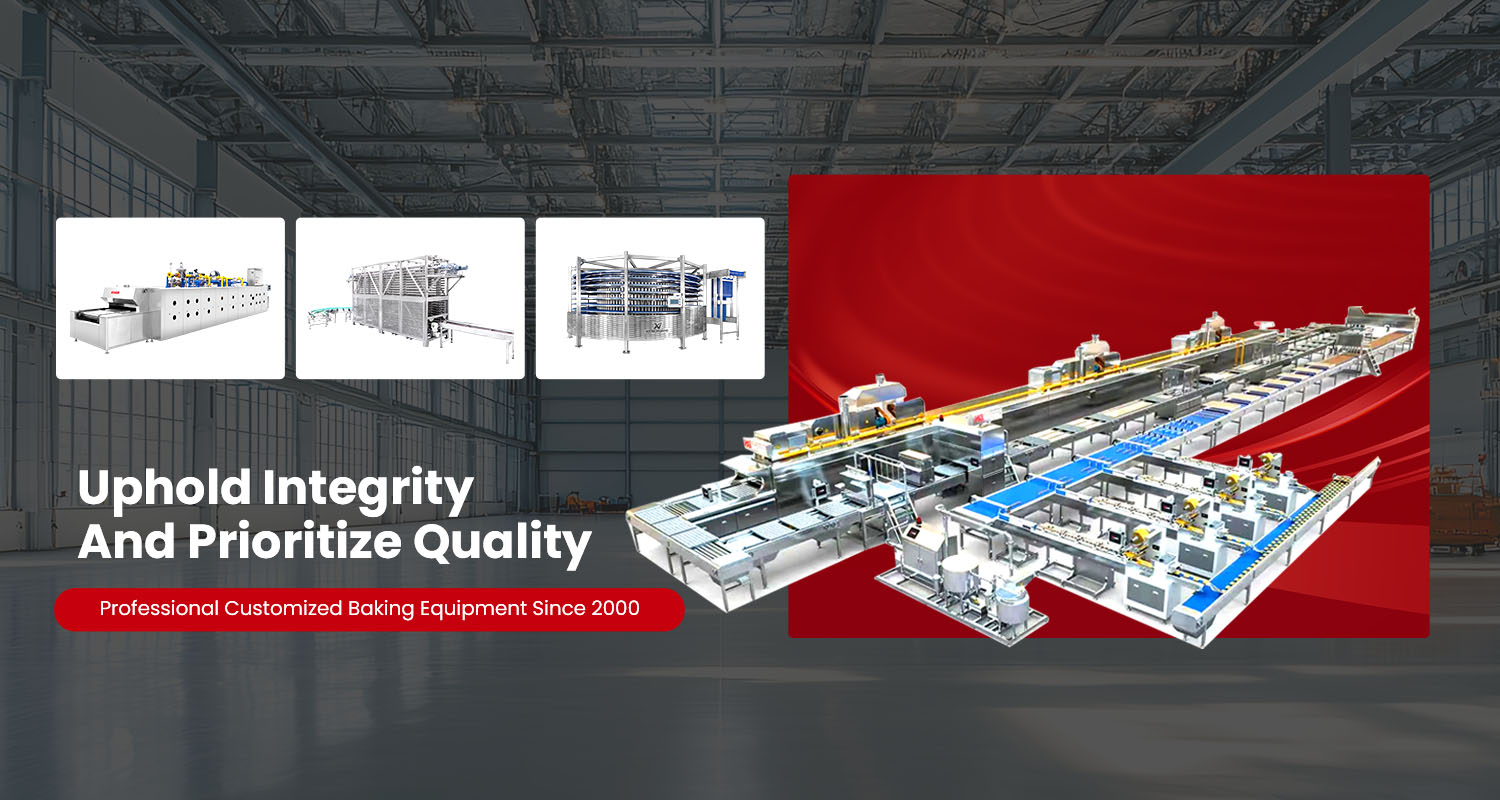
How to Choose a Food Processing Line?
Choosing a food processing line begins with understanding what must happen to the product at every stage. Capacity is important, but processing time, temperature, hygiene, product handling, changeovers, utilities, packaging, and factory space ultimately determine whether the line can operate reliably in daily production.
Convert Product Requirements into Process Data
Before requesting quotations, prepare a product specification covering raw materials, recipe characteristics, unit size, target weight, moisture, processing temperature, cooling conditions, and final packaging format.
Production targets should include normal hourly output rather than only the highest expected figure. The supplier also needs to know the number of shifts, planned operating days, seasonal peaks, future products, and acceptable waste rate. This information supports accurate equipment sizing and prevents unnecessary investment in oversized machinery.
For bakery applications, buyers should provide dough type, fermentation time, tray or pan dimensions, baking curve, cooling time, and discharge orientation. Similar product appearances do not always mean identical processing requirements.
Compare Capacity Across the Entire Line
| Production Stage | Main Evaluation Point | Risk of Incorrect Sizing |
|---|---|---|
| Feeding and mixing | Batch volume and cycle time | Ingredient shortages |
| Forming | Pieces per minute | Irregular product spacing |
| Heating or baking | Residence time and usable width | Uneven processing |
| Cooling | Required product temperature | Packaging condensation |
| Sorting | Lane and orientation control | Product accumulation |
| Packaging interface | Stable incoming rate | Frequent line stoppages |
The industrial production system should be evaluated as one process. Its usable output is limited by its slowest section. Buffer conveyors can manage short speed differences, but they cannot correct a major capacity mismatch.
Determine the Necessary Automation Level
Automated line equipment should reduce repetitive work and process variation without making operation unnecessarily complicated. High-volume production may justify automatic dosing, recipe management, synchronized conveyors, product tracking, reject control, and centralized production records.
Factories with many SKUs should prioritize flexibility. Check how many parts must be replaced during a changeover, whether adjustments use stored settings, and how long cleaning and restart procedures take. A slightly lower operating speed may be more valuable when the equipment changes products quickly and consistently.
Inspect Hygiene, Maintenance, and Safety
Food-contact surfaces should use suitable materials and allow convenient cleaning. Inspect conveyor access, drainage, removable components, dead corners, lubrication points, and separation between food zones and drive systems.
Maintenance teams need safe access to motors, sensors, chains, burners, fans, and electrical cabinets. The supplier should explain preventive-maintenance intervals, recommended spare parts, fault diagnosis, and local sourcing options for standard components.
Safety reviews should cover emergency stops, guarding, thermal protection, gas controls, electrical protection, access platforms, and restart logic after a fault.
Confirm Integration Before Ordering
To select a food processing production line, request a process diagram, equipment layout, utility schedule, control description, capacity calculation, and interface list. The proposal should show how upstream machines communicate with heating, cooling, sorting, and packaging sections.
An industrial system integration solution must also fit the building. Verify floor strength, ceiling clearance, installation routes, drainage, ventilation, gas pressure, electrical capacity, and space for future maintenance.
Final acceptance criteria should define product quality, hourly output, operating stability, waste level, changeover performance, and energy conditions. A carefully selected food processing line delivers sustainable production because its machinery, controls, factory environment, and product requirements have been engineered together.