





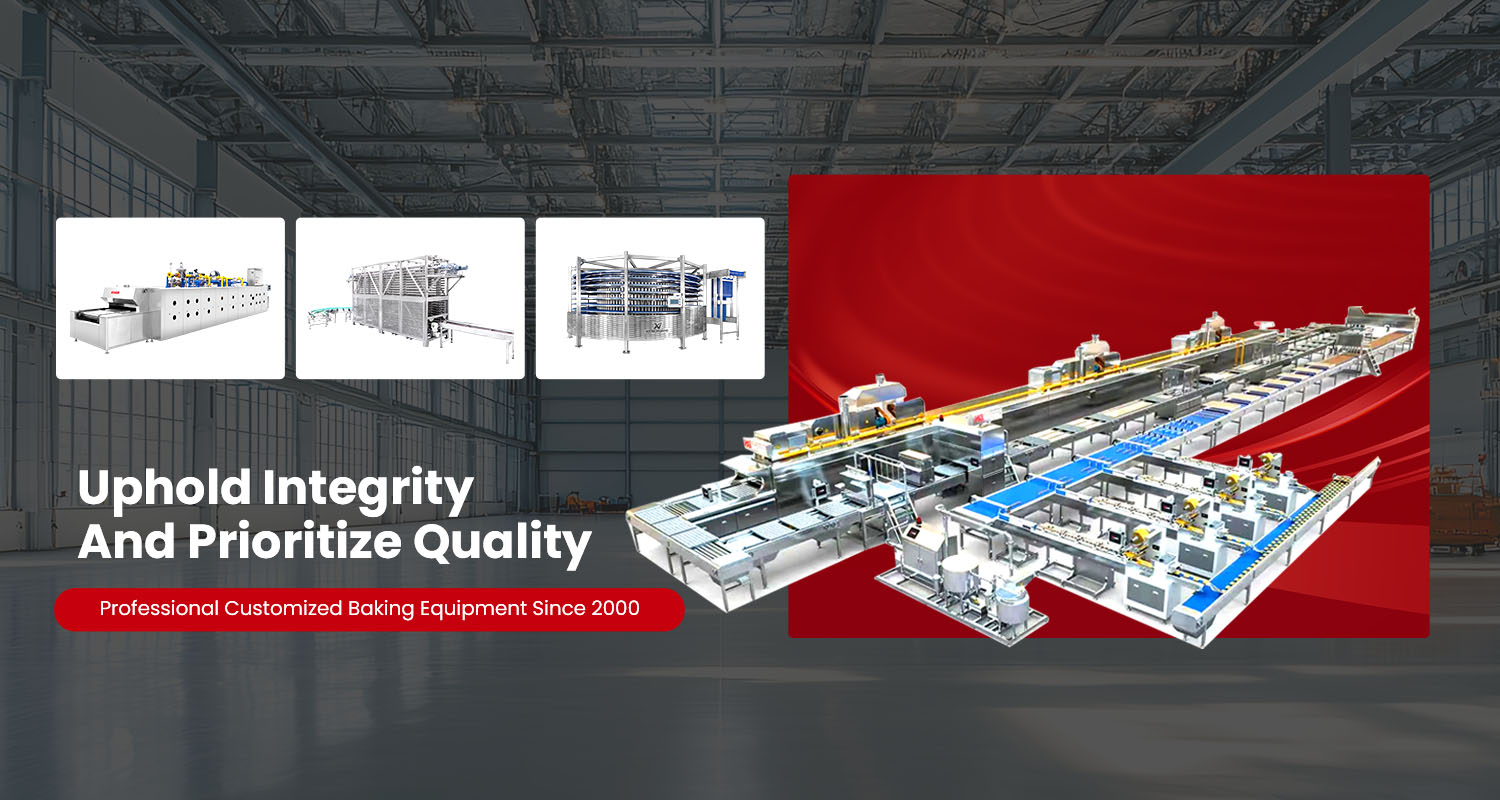
How Does an Automatic Bread Line Work?
Modern bread manufacturing requires more than individual machines working separately. As production demand increases, bakeries need a connected system that can manage dough preparation, fermentation, baking, cooling, and packaging with stable timing and consistent quality. An automatic bread production line integrates different production stages into one continuous workflow, reducing manual handling and improving control over every step of the manufacturing process.
Understanding how an automated bread line operates helps factories evaluate whether their current production methods can support higher output, better consistency, and future expansion. The working principle is based on coordinating each process stage so that products move smoothly from raw materials to finished goods while maintaining accurate production parameters.
The Basic Structure Of An Automatic Bread Production Process
An automated bread line is not simply a combination of machines. It is a complete production system where each section is connected according to product requirements and manufacturing flow.
The process usually begins with dough preparation, where ingredients are mixed and processed according to the required formula. After dough forming, products enter fermentation equipment where controlled environmental conditions allow proper expansion. The shaped dough then moves through baking, cooling, and packaging stages.
The key objective is to maintain a stable connection between each production step. When one section operates faster or slower than another, it can affect the entire production rhythm.
How Different Stages Work Together
The efficiency of an automatic bread production line depends on coordination between equipment sections.
Dough processing determines the initial quality of the product. Accurate mixing and forming create consistent dough pieces, which helps improve later fermentation and baking results.
Fermentation controls the development of dough structure. Stable temperature and humidity conditions allow yeast activity to remain consistent, supporting uniform product volume.
Baking transforms prepared dough into finished bread products. Precise control of baking conditions helps maintain expected texture, color, and internal structure.
Cooling and packaging complete the production cycle. Proper cooling before packaging prevents quality problems and supports longer product stability.
What Makes An Automatic Bread Line More Efficient?
Automation improves production efficiency by reducing unnecessary interruptions between processes. Instead of manually transferring products between separate machines, connected equipment allows continuous movement through the production workflow.
The main improvements usually come from better process coordination, reduced handling time, and more consistent operating conditions.
| Production Stage | Automation Function |
|---|---|
| Dough handling | Maintains consistent shaping and transfer speed |
| Fermentation | Controls environmental conditions for stable proofing |
| Baking | Supports continuous product movement and timing control |
| Cooling | Creates suitable conditions before packaging |
| Packaging connection | Improves production flow after baking |
Why Workflow Design Matters In Bread Manufacturing
A well-designed production workflow helps factories achieve higher output without creating unnecessary complexity. The distance between equipment sections, transfer methods, and control systems all influence daily operation.
For example, poor connections between fermentation and baking areas may create delays, while unsuitable cooling arrangements may affect packaging efficiency. An automatic bakery line manufacturer focuses not only on equipment functions but also on how the entire production process operates as one system.
KC-SMART considers production flow when developing bakery automation solutions, helping manufacturers create smoother connections between different processing stages.
How Automation Supports Consistent Bread Quality
One of the biggest challenges in large-scale bread production is maintaining the same quality across every batch. Manual operations often introduce differences caused by timing variations, environmental changes, or human handling.
Automated systems help reduce these differences by keeping production parameters more stable. When dough movement, fermentation conditions, and processing times are controlled accurately, factories can achieve more predictable results.
Automation also allows production teams to monitor equipment performance more easily and identify possible issues before they affect final products.
Building A More Reliable Bread Manufacturing Workflow
An automatic bread line works by connecting every production stage into a coordinated system. The value of automation is not only faster production but also improved stability, easier management, and better control over product quality.
Before selecting equipment, factories should analyze product types, production targets, available space, and future development plans. A suitable production workflow allows each stage to support the next one, creating a more efficient and reliable bread manufacturing process.
Previous: