





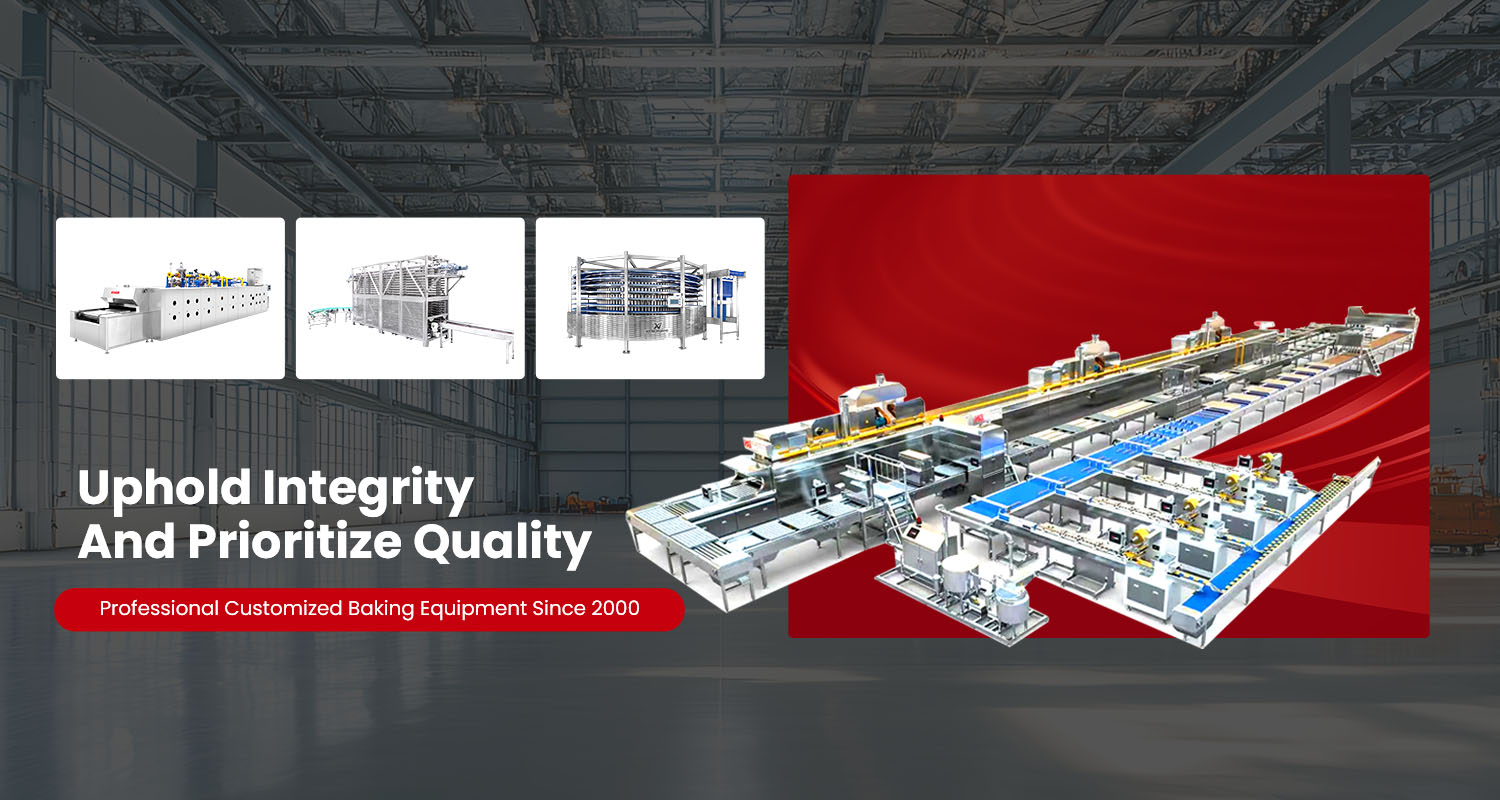
How Does A Spiral Cooling Tower Improve Bakery Production Efficiency?
Cooling is a critical stage that connects baking with packaging and storage. After leaving the oven, baked products still contain internal heat and moisture that need to be released under controlled conditions. When cooling capacity cannot match baking speed, production flow becomes interrupted, creating delays and affecting product quality.
For modern bakeries operating continuous production lines, cooling is not simply a waiting process. It is an important part of overall manufacturing efficiency. A properly designed Spiral Cooling Tower System allows products to move through a controlled cooling environment while saving factory space and improving production continuity.
Why Cooling Efficiency Affects Bakery Output
The baking process often operates at a faster speed than traditional cooling methods can handle. Without an effective cooling solution, finished products may need to remain in temporary storage areas, creating bottlenecks between baking and packaging.
Insufficient cooling can also influence product performance. Bread that is packaged too early may experience condensation, while uneven cooling may create differences in texture and appearance.
A continuous cooling system helps maintain a stable connection between oven output and downstream processes, allowing the entire production line to operate more smoothly.
How A spiral cooling tower Works
A spiral cooling tower uses vertical space efficiently by moving products through multiple levels of controlled cooling paths. Instead of requiring a long horizontal cooling area, the spiral structure allows more cooling time within a smaller footprint.
During operation, products enter the tower after baking and gradually move through the spiral path. Air circulation and controlled environmental conditions help remove excess heat before products continue to packaging or further processing.
The design provides several practical advantages for industrial bakeries:
Longer cooling distance within limited factory space
Continuous product movement after baking
Better connection between baking and packaging processes
Reduced manual handling requirements
The Relationship Between Cooling Time And Production Efficiency
Cooling time directly affects production rhythm. If products cannot reach suitable temperatures before packaging, the entire production schedule may slow down.
A Spiral Cooling Tower System improves efficiency by allowing products to cool while continuously moving through the production line. This reduces the need for additional storage areas and helps maintain a balanced workflow.
| Cooling Challenge | Effect On Production |
|---|---|
| Limited cooling space | Creates delays after baking |
| Uneven cooling | Causes product quality differences |
| Slow manual cooling | Reduces production capacity |
| Poor process connection | Interrupts packaging efficiency |
How spiral cooling equipment Supports Large-Scale Bakeries
Large bakeries usually need equipment that can operate continuously while maintaining stable performance. Cooling systems must match oven capacity, product specifications, and packaging requirements.
An industrial bakery cooling equipment supplier needs to consider multiple factors when designing a suitable cooling solution, including product weight, cooling time, factory layout, and production speed.
Different bakery products may require different cooling conditions. Soft bread, toast products, and specialty baked goods have different moisture characteristics, which means cooling parameters should be adjusted according to actual production needs.
Improving Factory Space Utilization Through Vertical Cooling
Factory space is often limited, especially when production capacity continues to increase. Traditional cooling methods may require large floor areas, making expansion difficult.
The vertical structure of spiral cooling equipment helps factories use available height more effectively. By increasing cooling capacity without significantly expanding the production footprint, bakeries can improve space utilization and maintain a more organized production environment.
KC-SMART applies automation concepts to bakery equipment design, supporting smoother product transfer and more efficient production connections.
Selecting A Suitable Cooling Solution
The right cooling system should match the entire bakery workflow rather than operate as an independent machine. Factors such as oven capacity, packaging speed, product characteristics, and available factory space should all be considered before installation.
A well-matched cooling system helps maintain continuous production, reduces waiting time, and improves overall manufacturing efficiency. By treating cooling as an essential production stage rather than a simple post-baking step, bakeries can create a more balanced and reliable production process.