





Why Is Proper Cooling Important After Bread Baking?
Removing bread from the oven does not mean the production process is complete. Freshly baked products continue to release heat and moisture as their internal structure stabilizes. Packaging bread too early can create condensation, soften the crust, and negatively affect storage conditions. On the other hand, unnecessarily long cooling periods can slow down production and create product accumulation between baking and packaging.
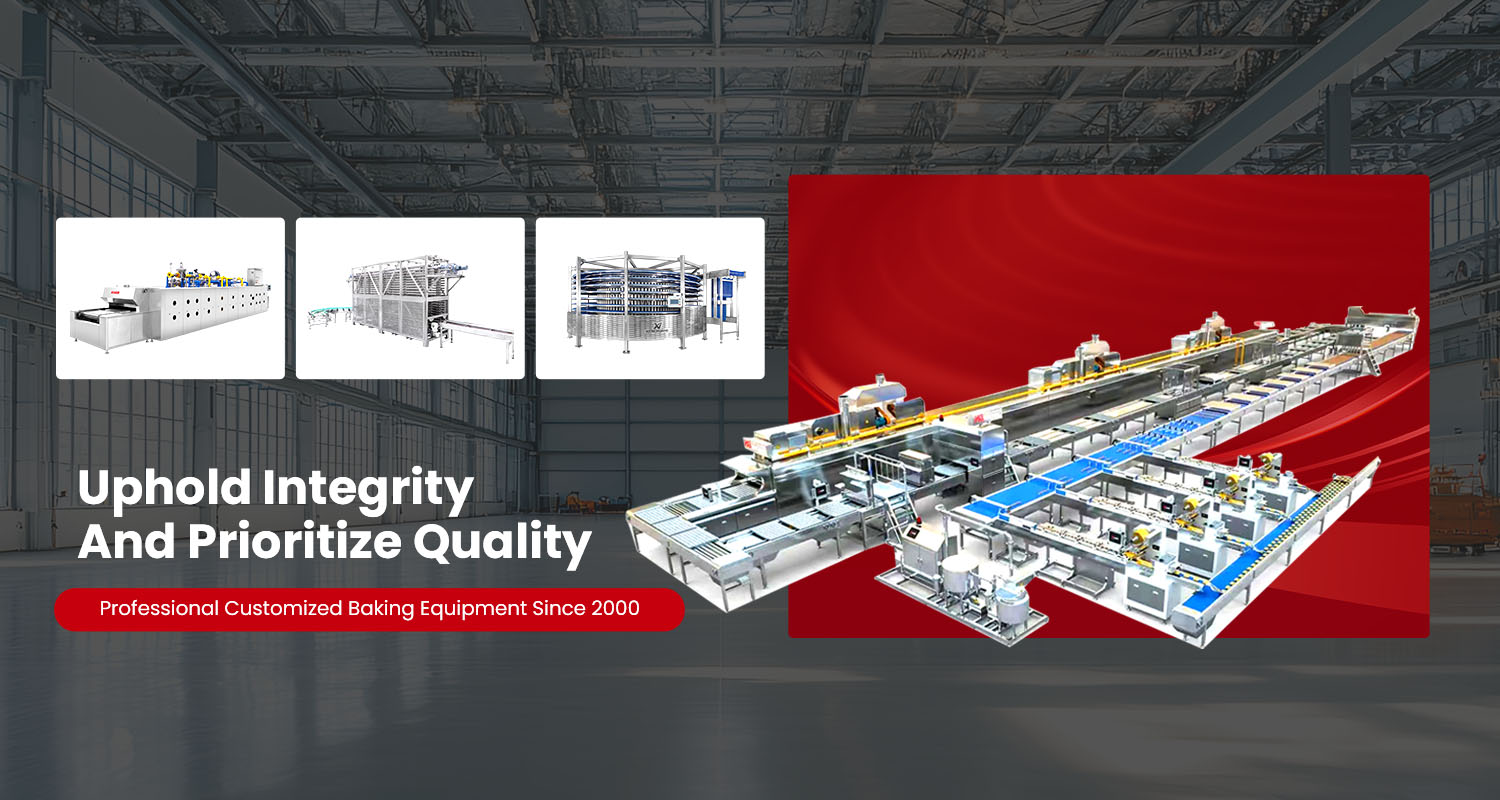
The post baking cooling process is therefore an important part of industrial bakery production. Manufacturers need to control cooling time, airflow, product spacing, and discharge temperature to maintain consistent product quality. Spiral Cooling Tower Equipment provides a continuous conveying solution that allows freshly baked products to cool while moving through multiple levels, helping bakeries balance cooling requirements with production capacity.
1. What Happens to Bread During Cooling?
After baking, the internal temperature of bread remains considerably higher than the surrounding environment. Heat gradually moves from the center toward the surface before being released into the surrounding air.
During this period, several changes take place:
Internal moisture redistributes throughout the bread structure.
The crumb gradually stabilizes as the product cools.
Excess heat and water vapor escape from the surface.
The crust develops its final texture.
Product temperature approaches a suitable packaging condition.
Cutting or packaging bread before these changes are sufficiently complete may affect product appearance and texture.
2. Why Is Temperature Control Important Before Packaging?
Packaging hot bread can trap water vapor inside the packaging. As the product temperature decreases, moisture may condense on the inner surface of the packaging material.
This can lead to several problems:
| Cooling Problem | Possible Consequence |
|---|---|
| Excessive product temperature | Condensation inside packaging |
| Uneven cooling | Different product conditions |
| Excessive surface drying | Changes in crust texture |
| Insufficient cooling time | Unstable packaging conditions |
| Long cooling delays | Production accumulation |
The required discharge temperature varies according to bread type, packaging material, product dimensions, and storage requirements. Manufacturers should establish the target through product testing.
3. How Does a spiral cooling tower Improve the Process?
A spiral cooling tower provides a long conveying route within a vertical structure. Instead of spreading cooling conveyors across a large factory floor, products move through multiple levels while cooling air circulates around them.
The operating principle is straightforward: freshly baked products enter the tower, travel along the spiral conveyor, release heat during transportation, and exit at a lower temperature.
The residence time can be adjusted through conveyor speed.
Cooling Time = Effective Conveyor Length / Conveyor Speed
This relationship helps manufacturers estimate the required conveying capacity when planning equipment dimensions.
4. Three Factors That Determine Cooling Performance
Air circulation
Airflow removes warm air around the bread surface. Uniform distribution is important because uneven circulation may cause different cooling results between conveyor levels.
Product arrangement
Products need sufficient spacing to allow air to reach their surfaces. Excessive loading can reduce cooling efficiency and create temperature variations.
Conveyor residence time
Larger and thicker products generally require more cooling time. Conveyor speed should therefore match product dimensions and required discharge conditions.
5. Cooling Equipment Must Match the Baking Line
A cooling tower should not be selected independently from the oven and packaging equipment.
For example, if an oven produces 3,600 bread rolls per hour and the cooling process requires 30 minutes, the tower needs sufficient capacity to accommodate approximately 1,800 products at a time.
Actual capacity also depends on belt width, product spacing, tower configuration, and airflow.
KC-SMART considers these factors when evaluating bakery cooling equipment and production line integration.
Conclusion
Proper cooling stabilizes bread structure, releases excess heat and moisture, and creates suitable conditions for packaging. Spiral Cooling Tower Equipment helps manufacturers achieve continuous cooling while making efficient use of factory space. Matching airflow, conveyor speed, product spacing, and discharge temperature with actual production requirements is essential for maintaining consistent bakery quality.