





What Equipment Is Needed For Industrial Bread Manufacturing?
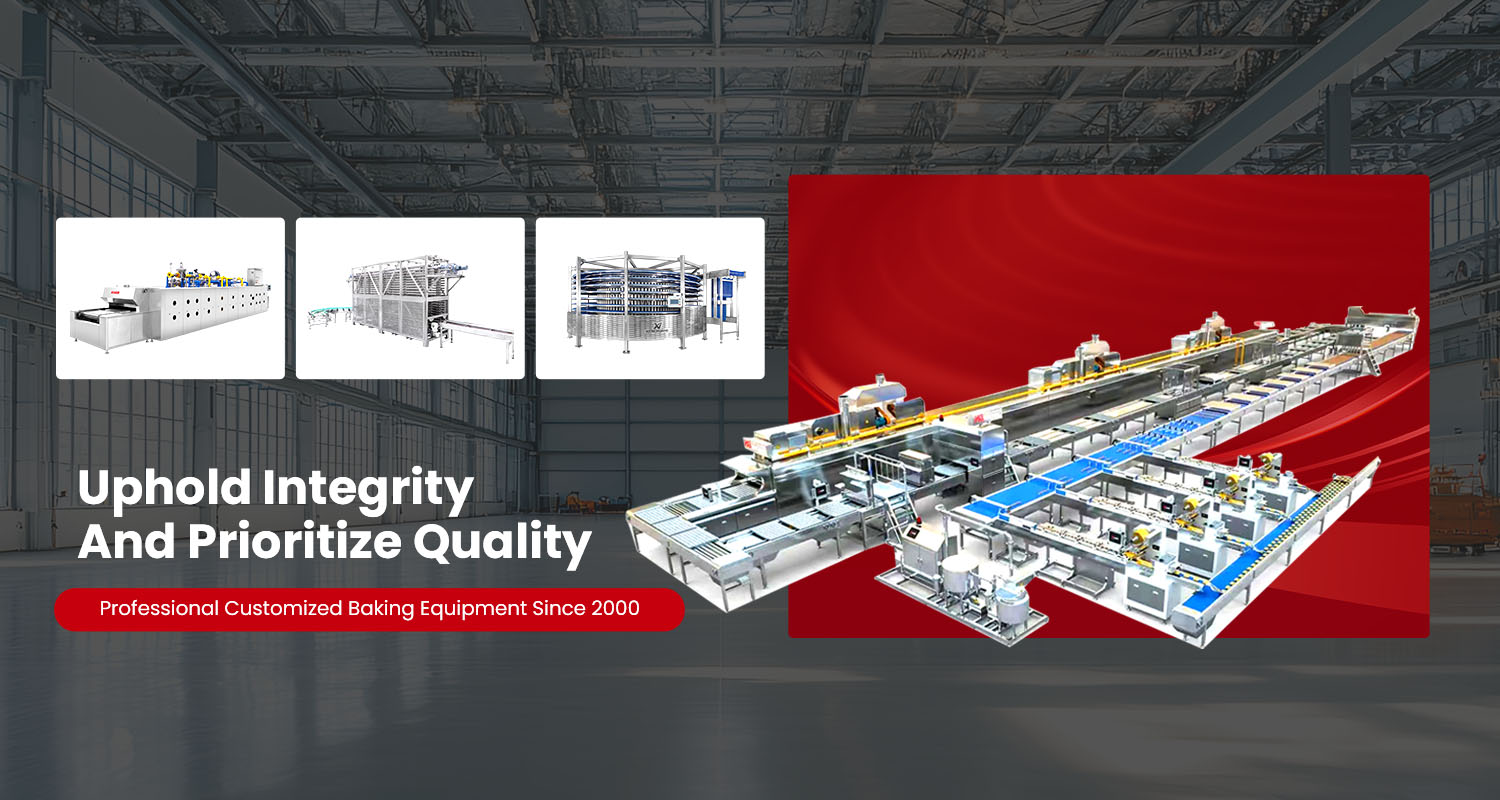
Industrial bread manufacturing involves several connected processes, from ingredient preparation and dough mixing to dividing, shaping, fermentation, baking, cooling, and packaging. Each stage requires suitable machinery to maintain production speed and product consistency. Selecting equipment individually without considering the complete workflow can create capacity imbalances, unnecessary manual handling, and production delays.
A well-planned Industrial bakery equipment configuration should match the bread type, expected hourly output, factory layout, and required level of automation. Different products also require different processing arrangements. Standard sandwich bread, burger buns, baguettes, and specialty loaves may share some production equipment but need different shaping, moulding, and baking configurations.
1. The Main Equipment Used in Bread Manufacturing
A typical industrial bread production line can be divided into seven functional stages.
| Production Stage | Main Equipment | Primary Function |
|---|---|---|
| Ingredient preparation | Weighing and batching systems | Measure raw materials |
| Dough mixing | Industrial dough mixer | Develop dough structure |
| Dividing | Automatic dough divider | Control portion weight |
| Shaping | Rounder and moulding machine | Form consistent dough pieces |
| Fermentation | Proofing or Fermentation Tower | Control dough expansion |
| Baking | Tunnel or rotary oven | Bake products uniformly |
| Cooling and packaging | Spiral cooler and packaging machine | Prepare products for distribution |
The configuration depends on production capacity and product specifications. Smaller lines may combine certain functions, while high-volume factories generally require more automated connections.
2. Why Is Each Production Stage Important?
Dough preparation and mixing
Ingredient measurement establishes the foundation for consistent production. Mixing equipment must handle the required batch size while providing suitable mixing intensity and time. Excessive or insufficient mixing can affect dough elasticity and subsequent processing performance.
Dividing and shaping
Automatic dividers separate dough into portions with controlled weight. Rounding and moulding machines then establish the required product shape. Accuracy at this stage helps maintain consistent finished-product dimensions.
Fermentation
Proofing equipment provides controlled temperature, humidity, and residence time. Dough needs sufficient development before baking, but excessive fermentation may weaken its structure.
Baking
Ovens must provide suitable heating conditions and sufficient capacity. Temperature distribution, conveyor speed, and baking time influence crust color, internal texture, and moisture content.
Cooling and packaging
Fresh bread needs sufficient cooling before packaging. Spiral cooling systems provide a continuous conveying path, helping products reach the required discharge condition without occupying excessive floor space.
3. How to Match Equipment Capacity Across the Line
One of the most common mistakes in equipment planning is selecting machines based only on individual maximum output.
Consider a line with the following theoretical capacities:
| Machine | Capacity per Hour |
|---|---|
| Dough mixer and feeding system | 5,000 units |
| Dough divider | 4,800 units |
| Shaping machine | 4,500 units |
| Fermentation system | 4,500 units |
| Baking section | 4,200 units |
| Cooling and packaging | 3,800 units |
In this example, the final production output is restricted by cooling and packaging capacity.
Actual output will also depend on downtime, product changes, and processing losses. Manufacturers should evaluate the complete production line rather than relying on the highest individual machine specification.
4. What Information Is Needed Before Purchasing?
Before contacting a commercial bakery machinery supplier, prepare product drawings, dough specifications, target hourly output, working schedules, and factory layout information.
The following details are particularly useful:
Bread types and product dimensions.
Dough weight and formulation characteristics.
Required production quantity per shift.
Expected automation level.
Available factory space and building height.
Packaging specifications.
Cleaning and maintenance requirements.
These details help determine whether standard machinery, customized equipment, or a complete integrated line is more suitable.
5. Consider Future Production Expansion
Equipment should not only meet current requirements. Manufacturers should also consider potential product diversification and capacity increases.
Modular feeding systems, adjustable shaping mechanisms, expandable conveyors, and compatible control interfaces can make future upgrades easier. However, unnecessary flexibility may increase investment and maintenance complexity.
Conclusion
Industrial bread manufacturing requires coordinated equipment for mixing, dividing, shaping, fermentation, baking, cooling, and packaging. The right Industrial bakery equipment configuration should balance processing capacity, product requirements, factory layout, and automation needs. Evaluating the complete workflow before purchasing machinery helps prevent production bottlenecks and supports stable long-term manufacturing.