





What Are The Advantages Of Vertical Bakery Equipment?
Factory floor space is becoming an important consideration in industrial bakery planning. Production lines require room for mixing, dividing, shaping, fermentation, baking, cooling, and packaging equipment. When manufacturers increase production capacity, traditional horizontal layouts may require substantial additional floor area. This can make factory expansion expensive or difficult, particularly when the existing building has limited available space.
Vertical bakery equipment offers an alternative by arranging certain production functions across multiple levels rather than extending every process horizontally. This approach makes better use of available building height and can provide more compact material handling arrangements. However, vertical equipment is not simply about stacking machines. Its value depends on suitable mechanical design, product transfer stability, maintenance access, and integration with the overall bakery workflow.
Why Is Vertical Equipment Becoming Important?
Consider a bakery that needs a longer fermentation or cooling process. A conventional horizontal conveyor may require a substantial installation length to provide sufficient residence time.
A vertical arrangement distributes the conveying path across multiple levels. Products move through an extended route while occupying a smaller horizontal footprint.
This is particularly useful when production processes require continuous transportation but the factory cannot accommodate additional floor-length conveyors.
Three Main Advantages of Vertical Bakery Equipment
1. Better Use of Available Factory Space
The most obvious advantage is improved space utilization.
Vertical systems use building height to accommodate equipment functions that would otherwise require longer horizontal arrangements. This can leave more floor area available for raw material storage, packaging, personnel movement, and other production activities.
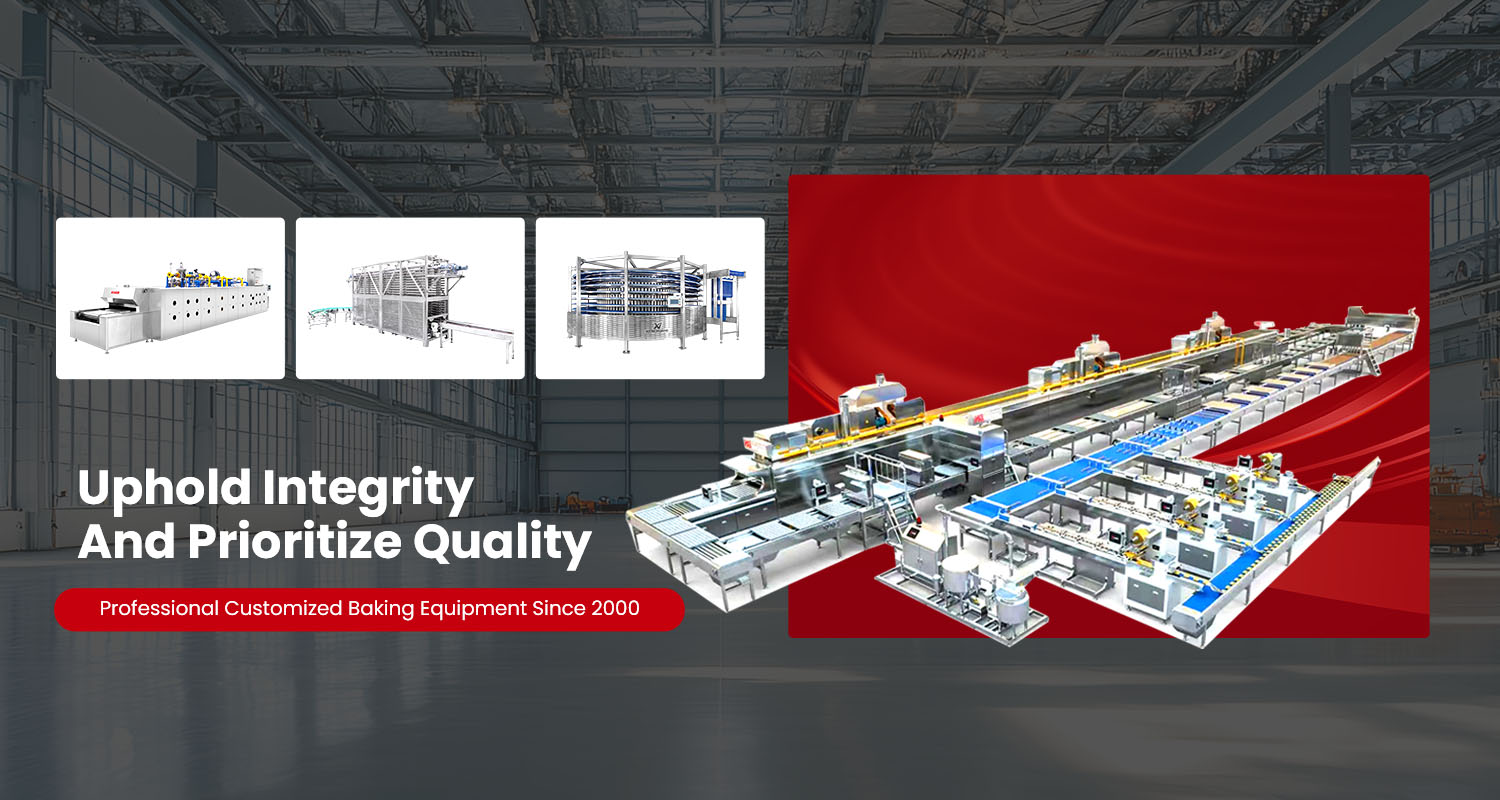
For example, a Spiral Cooling Tower can provide a long conveying route through multiple levels instead of occupying the same length across the production floor.
2. More Compact Production Layouts
Vertical equipment can help shorten the distance between certain production stages when the infeed and discharge positions are planned correctly.
A multi-level conveying system may connect with upstream and downstream machinery through carefully arranged transfer conveyors. This can reduce unnecessary horizontal movement and create a more organized factory layout.
3. Support for Continuous Production
Many vertical bakery systems are designed for continuous conveying. Products enter the equipment, move through the required processing or holding period, and exit automatically.
Fermentation Towers and spiral cooling systems are typical examples. Their conveyor speed can be adjusted according to production requirements and the required residence time.
Where Is Vertical Bakery Equipment Commonly Used?
| Equipment Type | Main Function | Space-Saving Principle |
|---|---|---|
| Fermentation tower | Dough fermentation | Multi-level vertical conveying |
| spiral cooling tower | Post-baking cooling | Extended conveyor path in limited floor space |
| Vertical storage conveyor | Temporary product holding | Uses available building height |
| Multi-level transfer system | Product transportation | Connects production stages vertically |
Each application has different structural and environmental requirements. Fermentation systems need suitable temperature and humidity control, while cooling equipment requires appropriate airflow and heat removal.
What Should Manufacturers Consider Before Installation?
Vertical equipment requires sufficient building height and careful structural planning. The available ceiling clearance must accommodate the machine, installation procedures, and maintenance activities.
Another important consideration is product transfer. Dough pieces and freshly baked products must move between conveyor levels without deformation, falling, or unnecessary handling.
Maintenance access should also be considered from the beginning. Drive systems, bearings, conveyor belts, sensors, and electrical components need accessible inspection points.
A suitable layout should evaluate the following relationship:
Total Installation Space = Equipment Footprint + Operating Clearance + Maintenance Access
This provides a more realistic basis for factory planning than measuring the machine footprint alone.
Are Vertical Systems Suitable for Every Bakery?
Not necessarily. Some production processes require direct horizontal movement or frequent operator access. Other factories may have limited ceiling height or structural restrictions that make vertical installation impractical.
Manufacturers should compare vertical and horizontal arrangements according to production capacity, product characteristics, building conditions, and equipment maintenance requirements.
Vertical systems are particularly attractive when long conveying paths are required but horizontal floor space is limited.
Conclusion
Vertical Bakery Equipment helps manufacturers use available building height more effectively, create compact production layouts, and support continuous material transportation. Fermentation towers and spiral cooling systems demonstrate how vertical structures can provide extended conveying capacity without requiring equally long horizontal installation areas. The best configuration depends on factory dimensions, production workflow, product handling requirements, and long-term maintenance considerations.