





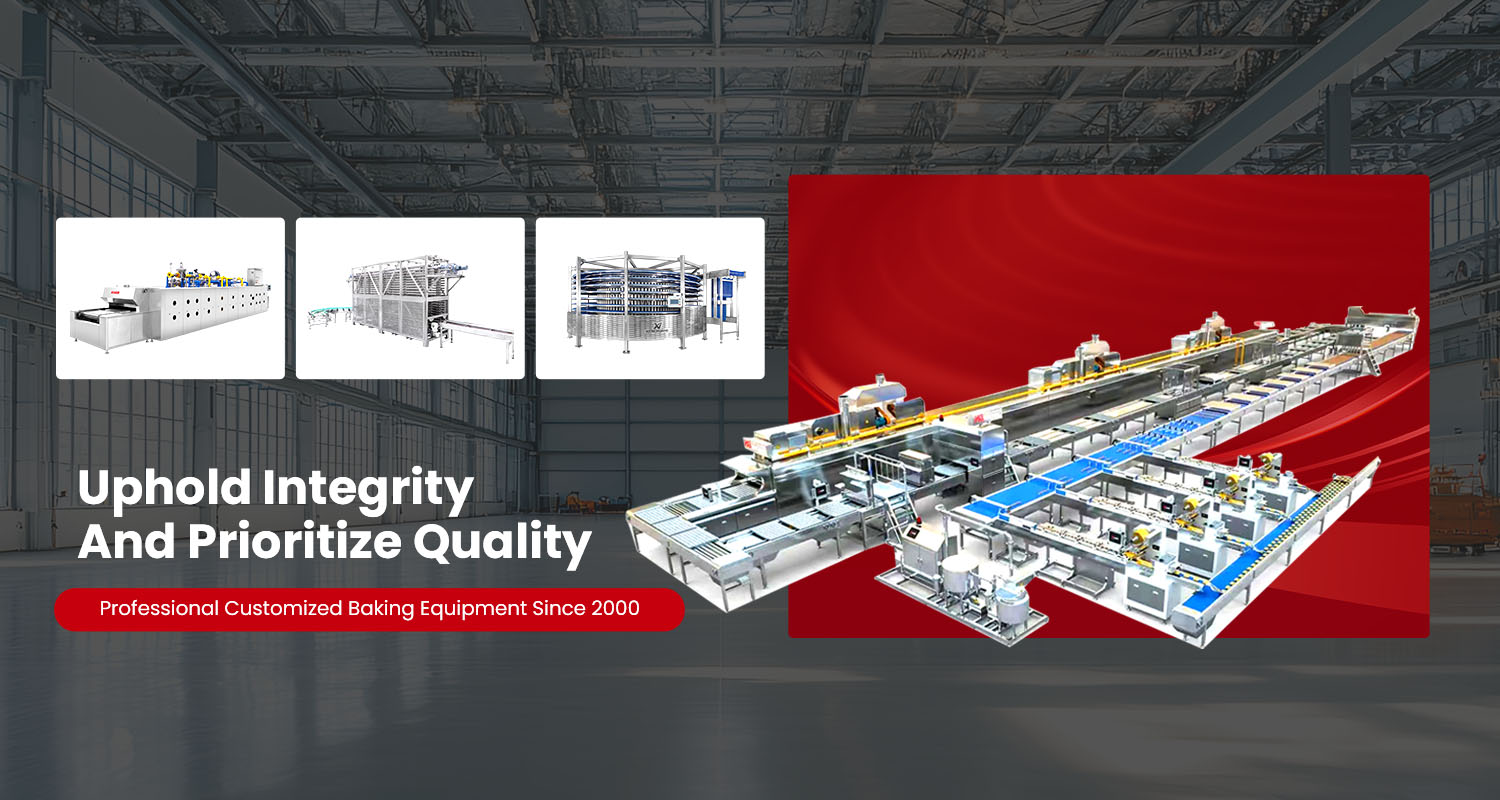
Bread Conveying Systems
Bread conveying systems use belts, rollers, and specialized equipment to move dough and baked loaves between production stages. They reduce manual handling and help maintain a continuous flow from shaping and proofing to baking, cooling, and packaging. The design of a bread conveyor depends on the product, production process, available space, and equipment arrangement. Understanding how these systems work helps explain their role in modern bakeries.
What Are Bread Conveying Systems?
Bread conveying systems are mechanical arrangements designed to transport dough and bread products throughout a bakery. They connect different processing stages and reduce the need for workers to move products manually.
A typical production process may involve transporting shaped dough to a proofing machine, moving proofed dough into an oven, and transferring baked loaves to cooling and packaging areas.
Depending on the application, conveyors can handle raw dough, baking pans, trays, freshly baked bread, and packaged products.
What Are the Common Types of Bread Conveyors?
Different conveyor designs serve different purposes in bread production.
belt conveyors
Belt conveyors use a continuous moving belt to transport products along a straight or inclined path. They are commonly used for moving dough pieces, baking trays, and finished loaves.
The belt material should be suitable for food contact and compatible with the operating temperature and cleaning requirements.
Roller Conveyors
Roller conveyors use rotating rollers to move trays, racks, and containers. They can operate through powered mechanisms or gravity.
They are particularly useful when bread products remain inside baking pans or on trays during transportation. Roller spacing and load capacity should match the dimensions and weight of the items.
Spiral Conveyors
Spiral conveyors move products around a central structure, providing a long conveying path within a relatively small floor area.
They are commonly used in bakeries for cooling freshly baked bread. The gradual conveying process allows products to release heat before moving to slicing or packaging.
Tray Conveyors
Tray conveyors transport baking trays between different production stages, including proofing, baking, and cooling.
They help maintain organized product movement and are suitable for processes where bread remains on trays rather than being transferred directly onto a belt.
How Do Bread Conveying Systems Work?
Bread conveying systems follow the sequence of the bread production process.
After dough is divided and shaped, conveyors move individual pieces toward proofing equipment. Once proofing is complete, the dough travels to the oven using suitable belts or tray transportation systems.
After baking, conveyors transfer the loaves to cooling equipment. Depending on the production arrangement, the next stages may include depanning, slicing, inspection, and packaging.
Conveyor speed is important because it coordinates the operation of connected machines. If one section moves too quickly, products may accumulate at the next stage. If it moves too slowly, downstream equipment may have to wait.
What Are the Key Features of Bread Conveying Systems?
Several design characteristics affect conveyor performance and everyday operation.
Controlled Conveying Speed: Adjustable speed helps coordinate transportation with proofing machines, ovens, cooling systems, and packaging equipment.
Food-Grade Contact Materials: Conveyor surfaces that touch dough or bread should be suitable for food processing and compatible with regular cleaning procedures.
Gentle Product Transfer: Smooth transitions help prevent soft dough and freshly baked loaves from being damaged during transportation.
Hygienic Construction: Accessible conveyor surfaces make it easier to remove crumbs, flour residue, and other food particles.
Flexible Configuration: Straight, curved, inclined, and spiral conveyors allow different production layouts to be arranged according to available space.
Bread Conveying Systems vs. Manual Handling: What Is the Difference?
Manual handling and mechanical conveying are two different approaches to moving bread products.
Manual handling allows workers to transfer trays and products between stations. It offers flexibility for small batches, but repeated lifting and carrying can interrupt production flow.
Conveyor systems provide a more consistent transportation route and reduce repetitive manual work. However, they require sufficient installation space, regular cleaning, and equipment maintenance.
| Consideration | Manual Handling | Conveyor System |
|---|---|---|
| Product movement | Carried by workers | Mechanical transportation |
| Workflow | Depends on labor | Supports continuous movement |
| Flexibility | Suitable for changing batches | Designed around production flow |
| Maintenance | Carts and handling tools | Belts, rollers, and drives |
| Typical application | Small bakeries | Connected production processes |
Neither method is suitable for every situation. The appropriate approach depends on production volume, product characteristics, and available working space.
How to Choose a Suitable Bread Conveying System?
Identify the Products
Determine whether the conveyor will transport raw dough, hot bread, baking trays, or packaged products. Each requires different handling conditions.
Consider the Production Stage
A conveyor used before proofing has different requirements from one installed after an oven. Temperature, humidity, product weight, and cleaning conditions should all be considered.
Check Speed and Capacity
The conveying speed should match the operating requirements of connected machines. Conveyor width and load capacity must also accommodate the size and quantity of products.
Evaluate Available Space
Measure the installation area and check the height and direction of equipment connections. Properly designed transfer points help prevent products from tipping or becoming trapped.
Consider Cleaning Requirements
Choose a configuration that allows convenient access to belts, rollers, and other components. Follow the equipment manufacturer's instructions for cleaning and maintenance.
What Are Common Bread Conveyor Problems?
Several issues may affect conveyor operation over time.
Belt Tracking Problems: A belt moving toward one side may indicate incorrect tension, misaligned rollers, or material buildup.
Unusual Operating Noise: Worn bearings, loose components, or mechanical wear may cause abnormal sounds during operation.
Uneven Product Movement: Incorrect conveyor speed or poorly aligned transfer points may cause products to move inconsistently.
Product Accumulation: When connected machines operate at different speeds, bread products may collect between processing stages.
Regular inspection, cleaning, and timely replacement of worn components help maintain stable operation. Before maintenance, the equipment should be isolated from its power source and handled according to the relevant safety procedures.
Frequently Asked Questions
Are Bread Conveyors Suitable for Freshly Baked Bread?
Yes. They are commonly used to transfer baked loaves from ovens to cooling, slicing, and packaging areas. Conveyor design should accommodate the bread's temperature, weight, and surface condition.
Why Are Spiral Conveyors Used in Bakeries?
Spiral conveyors provide a long transportation route within a compact footprint. They are frequently used for cooling bread before further processing.
Can One Conveyor Handle Both Dough and Baked Bread?
Not necessarily. Raw dough and finished bread have different handling, temperature, and hygiene requirements. Each conveyor should be suitable for its intended application.
How Often Should Bread Conveyors Be Cleaned?
Cleaning frequency depends on the products being transported, operating conditions, and food safety procedures. Bakeries should follow an appropriate sanitation plan and the equipment manufacturer's maintenance instructions.
Bread conveying systems play an important role in connecting different stages of bakery production. By matching conveyor design, speed, materials, and layout to each process, bakeries can achieve more consistent product movement while supporting proper handling, cooling, and everyday operation.
Previous: Industrial Tunnel Oven