





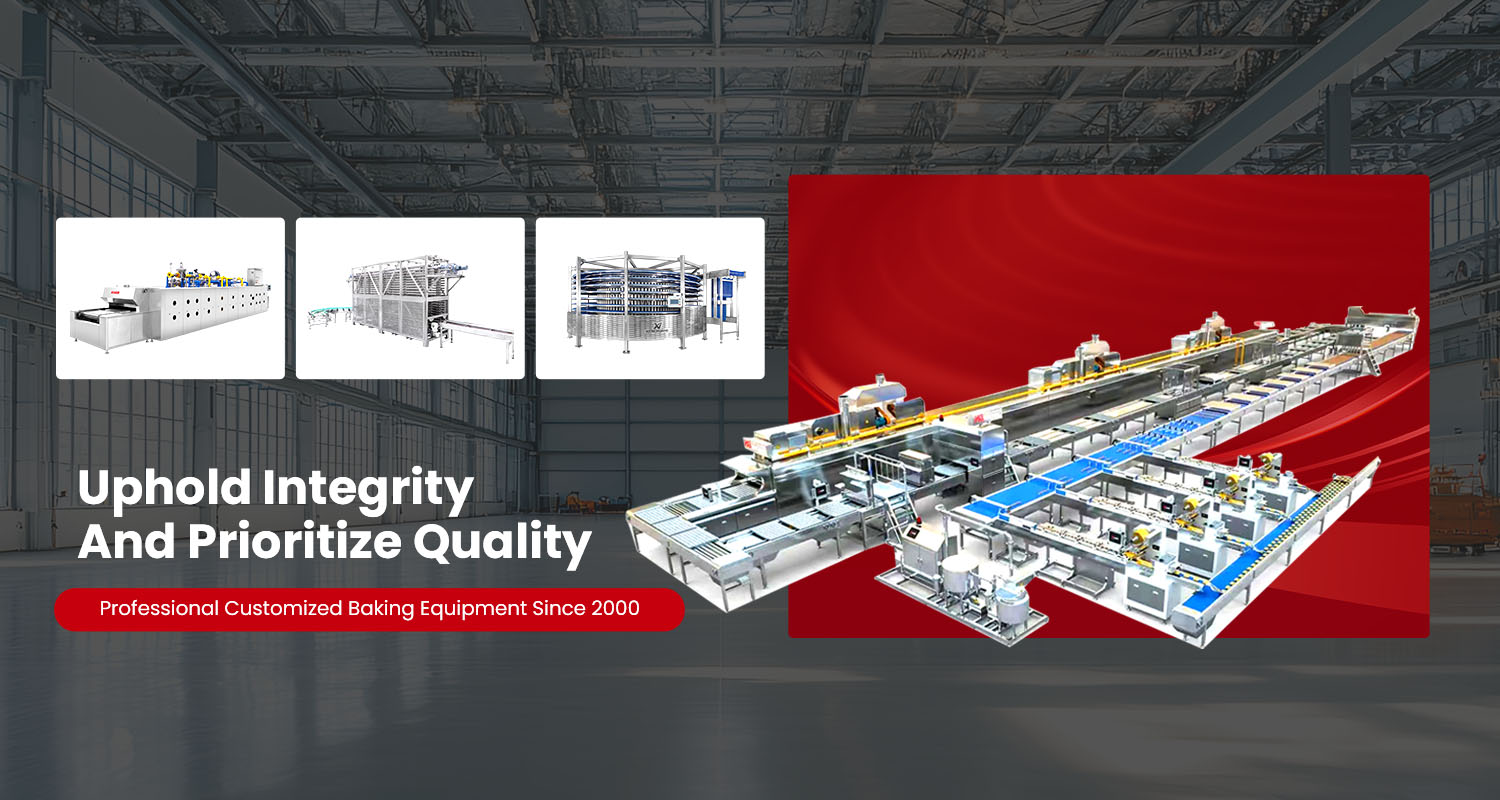
Industrial Tunnel Oven
An industrial tunnel oven is a continuous baking system that moves food through a heated chamber using a conveyor. It allows products to pass through different heating zones without repeated loading and unloading, making it suitable for continuous bread, biscuit, cake, and other food production processes. Unlike conventional batch ovens, tunnel ovens maintain a steady movement of products through the baking chamber. Their heating methods, conveyor speed, and temperature settings determine the final texture, colour, and moisture content of baked foods.
What Is an Industrial Tunnel Oven?
An industrial tunnel oven is an enclosed baking chamber equipped with a conveyor belt or moving baking surface. Food travels through the tunnel at a controlled speed while heat is applied throughout the baking process.
Most systems contain multiple heating zones, allowing different temperatures to be maintained along the chamber. This helps control crust formation, moisture loss, and internal baking conditions.
Industrial tunnel ovens are commonly used for bread, biscuits, cookies, crackers, cakes, and other baked products.
What Are the Main Types of Industrial Tunnel Ovens?
Tunnel ovens are generally classified according to their heating methods and energy sources.
gas-fired tunnel ovens
Gas-fired tunnel ovens use burners to generate heat inside the baking system. Depending on their design, heat can be transferred directly into the chamber or through a heat exchanger.
They are commonly used in bread and biscuit production, where stable heating and continuous baking are important.
Electric Tunnel Ovens
Electric tunnel ovens use heating elements to produce heat. Different heating zones can be controlled independently, allowing operators to adjust temperatures throughout the baking process.
These systems provide convenient temperature adjustment without requiring an on-site gas burner installation.
Direct-Fired and Indirect-Fired Ovens
Direct-fired ovens introduce combustion gases and heated air into the baking chamber. Indirect-fired ovens separate combustion products from the baking environment and transfer heat through a heat exchanger.
The appropriate design depends on the food being processed and the required baking conditions.
How Does an Industrial Tunnel Oven Work?
The baking process begins when prepared dough or food is placed on a conveyor belt, wire mesh, or baking tray.
The conveyor carries the products into the heated chamber, where heat is transferred through three main methods:
Radiation: Heat travels from hot surfaces to the food.
Convection: Circulating hot air distributes heat around the products.
Conduction: Heat transfers through direct contact with a heated belt or tray.
As products move through the tunnel, conveyor speed determines their baking time. A slower speed increases exposure to heat, while a faster speed reduces it.
After leaving the oven, baked products are transferred to cooling conveyors or subsequent processing equipment.
What Are the Key Features of an Industrial Tunnel Oven?
Continuous Conveying: Products move through the baking chamber in sequence, supporting uninterrupted production.
Multiple Temperature Zones: Independent heating sections allow different baking stages to operate under suitable temperature conditions.
Adjustable Conveyor Speed: Operators can adjust transportation speed to control baking time and achieve the desired product texture.
Thermal Insulation: Insulated chamber walls help retain heat and maintain stable operating temperatures.
Airflow Control: Fans and ventilation ducts distribute hot air throughout the chamber, influencing baking uniformity and surface colour.
Industrial Tunnel Oven vs. Batch Oven: What Is the Difference?
Both systems are designed to bake food, but their operating methods are different.
| Comparison | Tunnel Oven | Batch Oven |
|---|---|---|
| Operation | Continuous | Batch-based |
| Product movement | Conveyor transportation | Fixed baking trays |
| Baking time | Controlled by belt speed | Set for each batch |
| Production flow | Continuous movement | Separate cycles |
| Typical use | Large-scale baking | Small or varied batches |
Tunnel ovens are suitable for products following consistent baking processes. Batch ovens offer greater flexibility when different recipes or quantities need to be handled separately.
How to Choose a Suitable Industrial Tunnel Oven?
Identify the Food Type
Different products require different baking conditions. Bread needs sufficient internal baking, while biscuits and crackers often require controlled moisture removal and surface crispness.
Check the Heating Method
Consider whether gas or electric heating is more appropriate for the installation environment. Direct and indirect heating systems also provide different operating conditions.
Consider Conveyor Dimensions
Belt width should accommodate the product size and spacing. Tunnel length and conveyor speed determine how long food remains inside the heated chamber.
Evaluate Temperature Control
Check the available heating zones and temperature adjustment capabilities. Consistent heat distribution helps reduce differences in colour and texture between products.
Examine Cleaning Requirements
Flour, crumbs, and baked residue can accumulate on conveyor surfaces and inside the chamber. Accessible components make routine cleaning and inspection easier.
What Common Problems Can Occur in Industrial Tunnel Ovens?
Uneven Baking: Inconsistent airflow, incorrect temperature settings, or uneven product spacing can cause differences in colour and texture.
Underbaking or Overbaking: Conveyor speed and heating temperatures may not match the product's recipe or thickness.
Heat Loss: Damaged insulation or poorly sealed access doors can reduce thermal efficiency.
Abnormal Noise: Worn bearings, loose mechanical components, or conveyor alignment problems may affect normal operation.
Regular cleaning and inspection help identify these problems early. Maintenance should follow the manufacturer's instructions, and the oven must be isolated and cooled before internal servicing.
Frequently Asked Questions
What Foods Can an Industrial Tunnel Oven Bake?
Depending on its configuration, it can bake bread, biscuits, cookies, crackers, cakes, pizza bases, and other products suitable for continuous baking.
How Long Does Food Stay Inside a Tunnel Oven?
Baking time depends on tunnel length and conveyor speed. Product thickness, moisture content, and operating temperature also influence the required time.
Does an Industrial Tunnel Oven Use Gas or Electricity?
It can use either energy source. Gas-fired systems use burners, while electric models rely on heating elements.
Why Does a Tunnel Oven Have Multiple Heating Zones?
Different baking stages require different heat conditions. Multiple zones allow temperature settings to be adjusted as products move through the chamber.
Is a Tunnel Oven the Same as a Conveyor Oven?
The terms are often used interchangeably. A tunnel oven generally refers to a conveyor system passing through an elongated heated chamber, while conveyor oven is a broader equipment category.
An industrial tunnel oven combines controlled heating and continuous transportation to support consistent baking results. Understanding its heating methods, conveyor design, temperature zones, and maintenance requirements helps explain its important role in modern food production.
Previous: Tunnel Oven for Bakery
Next: Bread Conveying Systems