





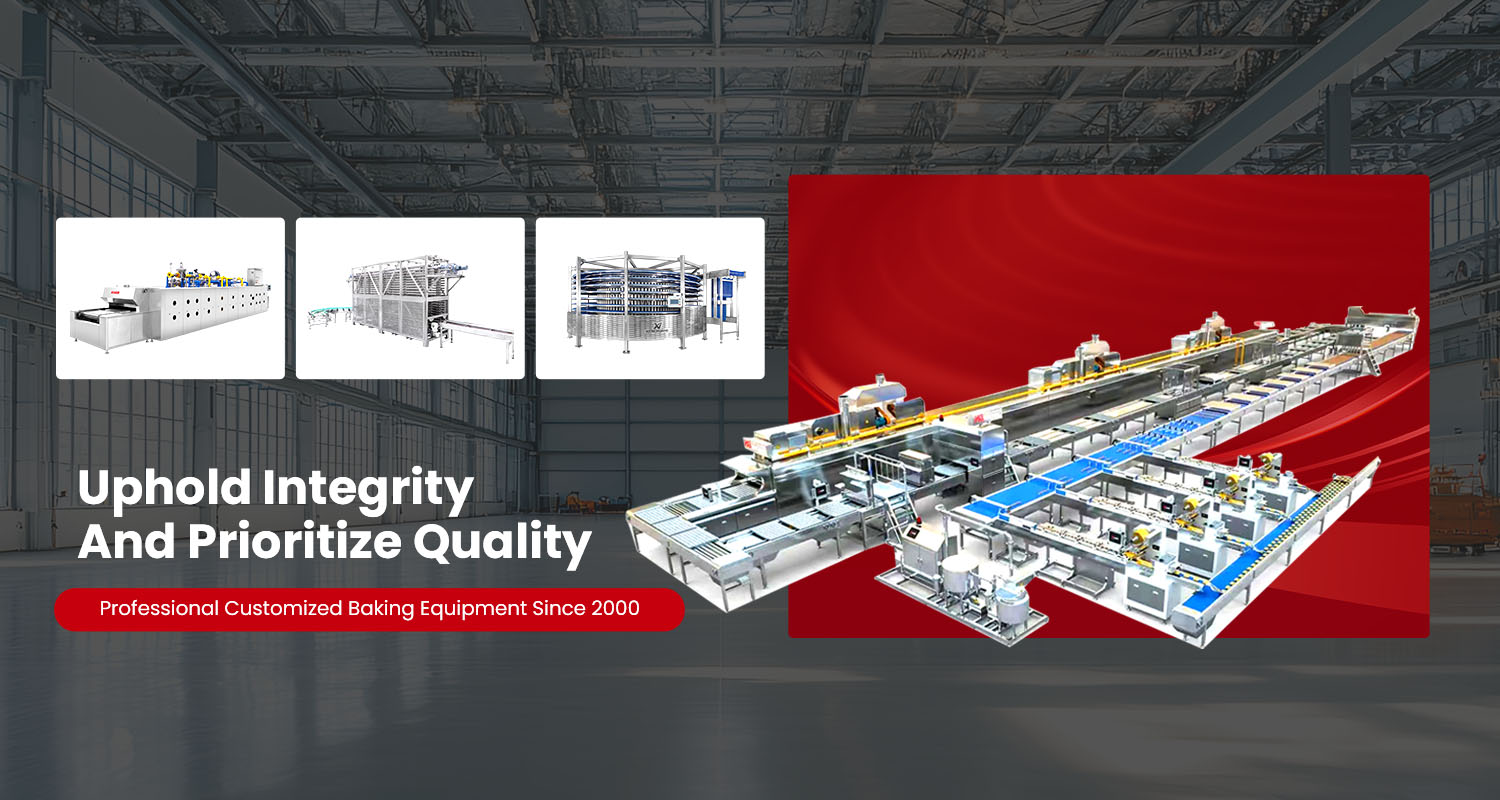
Tunnel Oven for Bakery
A tunnel oven for bakery production is a continuous baking machine that moves dough and other food products through a heated chamber on a conveyor. It provides controlled baking conditions for bread, biscuits, cookies, and other baked goods while maintaining a steady production flow.
Unlike traditional ovens that require products to be loaded and removed in separate batches, a bakery tunnel oven allows food to travel through different heating zones automatically. Its conveyor speed, temperature distribution, and heating method all influence the final texture, colour, and moisture content of baked products.
What Is a tunnel oven for bakery?
A bakery tunnel oven is an industrial baking system designed to process food continuously. It consists of a long insulated heating chamber, a conveyor mechanism, temperature control components, and a heating system.
During operation, dough or prepared food enters one end of the oven and travels through the heated chamber. As it moves forward, the product receives heat through radiation, convection, and conduction. Once baking is complete, the finished product exits the opposite end and moves to cooling or further processing.
Tunnel ovens are commonly used in commercial bakeries because they can maintain consistent baking conditions over extended operating periods.
What Types of Tunnel Ovens Are Used in Bakeries?
Different tunnel oven designs are suitable for different baking requirements.
Gas-Fired Bakery Tunnel Ovens
gas-fired tunnel ovens use burners to generate heat for the baking chamber. Depending on the design, heat may be transferred directly or through a heat exchanger.
They are commonly used for bread, biscuits, and other products that require continuous baking. Their operating temperature can be adjusted to match different recipes and production conditions.
Electric Bakery Tunnel Ovens
Electric tunnel ovens generate heat through electrical heating elements installed inside the oven.
Their heating zones can be controlled independently, making it easier to adjust temperature distribution throughout the baking chamber. They are suitable for applications where precise temperature adjustment is important.
Direct-Fired Tunnel Ovens
Direct-fired ovens introduce combustion heat directly into the baking environment. The interaction between hot gases and circulating air helps transfer heat to the products.
The temperature and airflow must be properly controlled to avoid uneven baking or excessive surface browning.
Indirect-Fired Tunnel Ovens
Indirect-fired systems use a heat exchanger to separate combustion gases from the baking chamber. Heat is transferred into the oven through a controlled heating system.
This arrangement is useful when the baking process requires separation between combustion products and the food-processing environment.
What Are the Main Components of a Bakery Tunnel Oven?
A tunnel oven contains several interconnected components that work together to maintain continuous baking.
Heating Chamber: The insulated enclosure maintains the required baking temperature and reduces unnecessary heat loss.
Conveyor System: A moving belt, mesh conveyor, or baking surface transports products through the oven at a controlled speed.
Heating System: Burners or electrical heating elements generate the thermal energy needed for baking.
Temperature Sensors: Sensors monitor conditions in different sections of the oven and provide information for temperature regulation.
Air Circulation System: Fans and ducts distribute heated air throughout the chamber, helping maintain consistent baking conditions.
Exhaust System: Ventilation removes excess moisture and gases generated during the baking process.
How Is Bread Baked in a Tunnel Oven?
Bread baking involves several physical and chemical changes that take place as dough moves through the heated chamber.
Initial Heating
When dough enters the oven, its surface and interior gradually absorb heat. The gases inside the dough expand, causing the bread to increase in volume during the early baking stage.
Crust Formation
As the surface temperature rises, moisture begins to evaporate and the outer layer becomes firmer. The crust gradually develops its characteristic structure.
Internal Baking
Heat continues moving toward the centre of the loaf. The internal structure becomes stable as starch gelatinization and protein changes take place.
Browning and Moisture Removal
During the final stages, surface browning develops through chemical reactions such as the Maillard reaction. The amount of moisture removed affects the bread's texture and storage characteristics.
After leaving the tunnel oven, the bread is transferred to a cooling conveyor before slicing or packaging.
What Bakery Products Can Be Processed in a Tunnel Oven?
Tunnel ovens are used for different baked products, although each product requires its own temperature and baking-time settings.
| Bakery Product | Main Baking Considerations |
|---|---|
| Bread | Internal baking, crust formation, moisture control |
| Biscuits | Surface colour, crispness, moisture removal |
| Cookies | Spread, texture, and edge browning |
| Crackers | Uniform drying and crisp structure |
| Cakes | Gentle heat distribution and internal structure |
| Pizza Bases | Surface colour and bottom crust development |
| Pastries | Layer development and moisture evaporation |
The conveyor arrangement and heating profile should be adjusted according to product thickness, moisture content, and recipe requirements.
What Are the Advantages of Using a Tunnel Oven in a Bakery?
Continuous Baking: Products move through the oven without repeated manual loading and unloading, supporting a more organized production process.
Consistent Temperature Control: Multiple heating zones allow different sections to operate under specific temperature conditions.
Adjustable Baking Time: Conveyor speed determines how long products remain inside the heated chamber, allowing baking conditions to be adjusted.
Uniform Heat Distribution: Proper airflow and heating arrangements help reduce differences in colour and texture across products.
Reduced Manual Handling: Automated transportation limits repetitive movement of trays and baked products between processing stages.
Tunnel Oven vs. Rotary Rack Oven: Which Is Better for Baking?
Tunnel ovens and rotary rack ovens use different methods to distribute heat and move products during baking.
A tunnel oven transports food continuously through a heated chamber. A rotary rack oven, by comparison, heats products placed on trays mounted on a rotating rack.
| Comparison | Tunnel Oven | Rotary Rack Oven |
|---|---|---|
| Operation | Continuous | Batch-based |
| Product movement | Conveyor belt | Rotating rack |
| Baking capacity | Suitable for continuous flow | Depends on rack and tray capacity |
| Baking adjustment | Temperature and conveyor speed | Temperature and baking duration |
| Typical applications | Bread, biscuits, crackers | Bread, cakes, pastries |
A tunnel oven is generally suitable for standardized products that follow a continuous process. A rotary rack oven offers more flexibility when baking different products in separate batches.
How to Choose the Right Tunnel Oven for a Bakery?
Determine the Product Requirements
Start by identifying the products to be baked. Bread, biscuits, and pastries have different requirements for heat transfer, moisture removal, and baking duration.
Select the Heating Method
Consider the available energy source and the desired heating arrangement. Gas-fired and electric ovens have different installation and operating requirements.
Evaluate the Conveyor Design
The conveyor material, width, and movement speed should match the products being processed. Delicate dough may require gentler transportation than firm biscuits or crackers.
Check Temperature Zones
Different baking stages may require different temperatures. A multi-zone design provides greater control over the heating profile along the oven.
Consider Installation Space
Tunnel ovens require sufficient floor space and appropriate access for operation, cleaning, and maintenance. Ventilation and heat exhaust arrangements should also be considered.
Review Cleaning and Maintenance Needs
Regular cleaning helps prevent accumulated crumbs, flour, and grease from affecting the baking environment. Components such as conveyor belts, ventilation ducts, and heating elements should be inspected according to the manufacturer's instructions.
What Are Common Problems with Bakery Tunnel Ovens?
Even well-designed tunnel ovens require regular monitoring to maintain stable baking conditions.
Uneven Bread Colour: Differences in airflow, heating distribution, or product spacing can cause some loaves to become darker than others.
Dry or Hard Bread: Excessive baking time or unsuitable temperature settings may remove too much moisture from the product.
Underbaked Centres: Large or thick products may not receive sufficient heat in the centre if the baking profile is incorrectly adjusted.
Conveyor Belt Deviation: Incorrect belt tension, misaligned rollers, or accumulated food residue may cause the conveyor to move unevenly.
Excessive Heat Loss: Damaged insulation, poorly sealed openings, or ventilation problems can affect temperature stability and energy consumption.
Identifying the cause of each problem is important before changing operating settings. Routine inspection and proper cleaning can help prevent many common operating issues.
Frequently Asked Questions
What Temperature Is Used in a Bakery Tunnel Oven?
The required temperature depends on the product and recipe. Bread, biscuits, cakes, and crackers all have different baking requirements. The temperature may also vary between heating zones.
How Long Does Bread Stay in a Tunnel Oven?
Baking time depends on oven length, conveyor speed, loaf size, and moisture content. Larger loaves generally require different baking conditions from smaller bread products.
Can a Tunnel Oven Bake Different Types of Bread?
Yes. A tunnel oven can process different bread varieties when its temperature, conveyor speed, and heating profile are adjusted to suit each product.
Why Does a Tunnel Oven Have Multiple Heating Zones?
Different stages of baking require different thermal conditions. Multiple zones allow operators to control initial expansion, crust formation, internal baking, and final browning more effectively.
Does a Tunnel Oven Need to Preheat?
Yes. The baking chamber generally needs to reach its required operating temperature before production begins. Preheating helps establish stable conditions and reduces variations between products.
How Is a Tunnel Oven Cleaned?
Cleaning procedures depend on the oven design and the materials used in its construction. Remove loose crumbs and food residue from accessible surfaces, and follow the manufacturer's instructions for cleaning belts, trays, and internal components.
A tunnel oven for bakery production combines continuous transportation with controlled heating to support consistent baking results. Its performance depends on the relationship between temperature, airflow, conveyor speed, and product characteristics. Understanding these factors helps explain why tunnel ovens are widely used for bread, biscuits, cookies, and other baked foods.
Previous: Automated Pizza Production Line
Next: Industrial Tunnel Oven