





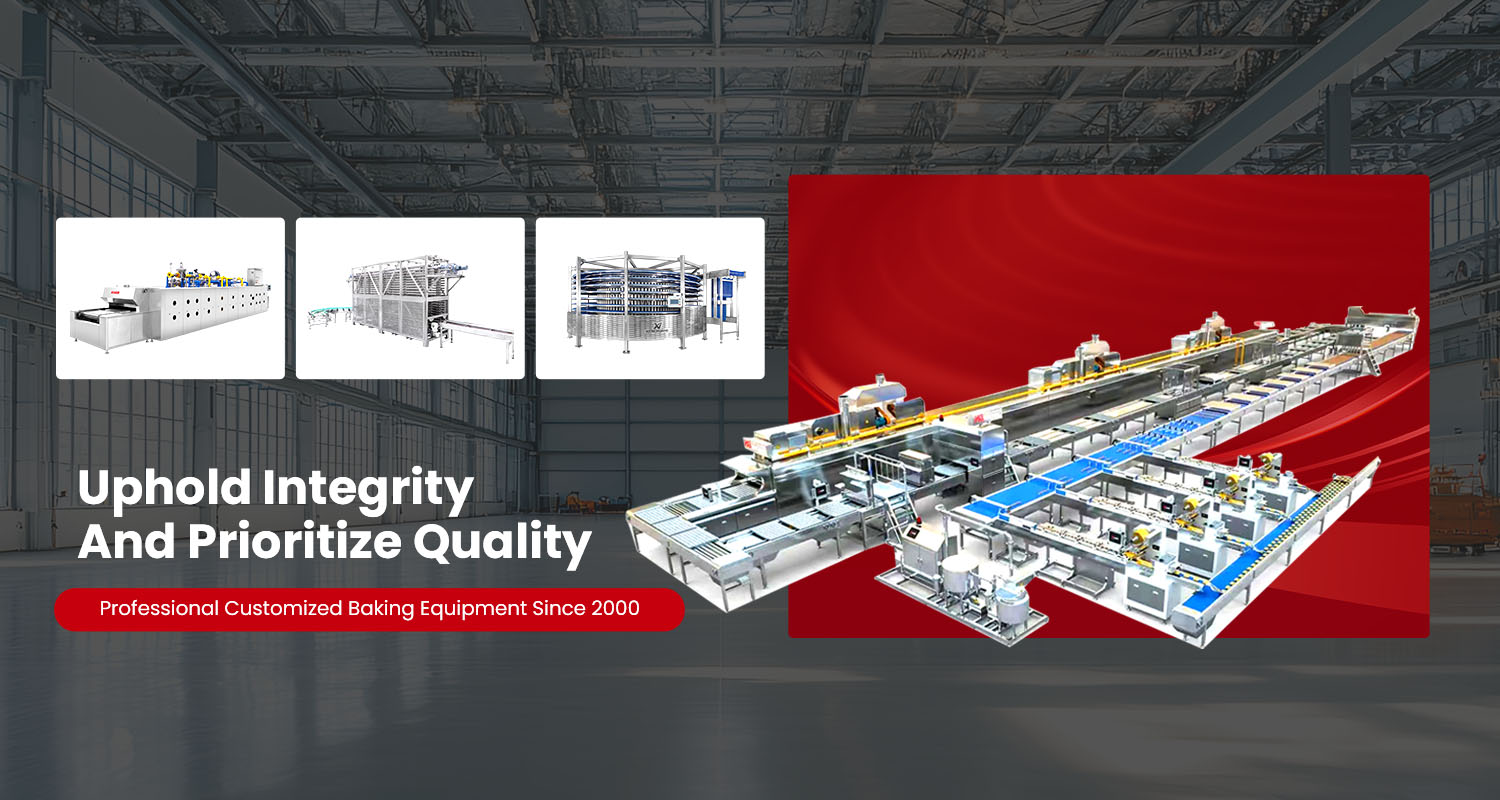
Automated Pizza Production Line
An automated pizza production line is a connected system of machines that prepares dough, shapes pizza bases, applies sauce and toppings, bakes the products, and handles finished pizzas. By combining multiple processing stages, it allows pizzas to move through production with less repetitive manual handling and more consistent results.
From mixing flour and water to baking a golden crust, each stage has a specific function. Understanding how these machines work together provides a clearer picture of how modern pizza production has developed.
What Is an Automated Pizza Production Line?
An automated pizza production line is a series of interconnected food processing machines designed to manufacture pizzas through a continuous or coordinated workflow.
Instead of preparing every pizza individually by hand, the system uses mechanical equipment to perform tasks such as dough mixing, portioning, flattening, sauce distribution, topping placement, and baking.
The exact configuration depends on the type of pizza being produced. A line making thin-crust pizza may require different dough-forming equipment from one producing thick-crust or pan pizza.
Some systems also include cooling conveyors, freezing equipment, inspection stations, and packaging machines to complete the process.
How Does an Automated Pizza Production Line Work?
Pizza production generally follows several stages, with each machine preparing the product for the next operation.
1. Dough Mixing and Preparation
The process begins with flour, water, yeast, salt, and other ingredients being combined in an industrial dough mixer.
Mixing develops the dough structure by distributing ingredients and allowing gluten to form. The mixing time and speed influence elasticity, softness, and handling characteristics.
Once mixing is complete, the dough may rest or undergo fermentation before being transferred to the forming section.
2. Dough Dividing and Rounding
A dough divider separates a large quantity of dough into smaller portions according to the required pizza size.
These portions then pass through a dough rounder, which forms them into relatively uniform balls.
Consistent portioning helps maintain similar base dimensions and reduces differences in finished pizza weight.
3. Dough Sheeting and Forming
The divided dough is flattened using rollers, presses, or specialized forming machines.
A sheeting system gradually reduces dough thickness through multiple roller stages. A pressing machine can also shape dough into a predetermined diameter and thickness.
Rotary cutters or stamping devices may be used to produce round pizza bases. Excess dough from cutting can sometimes be collected and returned to the appropriate processing stage.
4. Sauce and Topping Application
After shaping, pizza bases move beneath sauce applicators that distribute tomato sauce or other ingredients across the surface.
Additional stations can apply cheese, vegetables, meat, and seasonings.
The distribution method depends on the ingredient. Liquid sauces require controlled dispensing, while shredded cheese and solid toppings need suitable feeding and spreading mechanisms.
5. Baking
Prepared pizzas enter an oven where heat transforms the dough and toppings into a finished product.
Depending on the production process, baking equipment may include tunnel ovens, conveyor ovens, or other continuous baking systems.
Temperature, airflow, and baking duration influence crust colour, internal texture, cheese melting, and moisture loss.
6. Cooling and Packaging
After baking, pizzas move onto cooling conveyors to reduce their temperature before further handling.
Some production processes include slicing, inspection, freezing, or additional preparation before packaging.
For frozen pizza, a freezing system is used to lower product temperature before the pizzas are wrapped and packed.
What Equipment Is Used in an Automated Pizza Production Line?
Different machines perform specific operations throughout the production process.
| Equipment | Main Function |
|---|---|
| industrial dough mixer | Combines flour, water, yeast, and other ingredients |
| Dough Divider | Separates dough into uniform portions |
| Dough Rounder | Forms divided dough into rounded pieces |
| Dough Sheeter | Reduces dough thickness |
| Dough Press | Shapes pizza bases |
| Sauce Applicator | Distributes sauce across the base |
| Topping Dispenser | Applies cheese and other ingredients |
| Tunnel Oven | Bakes pizzas continuously |
| Cooling Conveyor | Reduces product temperature |
| Packaging Machine | Wraps and prepares finished products |
Not every pizza production line contains all these machines. Some processes combine several functions into one unit, while others use separate stations for greater control.
What Types of Pizzas Can Be Made on an Automated Production Line?
The product style influences how dough is formed, how ingredients are applied, and how the pizza is baked.
Thin-Crust Pizza: Thin-crust pizza requires careful dough sheeting to achieve an even base. Baking conditions help create a crisp texture without excessive moisture.
Thick-Crust Pizza: Thick-crust products require greater dough thickness and sufficient baking time to cook the centre while developing the outer crust.
Pan Pizza: Pan pizza is formed or placed in baking pans, which influence its shape and bottom texture. The production process may include oil application and additional proofing.
Frozen Pizza: Frozen pizza production includes additional cooling or freezing stages. Some products are fully baked before freezing, while others are partially baked.
Mini Pizza: Smaller pizzas require appropriate portioning and forming settings to maintain consistent dimensions and topping distribution.
Automated Pizza Production Line vs. Manual Pizza Making: What Is the Difference?
Both methods follow similar preparation and baking principles, but they differ in how tasks are performed.
| Comparison | Automated Production | Manual Production |
|---|---|---|
| Dough preparation | Mechanical mixing and portioning | Manual or machine-assisted |
| Base forming | Rollers, presses, or cutters | Hand stretching and shaping |
| Topping application | Dispensing equipment | Manually distributed |
| Product movement | Conveyor transportation | Carried between stations |
| Production consistency | Controlled machine settings | Depends more on operator technique |
| Workflow | Connected processing stages | Separate preparation activities |
Manual pizza making provides greater flexibility for individual recipes and customized toppings. Automated production is more suitable for repeated processes where similar product dimensions and preparation conditions are required.
What Factors Affect Pizza Quality During Automated Production?
Although machines control many operations, the final product still depends on several important conditions.
Dough Formulation: Flour type, water content, yeast activity, and mixing time influence dough elasticity and fermentation.
Dough Thickness: Uneven thickness can cause some sections to bake faster than others, resulting in differences in crust texture.
Sauce Distribution: Excessive sauce may make the base soggy, while insufficient coverage can produce a dry surface.
Topping Quantity: Too many toppings may increase moisture and affect heat transfer during baking.
Oven Temperature: Incorrect heating conditions can lead to pale crusts, excessive browning, or undercooked centres.
Cooling Conditions: Pizzas need sufficient cooling before packaging to reduce condensation and protect product quality.
How to Maintain an Automated Pizza Production Line?
Regular maintenance helps keep the equipment operating properly and supports consistent food processing conditions.
Clean Food Contact Surfaces
Remove dough residue, flour, cheese, sauce, and other food particles from belts, rollers, dispensers, and processing surfaces. Follow the recommended cleaning procedures for each component.
Inspect Moving Parts
Check conveyor belts, rollers, bearings, and drive components for wear, misalignment, or unusual movement.
Check Temperature Controls
Temperature sensors and heating systems should be inspected regularly to identify inaccurate readings or inconsistent heating.
Examine Dispensing Equipment
Sauce and topping applicators should be checked for blockages, uneven distribution, and ingredient buildup.
Follow Preventive Maintenance Schedules
Lubrication, component replacement, electrical inspection, and safety checks should follow the equipment manufacturer's instructions.
What Are Common Problems in Automated Pizza Production?
Uneven Dough Thickness: Incorrect roller adjustment or inconsistent dough feeding may create differences in pizza base thickness.
Irregular Topping Distribution: Blocked dispensers, unsuitable ingredient sizes, or incorrect feeding settings can cause uneven coverage.
Pizza Base Deformation: Excessive pressure, unsuitable dough conditions, or poorly adjusted transfer points may affect the shape of the base.
Uneven Baking: Differences in oven temperature, airflow, and product spacing can lead to inconsistent crust colour and texture.
Conveyor Interruptions: Belt misalignment, mechanical wear, or accumulated food residue may interrupt product movement between stations.
Identifying the specific processing stage responsible for a problem helps prevent unnecessary adjustments to other parts of the production line.
Frequently Asked Questions
How Many Stages Are There in Automated Pizza Production?
A typical process includes dough mixing, portioning, rounding, forming, sauce application, topping, baking, cooling, and packaging. Additional stages may be included depending on the product.
Can an Automated Pizza Production Line Make Different Pizza Sizes?
Yes. Many systems allow adjustments to dough portion weight, forming dimensions, and cutting settings. The available size range depends on the equipment design.
Does Every Pizza Production Line Use a Tunnel Oven?
No. Tunnel ovens are common in continuous production, but other baking systems can be used depending on the product, baking method, and production arrangement.
Why Is Dough Fermentation Important?
Fermentation allows yeast to produce carbon dioxide, helping dough expand and develop its characteristic texture and flavour. Its duration and conditions influence the final crust.
What Happens to Excess Dough During Pizza Forming?
Some forming systems collect dough scraps generated during cutting. Depending on the process and food safety procedures, suitable scraps may be returned to the dough preparation stage.
Are Frozen Pizzas Made on the Same Production Line as Fresh Pizzas?
The initial stages may be similar, but frozen pizza production includes additional freezing and packaging operations. Baking conditions also depend on whether the pizza is fully baked or partially baked before freezing.
An automated pizza production line brings together dough preparation, forming, topping, baking, and packaging equipment to create a coordinated manufacturing process. Each stage influences the next, making dough consistency, ingredient distribution, temperature control, and product handling essential to the final pizza.
Previous: Croissant Production Line
Next: Tunnel Oven for Bakery