





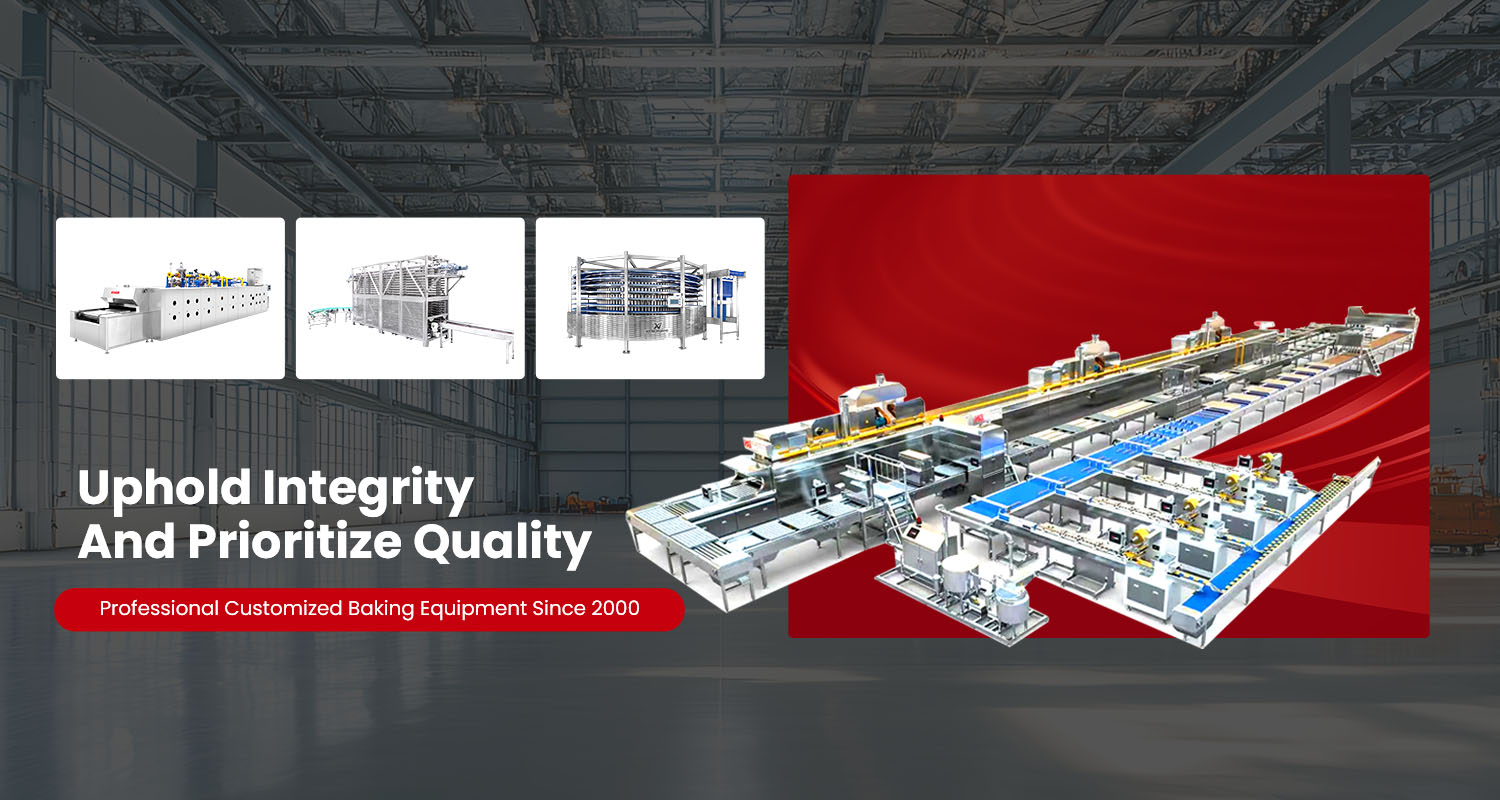
Selecting an automatic production line requires more than comparing output figures. The correct line must match the product recipe, process sequence, factory utilities, labor plan, packaging method, hygiene requirements, and future capacity. A well-engineered system creates balanced production instead of moving bottlenecks from one machine to another.
-
2026-07-31
-
2026-07-31An industrial baking oven system is a continuous thermal-processing solution designed to bake bread, cakes, biscuits, mooncakes, and similar foods at controlled temperatures and production speeds. It combines heating, conveying, airflow management, exhaust, and automatic controls to deliver consistent color, moisture, texture, and output across every batch.
-
2026-06-27Reliable cooling protects product structure, packaging quality, and line stability. Baked products continue releasing heat after leaving the oven, so cooling must lower temperature before slicing, sorting, or packing. The right system should be selected according to product data, output, space, and discharge requirements.
-
2026-06-27Continuous bakery production depends on stable heat, product movement, and repeatable baking time. An industrial baking oven system combines these functions so bread, buns, cakes, biscuits, and pastries pass through defined heating stages without repeated manual loading.
-
2026-06-27Bakery automation equipment includes machines, controls, conveyors, sensors, and software used to perform or coordinate production tasks with less repetitive manual intervention. It can cover ingredient handling, mixing, forming, fermentation, baking, depanning, cooling, sorting, and packaging feed.
-
2026-06-27Consistent dough starts with accurate ingredient delivery. An automated transfer line moves flour from bags, bins, silos, or intermediate containers to mixers or weighing stations. Correct design reduces lifting, controls dust, supports recipe accuracy, and maintains a stable supply for production.
-
2026-06-27Removing baked products from trays can become one of the most unstable stages in a high-output bakery. An automatic depanning system separates bread, cakes, buns, or similar products from pans and transfers them toward cooling or further processing. Its purpose is to reduce manual handling while maintaining product shape, tray flow, and line speed.
-
2026-06-27Cooling determines when baked products can be depanned, sorted, wrapped, or packed without losing shape or creating condensation. Selecting a bakery cooling system requires more than calculating conveyor length. Product structure, heat release, room conditions, output, hygiene, and available space all influence the final design.
-
2026-06-27Continuous bakery production needs controlled heating, product movement, and repeatable discharge conditions. A gas fired tunnel oven uses gas burners as the main heat source while products travel through a long insulated chamber on a conveyor or supporting surface. It is designed for steady operation.
-
2026-06-27Equipment decisions influence capacity, consistency, maintenance, and expansion. Industrial bakery equipment should be selected from a complete operating plan rather than from isolated specifications. The configuration should fit the product, factory, hygiene plan, and automation level.
-
2026-06-27Cooling is a controlled production stage that protects product structure and prepares baked goods for handling or packing. A spiral cooling conveyor moves products through a long conveying path arranged vertically around a central structure. This design provides extended cooling time while using less floor area than a straight conveyor of similar length.
-
2026-06-27Production line selection should begin with the product and process, not with a list of machines. A bakery production line must convert ingredients into finished goods at the required quality, output, and cost while fitting the factory layout.