





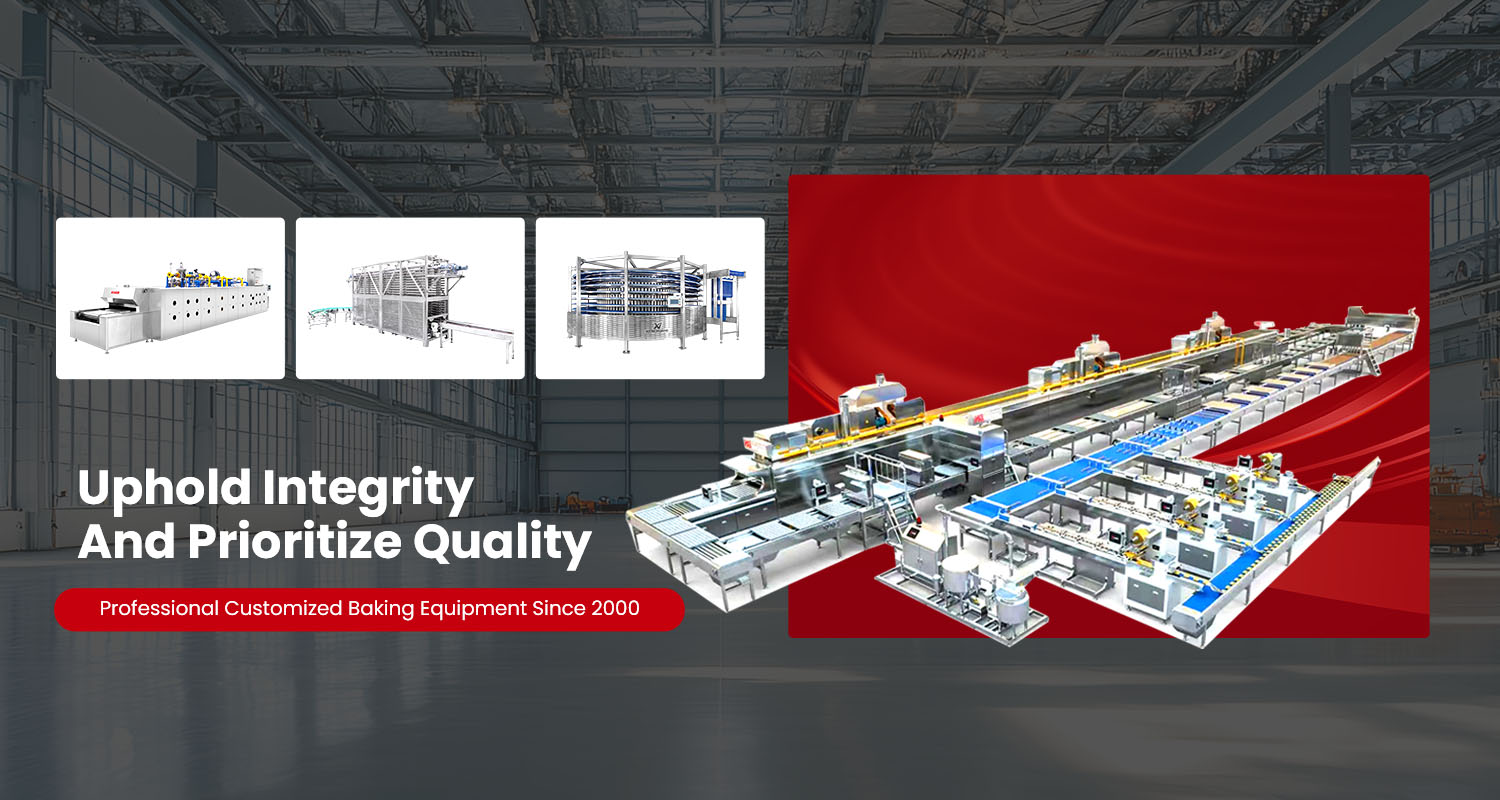
A depanning system can handle multiple tray formats when tray dimensions, product positions, release methods, and changeover requirements are considered during design. Simply making guides adjustable is not enough. A bakery depanning machine must lift or remove products consistently without damaging bread, deforming cakes, interrupting tray flow, or requiring lengthy adjustments between production runs.
-
2026-08-29
-
2026-08-28Factory acceptance testing verifies whether newly manufactured equipment meets the agreed technical requirements before shipment. For industrial bakery machinery, the test should examine construction, operation, controls, safety, documentation, and simulated production conditions.
-
2026-08-28Water droplets inside a bread bag indicate that heat and moisture were trapped after sealing. Condensation can soften crust, blur printed film, weaken labels, encourage mold growth, and shorten dependable shelf life. An automatic bread cooling system should bring products to a verified packaging condition, but cooling time is only one part of the investigation.
-
2026-08-28Dough sticking to the bowl, hooks, or sidewalls can slow unloading, increase product loss, extend cleaning time, and create differences between batches. The issue is not always caused by the commercial dough mixing machine itself.
-
2026-08-28Baking color develops through the interaction of surface temperature, moisture removal, recipe composition, and exposure time. Inside a direct gas fired oven, airflow determines how heat and water vapor move around each product.
-
2026-08-28Flour dust can spread during bag unloading, silo filling, pneumatic conveying, weighing, mixing, and manual ingredient transfer. Besides creating housekeeping work, airborne flour can contaminate surrounding surfaces, interfere with sensors, affect employee comfort, and form combustible dust hazards under certain conditions.
-
2026-08-27Manual brushing often applies more egg wash, oil, glaze, or syrup than a product actually needs. The excess may drip between products, collect on the conveyor, contaminate trays, and increase cleaning time. An automatic liquid brushing applicator can reduce this loss by controlling liquid delivery, brush contact, product spacing, and conveyor speed, but savings depend on correct setup rather than automation alone.
-
2026-08-27Production losses rarely come from one machine running too slowly. Delays often develop where processes connect: flour arrives late at the mixer, dough waits before forming, proofing becomes uneven, oven loading fluctuates, or warm bread reaches packaging.
-
2026-08-27Cooling time depends on the product rather than a fixed industry rule. Bread, buns, cakes, toast, and filled pastries differ in weight, moisture, shape, crust, and packaging requirements. An industrial spiral cooling tower must therefore provide enough residence time for each product to reach a stable packaging condition without causing excessive drying, surface cracking, or unnecessary delays.
-
2026-08-27Small flour-weight deviations can affect dough absorption, mixing time, fermentation behavior, product weight, and final texture. When an automatic flour dosing system becomes inconsistent, the weighing unit is not always the only source of error.
-
2026-08-27Adding a new oven, cooling tower, depanner, mixer, or sorting unit to an operating bakery is more complex than placing a machine in an available area. Product flow, conveyor height, speed, controls, utilities, hygiene, and maintenance access must work together.
-
2026-08-26Rising fuel bills do not always mean an oven has reached the end of its service life. Excessive gas use can result from heat loss, incorrect burner adjustment, unsuitable exhaust settings, poor production loading, or frequent operating interruptions.