





Why Automation Matters in Bakery Production?
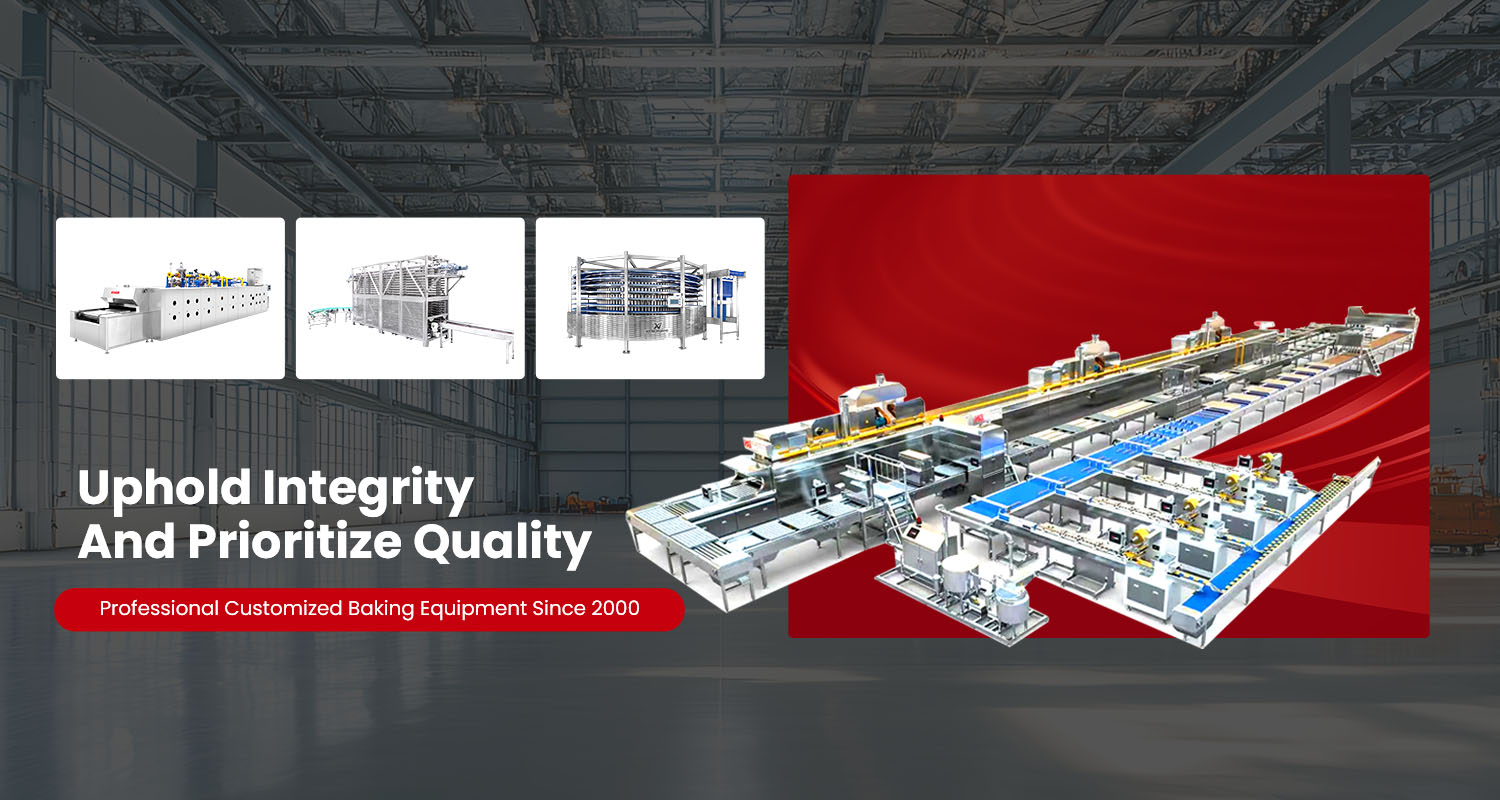
Growing demand, tighter delivery windows, and stricter safety requirements are reshaping how bakeries operate. Manual processes that once supported small-batch production now struggle to keep pace with large-scale output and consistent quality expectations. Automation has become a core strategy for modern factories, not only to increase capacity but also to stabilize performance across every stage of production. KC-SMART delivers integrated bakery equipment solutions that connect mixing, fermentation, baking, cooling, and handling into a coordinated system, helping manufacturers achieve reliable and efficient operations.
Consistency and repeatable quality
One of the most significant bakery automation benefits is the ability to deliver consistent results across batches. Manual adjustments often lead to variation in dough handling, proofing time, and baking conditions. Automation replaces guesswork with programmed parameters, ensuring that each cycle follows the same process logic.
Industry studies in food manufacturing show that automation can reduce product variation by more than 20 percent in high-volume lines. This level of control is essential for maintaining uniform color, texture, and weight, especially when production runs continuously across multiple shifts.
Higher efficiency and production capacity
Automation directly contributes to output growth. A well-designed automatic production line reduces idle time between stages and eliminates delays caused by manual transfer or coordination issues. Continuous production flow allows factories to maximize equipment utilization and shorten overall production cycles.
Research in industrial processing indicates that automated systems can increase production efficiency by 30 to 50 percent compared to semi-manual operations. This improvement is not only about speed but also about reducing bottlenecks and maintaining steady throughput.
By implementing integrated systems, manufacturers can effectively improve bakery efficiency automation while maintaining stable product quality.
Reduced labor dependency and operational risk
Labor availability and consistency are ongoing challenges in many manufacturing regions. Automation reduces reliance on manual handling, which lowers the risk of human error and improves operational stability.
In automated environments, operators focus on monitoring and control rather than repetitive tasks. This shift improves safety and reduces fatigue-related mistakes. It also allows factories to maintain production performance even when labor conditions fluctuate.
The benefits of bakery automation system become particularly evident during peak production periods, where stable output must be maintained without increasing workforce pressure.
Improved hygiene and food safety
Automation plays a key role in supporting industrial food automation standards for hygiene and safety. By reducing direct human contact with products, automated systems help minimize contamination risks.
Enclosed transfer systems, controlled environments, and hygienic equipment design ensure that products move through the line with minimal exposure. This aligns with global food safety guidelines that emphasize controlled handling of ready-to-eat foods.
Automated cleaning processes and structured sanitation procedures further enhance compliance and reduce downtime associated with manual cleaning.
Better process integration and line coordination
A major advantage of automation is the ability to synchronize all stages of production. Mixing, fermentation, baking, cooling, and packaging can be connected into a single workflow with unified control.
For example, fermentation systems such as a spiral cake Fermentation Tower provide stable and continuous proofing conditions while aligning output with downstream baking capacity. This reduces waiting time and prevents process imbalance.
Integrated control systems allow real-time adjustments based on production data, ensuring that the entire line operates in harmony rather than as isolated units.
Data-driven decision making
Automation enables continuous data collection across the production line. Parameters such as temperature, humidity, processing time, and equipment status can be monitored and recorded in real time.
This data provides valuable insights for process optimization, quality improvement, and predictive maintenance. Factories can identify trends, detect anomalies early, and make informed decisions to improve overall performance.
According to manufacturing analytics reports, data-driven operations can reduce downtime by up to 25 percent and improve overall equipment effectiveness significantly.
Cost control and long-term value
Although automation requires initial investment, it delivers long-term cost advantages. Reduced labor costs, lower material waste, and improved energy efficiency contribute to better profitability over time.
The following table outlines key impacts of automation:
| Area | Manual Operation | Automated System |
|---|---|---|
| Production speed | Variable | Stable and continuous |
| Product quality | Inconsistent | Highly uniform |
| Labor requirement | High | Reduced |
| Downtime risk | Frequent | Lower |
| Data visibility | Limited | Real-time monitoring |
These improvements make automation a strategic investment rather than a short-term upgrade.
Integrated solutions from KC-SMART
Automation is most effective when supported by a complete system design. KC-SMART offers full-line bakery solutions that integrate equipment, control systems, and installation services. With in-house manufacturing and engineering capabilities, the company ensures that each component works seamlessly within the overall production line.
By focusing on system compatibility and process optimization, KC-SMART helps manufacturers build scalable and reliable automated bakery operations.
Conclusion
Automation matters in bakery production because it transforms how factories manage quality, efficiency, and risk. From consistent output to improved hygiene and data-driven control, automated systems provide the foundation for modern manufacturing. By adopting integrated automation solutions, bakeries can meet growing demand while maintaining stable and predictable production performance.