





What Is Automatic Sorting System Used For?
Modern bakery factories often produce large volumes of bread, cakes, buns, cookies, and other products that must move from cooling to packing without losing their shape or order. An automatic sorting system is used to separate, align, count, inspect, and distribute products so downstream equipment receives a stable flow. It replaces irregular manual handling with controlled movement.
Where Sorting Fits in Production
Sorting usually begins after baking, depanning, or cooling. Products may arrive in uneven groups, different orientations, or inconsistent spacing. The equipment organizes them before wrapping, tray loading, cartoning, or other packing operations.
A bakery sorting line can divide products into lanes, correct their direction, create equal gaps, and guide rejected items away from the main flow. The exact functions depend on product size, surface condition, fragility, and the packing method used by the factory.
Main Functions of the System
The equipment may combine several tasks within one section:
Separating products that overlap or touch
Aligning pieces to a common direction
Counting products before grouping or packing
Dividing one stream into multiple lanes
Removing items that do not meet preset conditions
Balancing flow between connected machines
These functions reduce manual repositioning and improve product sorting efficiency.
Product Conditions That Affect Design
Food sorting equipment must match the physical behavior of the product. Soft bread cannot be handled in the same way as firm biscuits. Filled cakes may require low transfer heights, while small cookies need precise guides and sensors.
| Product factor | Design consideration | Possible response |
|---|---|---|
| Shape and dimensions | Stable guidance | Adjustable rails or lane dividers |
| Surface condition | Sticking or marking risk | Suitable belt and transfer angle |
| Fragility | Breakage or deformation | Gentle acceleration and low drops |
| Temperature | Firmness after cooling | Controlled sorting timing |
| Output rate | Products per minute | Correct lane quantity and speed |
Product samples and operating data should be reviewed before the design is finalized.
How Sorting Supports Packaging
Packaging equipment works more reliably when products arrive at a predictable speed and position. Random spacing can cause missed detection, poor film cutting, incorrect grouping, or repeated stops. Sorting stabilizes the feed so the packer can maintain planned output.
A bakery automatic sorting solution should communicate with upstream and downstream machines. When packing slows, the sorting conveyor may reduce speed or pause in a controlled way. When production resumes, products should restart without sudden accumulation or collision.
Inspection and Rejection
Sensors or vision equipment may identify missing products, damaged shapes, or abnormal spacing. Pushers, gates, or diverters can remove unsuitable items, but the method must be tested with actual product weight and line speed.
Cleaning and Changeover
Sorting systems are installed close to exposed food, so frames, belts, guards, guides, and collection points should be accessible. Components that require frequent removal should be easy to identify and reinstall correctly.
Marked guide positions, stored recipes, and adjustable lane widths also make product changeovers more repeatable.
Selecting the Correct Configuration
Before defining the equipment, the manufacturer should review product dimensions, acceptable variation, hourly target, lane arrangement, cooling conditions, packing format, cleaning method, and available space. These details determine the handling method and control sequence.
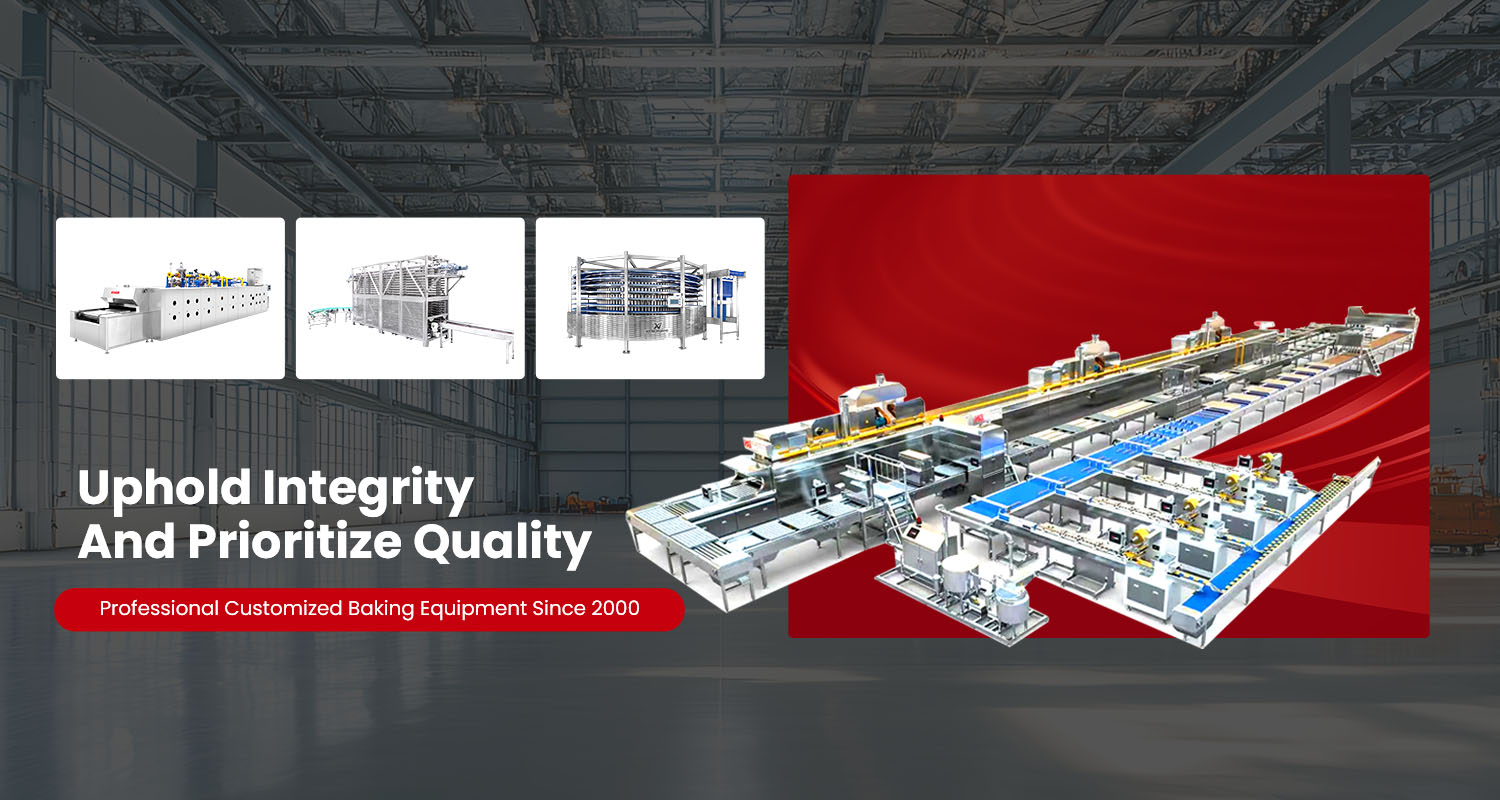
KC-SMART develops customized bakery equipment covering cooling, conveying, sorting, and connected production stages. By reviewing the complete flow instead of one machine alone, the sorting section can support stable handling, easier operation, and more consistent packing performance.